People Standing Before God
1A revelation, Yahweh’s word to Israel by Malachi. 2“I have loved you,” says Yahweh. Yet you say, “How have you loved us?” “Wasn’t Esau Jacob’s brother?” says Yahweh, “Yet I loved Jacob; 3but Esau I hated, and made his mountains a desolation, and gave his heritage to the jackals of the wilderness.”
The prophet Malachi was a man of God who ministered sometime between 450 and 400 BC. His name means “my messenger.” True to that name, Yahweh sent him to the people of Israel as his messenger and had him make God’s will known to them.
Just as the prophet Obadiah warned Edom, Malachi warned Israel of judgment. Scripture keeps no exact record of him, so we cannot say much for certain. He was perhaps a contemporary of Nehemiah and Ezra, or he ministered after their reforms. Before Israel entered four hundred dark years without a prophet, God had Malachi prophesy about Israel’s judgment, about John the Baptist, and about Jesus. Unbelief toward God had kept the people of Israel from holy worship and from building households of faith. God called them again and again to repent; when they would not return to him, he warned them of judgment. By then those who had come home after seventy years of exile had waited a hundred years, and still the Kingdom of God that Haggai and Zechariah had foretold had not come. In their ignorance of God they began to doubt him and to live by merely human standards. They wanted a king like David, who had ruled the world with great power, and a nation as glorious as the one they had enjoyed in King David’s day, but what they had instead was one hardship after another. It was their own sin that kept them from that glory. Yet instead of turning back, they forsook God, chased after the riches of the world, and served foreign gods.
Israel forgot the suffering they had endured at the hands of the Gentiles during seventy years of exile. They sank into formalism and hypocrisy and no longer served God as their King. Dissatisfied with their lot, they complained to the God who had not given them a prosperous life, and they sinned by withholding their full tithes and offerings. Worse still, the priests, who should have taught the people a sound faith so that they would live out the word, had fallen as well; and once the priests fell, the people broke the law, divorced their wives, and married foreign women as they pleased. The people failed to serve God fully and lived like the rest of the world because the priests had all become corrupt. Neither people nor priests felt any need to bring a whole offering to a God who did not bless them as much as they wanted. Israel had forgotten how precious it is to worship God. A God who would not grant them a life of plenty was no longer their King; that is why they could mock and despise him without fear.
To this fallen Israel the prophet Malachi proclaimed that the love of God they had received until now was a love too immense for any human being to take in, and that the God who had chosen them as his people and led them was absolute. Yet the people, discontented when nothing changed right away, gradually lost hope. They had lived through the fulfillment of the prophecy that they would return to Israel, and still they grumbled that life was not going the way they wanted.
We are no different from Israel today. We cry out, “Now, quickly—solve my problem and give me a good life!” and we try to force God’s answer. But God knows that even those who have tasted his grace will show the evil in their hearts once his answer is a little delayed. If we truly want to receive God’s grace, we must show him an honest faith that endures without wavering.
Jeremiah 16:12-13
12You have done evil more than your fathers, for behold, you each walk after the stubbornness of his evil heart, so that you don’t listen to me. 13Therefore will I cast you out of this land into the land that you have not known, neither you nor your fathers. There you will serve other gods day and night, for I will show you no favor.’
In Jeremiah’s day Judah, afraid of invasion by powerful nations such as Moab and Ammon, took up their gods and fell into idolatry, worshiping the sun, the moon, and the stars. When God withdrew his grace because of their sin, this idolatrous nation suffered the shame of being carried off into captivity. Seeing the wickedness of Israel and Judah, God told the prophet Jeremiah to warn them that they would be conquered by a nation they did not know at all and taken away to its land. Knowing that judgment would fall unless Israel turned from its sin, Jeremiah never stopped warning them to repent; what he received in return was persecution from the people. Because they worshiped idols they could see rather than the God they could not, they hated Jeremiah for preaching judgment. They wanted to be told that all would be well, and the call to repent was the last thing they wished to hear.
Through the folly of trusting what we can see, we keep committing the sin of leaving God. Had Israel and Judah repented when they heard the warning of judgment and lived a holy life of faith, God would not only have withdrawn his judgment but would also have given them strength to overpower the great nations. Yet even after hearing the warning, they ignored God. As a result, the unrepentant nations of Israel and Judah were invaded by cruel Babylon, and their king and people were carried off to Babylon.
Just as Jeremiah prophesied, they were taken to a nation whose name they had never heard and lived there as captives for seventy long years. By fulfilling the prophecy, God made the people know that the judgment Jeremiah had warned of was real. Then, taking pity on Israel and Judah after their seventy years of exile, God proclaimed their restoration, as he had promised beforehand. But a return to Israel required repentance, and for that he sent prophets who pressed hard. God calls for repentance through his prophets precisely because he means to bless.
When God points out your sin, it is not to shame you or to scold you; it is because he longs to restore you. Of course, people want to be blessed right now, but God says that we must first have a heart made clean through repentance. Only a clean heart that has repented and turned from sin can use a blessing for good, and for that reason repentance comes before blessing. Had there been no prophets like Malachi, who laid their lives on the line to proclaim repentance, Israel would not have been restored, even though God truly had compassion on them. Having proclaimed Israel’s restoration, God raised up Zerubbabel as their leader and granted the first return.
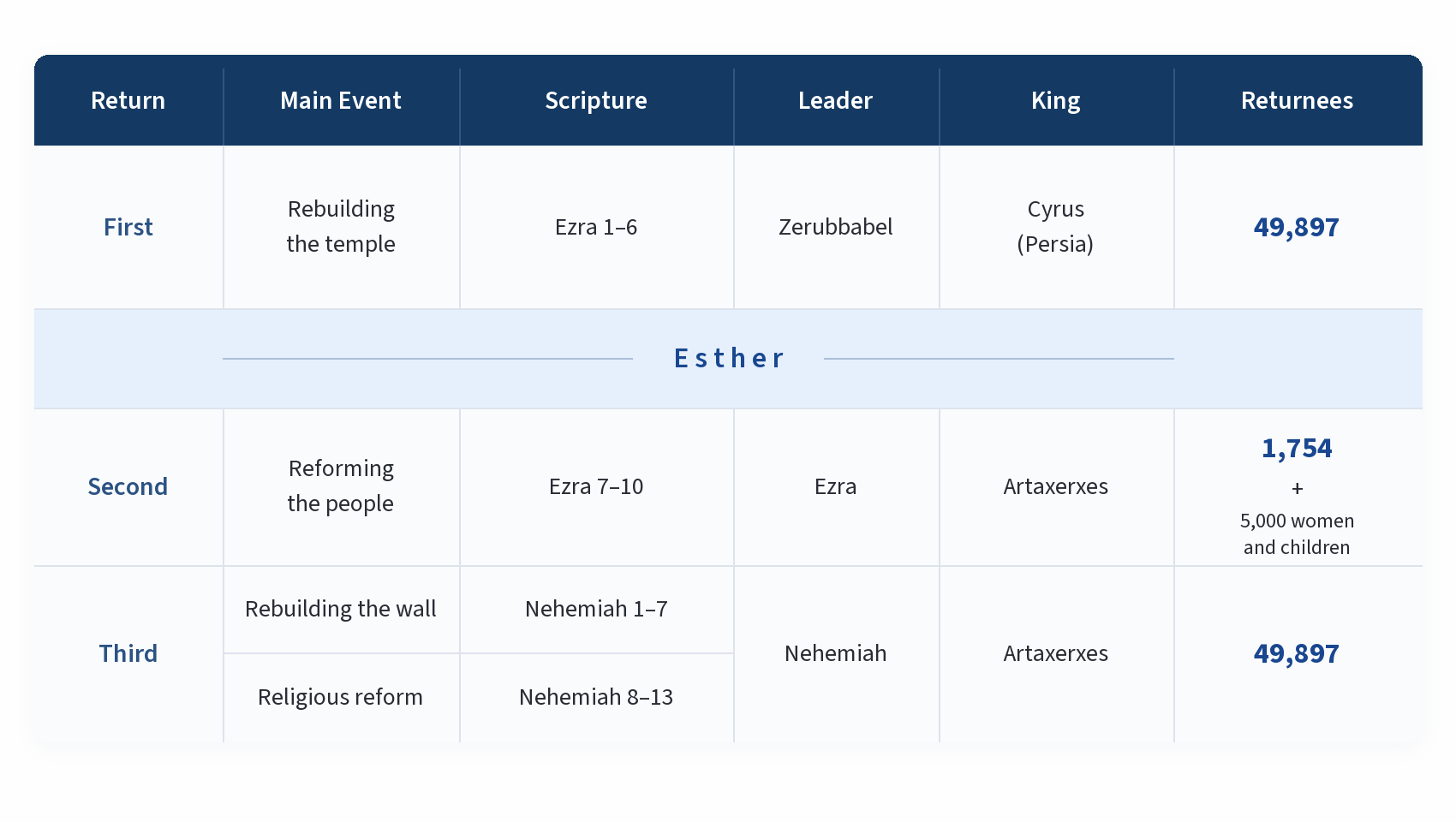
The people of Israel who came home with Zerubbabel in the first return threw themselves into rebuilding the temple, full of hope for the life ahead. The prophets Haggai and Zechariah also proclaimed the glorious Kingdom of God and helped the people return to God and serve him wholeheartedly. A second return followed under Ezra’s leadership, and in the third Nehemiah led the people home. They had come back to Israel just as the prophets foretold, yet when hardship came they complained to God, asking why he did not help them. Grieved by the people’s ignorance of God and their unbelief, Zechariah preached the word to them and labored for the recovery of Israel’s faith. But a hundred years after their return, Israel and Judah still had not come to full faith; they grumbled against God and worshiped idols like the pagan nations. Only by turning from sin could they be blessed, but they went on complaining. Their suffering could only continue.
Judah and Israel, having left God, were crushed and devastated by Babylon. The Babylonians were cruel, and they treated God’s people like animals that could be slaughtered at will.
The story of Mordecai and Haman in the book of Esther shows how bitterly the people of Judah suffered as captives in a foreign land. When Mordecai the Jew would not bow to him, Haman paid King Ahasuerus a great sum and in return won permission to kill every Jew in a single day. If Esther, who had become queen, had not fasted and clung to God, the Jews would probably not have escaped with their lives. Such were the people of Israel, suffering in a foreign land just as the prophets had said. And now, though by God’s grace they had come home, rebuilt the temple, and been blessed with the opportunity to rebuild their nation, they were once again resenting God and complaining.
During their seventy years of exile, they probably vowed that if only they could go home, they would serve God faithfully. They longed earnestly for grace and counted the days until their return, and God heard their heartfelt prayers and answered them. Yet when God actually granted their return, the very people who had longed so deeply forgot to give thanks and forsook him once more. Home at last and free from Gentile oppression, they now complained, asking why they should pick out good animals to sacrifice to a God who did not give them the abundant wealth the Gentiles enjoyed. They did not hesitate to marry outside their people, taking well-off foreign women as wives rather than marrying poor Israelite women, and they were quick to divorce in order to be rid of their first wives. They forgot the misery of exile and lived for pleasure and lust.
Malachi 1:1
1A revelation, Yahweh’s word to Israel by Malachi.
God always warns before he judges. If his people served him faithfully, he would have no reason to judge them; he warns them so that they may turn from sin and escape judgment. God’s warnings must be heeded and acted on, without exception. But when a pastor, a brother or sister in faith, or someone in our family points out where we fall short, that too is a warning, and we should take it to heart. The wise are those who listen well when told their shortcomings.
We are like Israel, who could not see their own sin; we rarely know where we fall short. So if we listen well to the counsel of others, we will not only make fewer mistakes but grow into a mature faith. When God told Israel that he rebuked them and sent them hardship because he loved them, they retorted by asking when Yahweh had ever loved them. If he loved them, they said, he should help them live in plenty; it was not right for him to claim to love them while withholding material abundance. What they needed was not God’s grace but money. They had been carried off to Babylon as the consequence of their sin and brought back as promised; they had rebuilt the temple and could live free from foreign invasion. All of it was God’s grace, yet they wanted only worldly blessing and complained to God.
God’s true people give thanks always, whatever their circumstances. These people had received the blessing of peace that ended their exile, and still they complained instead of giving thanks; a heavy rebuke from God was all they could expect.
Verse 2 reads: “Wasn’t Esau Jacob’s brother?” says Yahweh, “Yet I loved Jacob; but Esau I hated.” Heard on its own, God’s word that he loved Jacob and hated Esau can sound as though God loved Jacob unconditionally, hated Esau, and rejected him out of hand. But God knew that once Esau came into the world, he would live as God’s enemy. That is why he said he loved Jacob, who longed for grace, and hated Esau.
Scripture says that God blessed one child in the womb and cursed the other, and some may think him unfair for it. But while human beings have a past, a present, and a future, the almighty God is not bound by such time; for him there is only the present. Though thousands of years go by, it is always the present to God; he already knew what kind of lives Jacob and Esau, still in the womb, would live. Because time is a limit only for living human beings, God, who is absolute, sees everything from past to future as plainly as today.
In Genesis 25, Esau comes in from the field and says to Jacob, “Please feed me with that same red stew, for I am famished.” Jacob answers that if Esau will sell him the birthright he holds, he will give him the stew as the price. Esau, protesting that he is so hungry he could die and asking what good this birthright is to him, sells it for a single bowl of stew. Their conversation alone tells us why God said he hated Esau and loved Jacob.
Esau was born the firstborn and received God’s unearned blessing, yet his failure to value the birthright meant that when a crisis came, he threw away God’s grace without a second thought. Had he known that the birthright was a precious grace through which not only he but his descendants would be blessed, Esau would have given his life to keep it. Instead he handed it to Jacob without a struggle. Jacob, for his part, had always wanted the birthright; he strove to receive God’s grace even if it meant deceiving his hungry brother.
Genesis 27:3-4
3Now therefore, please take your weapons, your quiver and your bow, and go out to the field, and take me venison. 4Make me savory food, such as I love, and bring it to me, that I may eat, and that my soul may bless you before I die.”
Isaac took it for granted that Esau, as the firstborn, should receive the blessing, so he asked him to make him savory food. Believing his father’s prayer was all he needed to prosper, Esau went out hunting to prepare it. What Esau missed is this: Isaac was a man of God, and blessing would come only if God gave Isaac the power to bless. But Esau had already sinned by selling his God-given birthright for a bowl of stew, which put God’s blessing out of his reach. However zealously he went out hunting to make savory food for his father, he had broken God’s law, and no blessing could come to him. This is the faith of those who only pretend: they throw away the true faith that fears God and play at believing for their own gain. Esau did not hunt to respect and honor Isaac; he hunted to gain as much blessing as he could before his father died. Church members who use God to get ahead in the world will, like Esau, be rejected by God in the end because of their own sin.
The reason is that a faith practiced in blindness to the things of God does not grow stronger, as Jacob’s did, when God’s grace comes; it collapses, as Esau’s did. Isaac ate with relish the savory food Jacob brought him, then kissed Jacob and blessed him without reserve. Isaac’s prayer holds every blessing a person can receive.
“Behold, the smell of my son is as the smell of a field which Yahweh has blessed. God give you of the dew of the sky, of the fatness of the earth, and plenty of grain and new wine. Let peoples serve you, and nations bow down to you. Be lord over your brothers. Let your mother’s sons bow down to you. Cursed be everyone who curses you. Blessed be everyone who blesses you.”
Isaac prayed ardently that Jacob would receive every blessing of heaven and earth, that this grace would flow on to Jacob’s descendants, and that it would certainly be fulfilled. Through worldly eyes, this scene, with Isaac deceived into blessing Jacob, looks close to fraud. From God’s side, it shows that anyone who earnestly longs for his grace can receive the blessing he gives. From Esau’s point of view it might seem unjust, but he lost the blessing to Jacob because of his own sin: he had treated God lightly. Esau was not robbed by Jacob’s trickery. He failed to keep the blessing he had been given and threw it away himself. That is why he had no claim to it.
If you too want God’s love and protection, may you live by faith. The Israel now hearing Malachi’s warning is a chosen people who received God’s grace as an unearned gift, just as Esau received his birthright. Even so, they did not know how precious that grace was. Like Esau, they cast aside their privilege as God’s chosen people and lived for nothing but worldly blessing.
As I watched them doubt and insult once again the God who had shown them grace and brought them home from seventy years of exile, I thought: human beings truly do not change. In their suffering they had cried out desperately; God had heard and answered; the prophets had helped them escape judgment. Yet they so easily turned their backs on those prayers, the God who answered them, and the prophets, and settled into their comfort. I can only grieve for them. Only those who give thanks without end and never stop speaking deeply with God can receive his absolute protection.
God foretold through Jeremiah that Israel would be carried off to live in a land they did not know, and that prophecy was fulfilled. He foretold that he would love Jacob and hate Esau, and that prophecy too came true exactly: Edom, Esau’s descendants, came under judgment and vanished, while Jacob’s descendants received eternal blessing through Christ.
God always speaks first through his prophets and then fulfills what he has spoken. Israel knew this, yet right to the last they would not believe and went on complaining; looking at them, we see how evil human nature is. Their folly came from forgetting how greatly blessed a nation they were. Even so, God told those complaining people that he loved them. He is the unchanging God, and his love will never change.
When you suffer, if you take even that suffering as God’s love and repent and give thanks, God will lift it immediately and bless you. But if you complain to God or disobey him because your life is not prosperous now, that suffering will keep coming back.
I hope you will believe that God is at work in every circumstance and give thanks. May you not be bound by human thinking, as Israel was, and sin against God. If you rise from the place of sin without delay, that place of suffering will, wonderfully, become a place of blessing. God’s rebuke and God’s blessing are like the two sides of one sheet of paper, so your own resolve can bring either one upon you. May you never forget this, and may you always abide in his grace.