
Skip to content

Sermons

Those Who Missed Their Chance
1 Kings, Part 31 Kings 2:31-38

Those Who Missed Their Chance

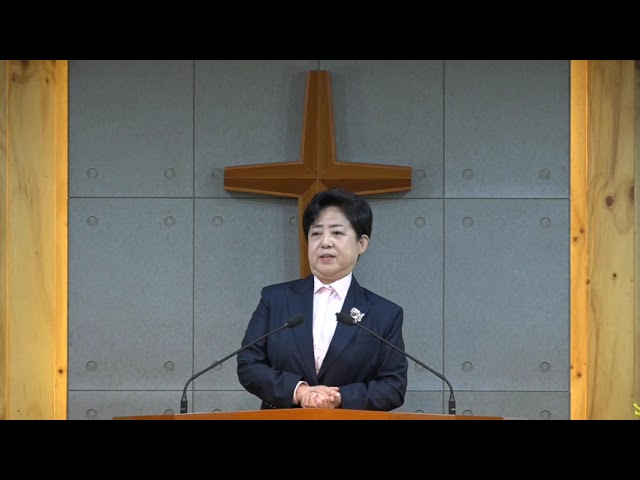
This passage describes how Solomon, following King David's last instructions, established his royal authority and dealt with the wicked. In particular, through two figures, Joab and Shimei, who in the end rushed to ruin because of their own sins and choices, it shows how important true repentance and choice before God are.

Joab devoted himself to David for nearly forty years and was the chief contributor to stabilizing the kingdom, but out of selfishness and greed to protect his position as second in command, he deliberately committed murder. Despite his many achievements and his devotion, his heart was set on his own power rather than on God, and so, even though he took hold of the horns of the altar, he was not spared and came to a miserable end.

Shimei was a sinner who had cursed David, but because of David's faith and patience he was given the chance to live several times over. Yet rather than truly repenting of his sin, he carelessly broke the king's command, and in the end he missed every chance he had been given and came to his death.

Through the lives of these figures, we should reflect deeply on how we should use the chances we are given, and on what true repentance and choice are.
Pastor Lee Ji-hyun · Feb 4, 2024
What Will You Live For?
Ecclesiastes, Part 1Ecclesiastes 1:1-11

What Will You Live For?

This passage is Solomon's confession of the deep emptiness and the fleeting nature of life that he came to feel after enjoying all his wealth and glory. He realizes that all the riches and power of the world, and all human effort, mean nothing in the face of death, when everything returns to dust. The passage points out that although he had wisdom and wealth, a life apart from God is all show, like a puffed-up bun that is hollow inside, and it emphasizes that there is no new thing under the sun.

The sermon explains that this emptiness is a sign revealing that human beings, because of sin, cannot escape death. People constantly chase new things to fill their lives, but they must recognize that none of it lasts forever. It warns that when people lose their longing for God and live by the world's desires, they become unable to make wise judgments. So it teaches that, rather than clinging to temporary possessions or honor, we must receive Christ for eternal life and live a life that walks with God.

The sermon invites the reader to look back on whether their life is an empty one filled without God, or one moving toward an eternal hope. Rather than regretting time gone by and chances thrown away, it asks how we will offer this very moment to God.

Pastor Cho Chun-sook · Jan 28, 2024
Believers Who Hold Citizenship in the Kingdom of God
Philippians, Part 7

Believers Who Hold Citizenship in the Kingdom of God

In this passage the apostle Paul conveys to the believers in Philippi, through his own journey of faith and devotion, how precious citizenship in the kingdom of God is. Paul gave up all the world's wealth and honor and lived for Christ, because of his assurance of the eternal kingdom of heaven and the mission he had received from God. He stresses that believers should give up their citizenship in the world of their own accord and walk carefully toward their true home, the kingdom of God.

The sermon explains why believers should live confidently in the world rather than anxiously, like people staying somewhere illegally. Paul did not boast of his faith or seek people's approval; he sought approval from God alone. Yet it warns that many believers fall into their own righteousness, judge and complain about others, and can easily give in to Satan's temptations. True believers are ashamed of their shortcomings, strive every day to build a close relationship with God, and should keep an attitude of thankfulness for the grace they have been given.

What must believers put into practice to discern Satan's schemes and grow spiritually mature? As people who hold citizenship in the kingdom of God, we consider what decisions we must make in order to pursue the eternal reward rather than the passing pleasures of this earth.

Pastor Cho Chun-sook · Jan 21, 2024
The End of the Foolish
1 Kings, Part 21 Kings 2:1-9

The End of the Foolish

Today's passage contains the last words King David left to his son Solomon at the end of his life, and the way Solomon, following those words, dealt with the kingdom's enemies and made his throne secure. David blesses Solomon, urging him to keep God's Law and walk in truth, but at the same time he commands him to deal wisely with those who had harmed or betrayed him. More than a simple historical record, this passage gives an important lesson on how God's people should live wisely.

The sermon uses two figures, Adonijah and Abiathar, to point out how grace should be handled. Adonijah quickly forgets the grace that spared his life, shows his foolish greed by reaching for the throne again, and meets a miserable end. Abiathar the priest, on the other hand, who had served David faithfully to the end, puts his own safety first in a time of peace, makes the wrong choice, and is cast off by God. This shows that keeping faith in the midst of blessing and peace is harder than in ordinary circumstances, and that one moment's wrong judgment can bring down a lifetime of faithfulness.

We must live thankful and contented lives for the grace we have received, but if we do not guard against Satan's temptations and our own greed, we can spill that grace at any time. Taking the sad ends of Adonijah and Abiathar as a warning, we must become believers who look at where we stand now and at our past choices, and who make right decisions before God. Remembering the truth that God honors those who honor him, take time to meditate deeply on what kind of heart we need in order to live the wise and truthful life of a believer today.

Pastor Lee Ji-hyun · Jan 14, 2024
The Faith of Jacob and Joseph Revealed by the Word [2][New Year Service]
Genesis 47:11-20

The Faith of Jacob and Joseph Revealed by the Word [2][New Year Service]

This passage focuses on the different choices Jacob and Joseph made in their circumstances and the results of those choices. Jacob brought great suffering on his family and himself through human reasoning and selfishness, while Joseph trusted in God's will and in his dreams, kept away from sin, and lived faithfully. The lives of the two men show that the direction of a life can change completely depending on whether a person with free will chooses good or evil.

The sermon points out that a proud heart is the main cause that leads people to choose sin. People who keep repeating sin believe only their own thinking is right and do not listen to others' advice, but people who keep away from sin are humble, fear God, and respond sensitively to the voice of conscience. Even in the extreme situation of prison, Joseph did not complain; he waited for the time God had set and kept himself pure, and as a result he was led to the position of prime minister. This suggests that what brings about miracles is not human effort or a change of circumstances, but steadfast faith that does not harm one's relationship with God.

We must reflect deeply on how to live so that we respond keenly to the voice of our conscience and do not commit sins that bring shame on God. Under the warning that our earnest wishes may not be fulfilled if we stay in a place of sin, we are led to ask what decision we must make as God's true children.

Pastor Cho Chun-sook · Jan 7, 2024
The Faith of Jacob and Joseph Revealed by the Word [1][New Year’s Eve Service]
Genesis 47:1-10

The Faith of Jacob and Joseph Revealed by the Word [1][New Year’s Eve Service]

Today's passage begins with the scene in which Jacob, having met Joseph, goes before Pharaoh, the king of Egypt, to greet him. When Pharaoh asks his age, Jacob sums up his life and confesses it as ‘one hundred thirty years … few and evil.’ This shows that what was stamped most deeply on him was not the glory of being an ancestor of faith specially chosen by God, but the life of a wanderer, pursued and drifting all his days.

The passage finds the reason Jacob's life was so hard in the way he made his judgments and decisions. Jacob deceived his brother to gain the firstborn's blessing, was deceived by his uncle Laban for twenty years, and put his family and a city in danger through what happened to his daughter Dinah; at every moment he put his own thinking and desires first. Even though God commanded him to go up to Bethel, he held on to human judgment and chose Shechem, which looked safe, and because of this his family had to go through great suffering and sin. God allowed hardship in order to correct his wrongs, but Jacob still chose human ways and could only live like a wanderer all his life.

We need to look back on whether we are living by our own righteousness and failing to see God's careful involvement in our lives. The sermon asks whether true faith means entrusting every judgment and decision to God within the peace and circumstances he has given, or whether we will live by our own thinking like Jacob and end with a sad confession.

Pastor Cho Chun-sook · Dec 31, 2023
The People Who Met the Baby Jesus [Christmas]
LukeLuke 2:8-25

The People Who Met the Baby Jesus [Christmas]

This passage sheds light on the encounters of various people surrounding the birth of Jesus Christ. It tells of Mary, who learned of the Messiah's coming through the angel's announcement; of the shepherds, who were keeping watch over their sheep through the night, heard the angel's news, and came to find him; and of the wise men, who followed a star from the east to come and worship Jesus. It also records the confession of Simeon, who, led by the Holy Spirit, met the baby Jesus in the temple.

The sermon points out the attitude these people had in common. Through a baby lying in a humble manger, they believed God's plan of salvation and offered worship and praise. In Simeon's case in particular, it explains that a life that went beyond a Law-centered faith, walked with the Holy Spirit, and put God first is what led him in the end to meet the Messiah. This shows how much more important it is to walk with the Holy Spirit, enjoying freedom in the truth, than to keep blind religious rituals.

The sermon emphasizes that when believers live righteous and devout lives like Simeon, they will meet Christ. It also points out that this faith must lead on to a holy hope that waits for his second coming. The sermon invites the reader to look back on whether their faith walks with the Holy Spirit and is centered on God, or is bound by the Law.

Pastor Cho Chun-sook · Dec 24, 2023
The One Who Exalted Himself and the One Who Was Appointed
1 Kings, Part 11 Kings 1:24-30

The One Who Exalted Himself and the One Who Was Appointed

This passage deals with an unsettled time when King David had grown old and frail and it was not clear who would succeed him. At that point Adonijah, David's fourth son, relying on his claim as the eldest, his fine looks, and the support of Joab and Abiathar the priest, declares that he will be king. The Bible describes his act with the words ‘exalted himself,’ pointing out that it was proud, self-willed behavior beyond his place. This scene shows that what God looked for in choosing a king for Israel was not human appearance or political standing, but his own choice alone and his eye that looks on the heart.

In contrast, while Adonijah was struggling to seize the throne and gathering people to his side, Solomon did nothing in particular and made no schemes to become king. He was simply one already loved and chosen by God, and around him the prophet Nathan and loyal men worked actively to secure his rightful claim. Unlike Adonijah, whose eyes were blinded to God's will by human greed and jealousy, Solomon quietly carried out his calling where he was and waited for God's timing. In the end, Adonijah's attempted rebellion became the very occasion for Solomon to take the throne, and the one who had tried to exalt himself was reduced to taking hold of the horns of the altar and begging for mercy.

As we live in the world, we must not confuse putting human effort into visible results with quietly doing our best for the calling God has set for us. If we refuse to stand with those who, like Adonijah, strive to make themselves king, and consider what it really means to be faithful in a very little right where we are and to wait for God's timing, with what attitude should we prepare for tomorrow's calling?

Pastor Lee Ji-hyun · Dec 17, 2023
Jesus Christ, the Land of Blessing
Amos, Part 9Amos 9:1-15

Jesus Christ, the Land of Blessing

This passage deals with Israel's corruption, the judgment of God that followed, and the restoration brought about through the remnant. God declares a terrible judgment, the destruction of the temple and war, against Israel, which had treated his creation carelessly and worshiped idols. But this judgment is not mere destruction; it shows God's character, which hates sin, and at the same time his endless patience and love. God protects Israel so that it is not completely destroyed, and he makes a wonderful plan to raise up the tent of David that is fallen and to make even the Gentiles, Edom included, part of the inheritance of salvation.

The sermon reveals that Jesus Christ stands behind this judgment and restoration. The prophecy delivered by the prophet Amos points to Jesus, who came from David's line and became the land of blessing that saves both Jews and Gentiles. This word, which the apostle James quoted when he testified to the salvation of the Gentiles, gives us the assurance that by believing in Jesus we come to possess a share in the eternal kingdom. The abundant blessing and peace that come after judgment are a privilege enjoyed only when we fear God and live under his protection. Seeing through Israel's history how God's will is fulfilled, we must live wisely so that sin does not hinder the growth of the kingdom of God.

What is that heart of God, which rebukes the proud and yet shelters his repentant children as an eagle gathers its young?

Pastor Cho Chun-sook · Dec 10, 2023
A Famine of Hearing Yahweh’s Words
Amos, Part 8Amos 8:1-14

A Famine of Hearing Yahweh’s Words

This passage deals with how the people of Israel let their chance to repent slip away and in the end came under God's judgment. Through Amos, God shows the vision of ripe summer fruit and declares that they have reached a state in which they can no longer be forgiven. The people kept only the outward form of the feasts and the Sabbath, while exploiting their neighbors through deceit and greed and giving themselves to pleasure. Because of this pride and sin, God resolves no longer to answer when they call.

The sermon points out what the spiritual famine Israel would face really is. It warns that what is coming is not a physical famine in which people die for lack of bread or water, but the drying up of the soul because it cannot hear Yahweh's words. The people will stagger from the north even to the east seeking the word, but once the door of judgment has closed, they will not be able to obtain the word of truth. Formal religious rituals and false faith cannot quench the soul's thirst; true life and satisfaction can be found only in Jesus Christ.

The sermon asks how believers should prepare their souls now, while God's word can be heard so easily. Seeing God fall silent once the opportunity he gave has been missed, it leads us to reflect on what true repentance and a life centered on God's word are.

Pastor Cho Chun-sook · Dec 3, 2023
Amaziah, the Priest Who Persecuted Amos
Amos, Part 7Amos 7:10-17

Amaziah, the Priest Who Persecuted Amos

This passage deals with the scene in which Amos, who had received God's call to deliver a message of judgment, is persecuted by Amaziah the priest at the sanctuary in Bethel. Amaziah threatens him to stop prophesying at Bethel, the king's sanctuary and the royal house of the kingdom, and orders that Amos be driven out to the land of Judah. He sows division by claiming that Amos is cursing the king and bringing the nation to ruin, and he obstructs God's servant in order to protect his own power and position.

Amaziah looks down on Amos because of his outward appearance: he is not a trained, professional prophet but an ordinary herdsman and a farmer of sycamore figs. But Amos firmly declares that his calling comes not from human education or power but from God's direct call. Even though God himself called Amos and gave him his mission, Amaziah challenges God's authority with worldly standards and pride. This shows that mocking and obstructing those who proclaim the truth is the same as opposing God.

When Amaziah tried to stop God's servant, God judged him so that his family would be miserably ruined. We must not, by our human judgment, become stumbling blocks to pastors or believers who proclaim the truth. Through this story we must come to understand what outcome awaits us if we hinder God's work and insist on our own way of thinking.

Pastor Cho Chun-sook · Nov 26, 2023
The God Who Blessed Humble Aaron (Thanksgiving)
Exodus

The God Who Blessed Humble Aaron (Thanksgiving)

Today's passage deals with the story of Aaron as he left Egypt with Moses. As Moses' spokesman, Aaron delivered God's word to the people and performed signs, yet his own name stayed hidden behind Moses'. Even when Moses received all the glory, he was not jealous but humbly served the leader God had appointed.

But Aaron too was a weak human being. While Moses was up on the mountain and the people wanted an idol, he gave in under threat and made a golden calf. This sinful act was a grave, unforgivable sin, but God saw the heart with which Aaron had quietly devoted himself without ever challenging Moses' authority. God covered Aaron's failure, appointed him high priest, and showed him amazing grace.

How should we regard the attitude of the heart that God sees, rather than visible results or recognition?

Pastor Cho Chun-sook · Nov 19, 2023