
Skip to content

Sermons

The Judgment the Proud Receive
Amos, Part 6Amos 6:1-14

The Judgment the Proud Receive

Today's passage deals with how the people of Israel grew proud in their prosperity, forgot God, and sank into worldly pleasure and ease. They turned the sacrifices that should have been offered in the temple into luxury and indulgence, and boasted of their power and wealth while mocking God. The spiritual confusion grew so deep that even the poor envied the lives of the wicked rulers and were ready to leave God.

The sermon points out that this attitude is not a simple mistake but a grave sin that betrays the covenant with God. In particular, it warns against ministers who use worldly methods to satisfy people's feelings, and against believers who, carried away by momentary emotion, live without restraint and without true repentance. Because God looks at the heart, he does not accept put-on zeal or formal worship. Instead he asks for a faith that obeys him with honesty and humility, and that grieves over the work of the gospel as one would grieve for the affliction of Joseph.

We consider what the judgment will finally bring upon those who forget God's grace and live in pride.
Pastor Cho Chun-sook · Nov 12, 2023
Seek Me, and You Will Live
Amos, Part 5Amos 5:4-15

Seek Me, and You Will Live

This passage deals with how the people of Israel clung only to formal worship and religious ritual while exploiting the vulnerable and not fearing God. God warns that the sacrifices and praise they offer in holy places such as Bethel and Gilgal are worthless if they are not sincere, and instead he demands that they let justice roll on like rivers, and righteousness like a mighty stream. Their attitude of judging happiness by worldly wealth and power and worshiping idols shows that they had reached a state in which judgment could not be avoided.

The sermon clearly points out the difference between seeking God and being absorbed in the world. Even among a corrupt people, God opens the way of life to those who sincerely seek him and seek good. But judgment comes upon those who set up their own righteousness through formal faith, or who mistreat their neighbors while enjoying religious privilege. It emphasizes that true worship comes not from the sound of splendid instruments or ritual feasts, but from a life that fears God, loves one's neighbor, and is lived honestly.

We need to look back on whether we have become spiritually blind through formal church attendance and neglect of God's word. We must examine whether we are living by the world's standards rather than with a heart that longs for God. How should we receive this important truth, that a life that truly seeks God, seeks good, and practices righteousness can protect us on the day of judgment?

Pastor Cho Chun-sook · Nov 5, 2023
The Judgment the Corrupt Receive
Amos, Part 4Amos 4:1-13

The Judgment the Corrupt Receive

This passage deals with how the people of Israel showed religious zeal through formal sacrifices and offerings, but in reality lived corrupt lives, oppressing the poor and indulging in luxury. God points out that their worship is hypocritical, lacking a contrite spirit, and rebukes them, saying that it only ends up piling up sin. It shows that the pride and injustice hidden behind a form of faith that looked perfect on the outside brought on God's wrath.

The sermon emphasizes the emptiness of people who chase wealth, power, and ideology, and how sin becomes a stumbling block in life. It warns that even believers can lose their salvation when they compromise God's law as it suits them and live as they please. It explains that God wants true faith and reverence rather than formal faith, and that a hardened attitude that sins without repenting leads in the end to a judgment from which there is no recovery.

God announced judgment through the prophet and gave them a chance to repent, but Israel missed that chance and in the end faced painful judgment. Through this lesson from history, we must look back on whether our faith has leaned only toward outward form. We must consider whether the chance to repent that we have now will stay open forever, and how we should prepare, given how serious the judgment on the corrupt will be.

Pastor Cho Chun-sook · Oct 29, 2023
Hear This Word, Children of Israel
Amos, Part 3Amos 3:1-15

Hear This Word, Children of Israel

This passage points out that the complex emotions and expressions of human beings cannot be hidden before God, and deals with how Israel, which had received special love, betrayed that grace. God knows the human heart well, and a betrayal that rejects the love and grace he has shown is regarded as the ugliest of sins. The prophet Amos sees clearly that the chosen people, captured by worldly pleasure and greed, exploited the poor and abandoned God.

Through the failures of Judas Iscariot and Peter, the sermon points out how betrayal follows when emotion overcomes reason or faith. Judas lost his judgment as his hope turned to despair, and Peter's confession of love collapsed in the face of fear. God gave even such betrayers a chance to turn back and urged them to repent through hardship and rebuke, but Israel had already closed its ears and would not listen to his word. The sermon emphasizes that the judgment God sends is not mere punishment but an expression of deep love meant to bring them back to him.

Finally, the sermon urges believers to grasp God's deep love, not to betray their brothers and sisters in the faith, and to live honestly today. It leads us to consider why we must stay spiritually awake, never forgetting that judgment will surely come, and how a community of faith should be built in which comfort can be found even in hardship.

Pastor Cho Chun-sook · Oct 22, 2023
A Warning to Israel
Amos, Part 2Amos 2:6-16

A Warning to Israel

This passage delivers the stern warning God gave to Judah and Israel after he had judged the Gentile nations. It points out their sins one by one: in a time when they had gained prosperity and power, they oppressed their poor fellow countrymen, sold the righteous for silver, and persecuted the prophets and Nazirites devoted to God.

The passage treats it as a serious betrayal that God's people took the world's wealth and power for granted and committed the same sins as the Gentile nations. It makes clear that trusting in the power of money to trample the weak, blocking those who proclaim the truth, and approaching God with a formal faith become obstacles that keep the kingdom of God from growing. It also warns that when such sins pile up, unavoidable judgment comes, and that this judgment is an inevitable result that no worldly power or wealth can stop.

We must look back on whether wealth and fame have bred pride in us, so that we despise the poor and walk a path that goes against the truth. Each believer should ask whether they have forgotten the grace God has given, pursued only worldly success, and taken an attitude of mocking and persecuting those who condemn them.

Pastor Cho Chun-sook · Oct 15, 2023
For Three Transgressions, Yes, for Four
Amos, Part 1Amos 1:1-15

For Three Transgressions, Yes, for Four

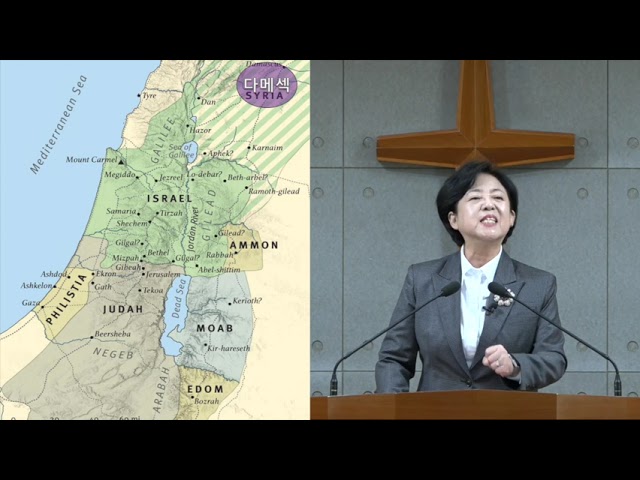
This passage deals with the scene in which God, through Amos, declares that he will judge the surrounding Gentile nations, including Damascus, Gaza, Tyre, Edom, Ammon, and Moab, as well as Judah and Israel. When Israel was under the rule of great powers, it resolved to serve God, but the moment it enjoyed freedom and prosperity it grew proud instead, exploited the poor and powerless, and became corrupt. Before judging his beloved people, God first judged the Gentile nations and gave them a chance to repent, but they never came to understand.

The sermon emphasizes that God begins his judgment at the sanctuary and does not forgive even small injustices, discrimination, and idolatry. In particular, the sin of the chosen people, who ignored God's Law and trampled the weak, is treated as heavier than the sins of the Gentile nations. We must be careful not to believe our own thinking is right and judge others, or become a whip to the world. God is not one who is present only in the church; he is the Lord of justice, who watches over the sins of the whole world and judges them.

We must look back on whether we truly have a better faith than the Gentile nations, and whether we have become believers who are not proud but humbly fear God. Take this opportunity God has given to reflect seriously on whether there is any promise you have failed to keep, and whether you have been proud toward other believers.

Pastor Cho Chun-sook · Oct 8, 2023
Those Who Have Been Persecuted for Righteousness’ Sake
The Sermon on the Mount, Part 8Matthew 5:1-12

Those Who Have Been Persecuted for Righteousness’ Sake

Today's passage deals with the last blessing of the Beatitudes, the concluding part of the Sermon on the Mount that Jesus proclaimed to his disciples: the blessing of those who are persecuted for righteousness' sake. This passage makes us face the reality of the mockery and persecution believers inevitably meet when they fulfill their role as salt and light and proclaim the truth in the world. It proclaims that even when, as the light of the world, they are attacked by evil forces that hate having their filthy sin exposed, they can rejoice and be exceedingly glad, for great is their reward in heaven.

The sermon emphasizes that such suffering is not simply bad luck but a process of training, like God's furnace that refines believers into pure gold. Through the severe persecution and suffering that the apostle Paul and the prophets endured, it shows that if believers are to enjoy rest in the kingdom of heaven like the martyrs, they must endure the trials of this earth by faith. It also warns, through Isaiah's experience, that when we stand before God all our put-on devotion is laid bare, so we must truly repent and live honest and clean lives. Only by being filled with the fruit of the Spirit and becoming gentle and merciful can we fend off Satan's attacks and receive God's protection.

How will we receive and put into practice this amazing truth, that when believers lay down human righteousness and greed and live for God's righteousness, they will at last find true peace and the reward of heaven?

Pastor Cho Chun-sook · Sep 24, 2023
The Peacemakers
The Sermon on the Mount, Part 7Matthew 5:1-12

The Peacemakers

In this passage Jesus proclaims that the peacemakers will be called children of God, and he sets out a concrete way of life: loving one's enemies and praying for those who mistreat you. The passage emphasizes that such love and forgiveness, which seem impossible by human reason and feeling, become possible through the leading of the Holy Spirit, and it teaches that true peace begins with the humility that lays down pride and human righteousness and goes down to a low place.

The sermon points out that believers must first remove the beam from their own eye before they can see the speck in their brother's eye, and it shows that the way of the peacemaker is to repent of one's own shortcomings rather than criticize the faults of others. It also warns that formal, artificially polished worship or devotion is not accepted by God, and it stresses that offering a truly born-again heart as a living sacrifice is what matters. It explains that just as Jesus became the atoning sacrifice, believers too will be praised as children of God only when they embrace one another and take up the mission of restoring relationships.

The sermon asks what kind of people believers are, and whether they can be peacemakers who bring joy and hope rather than people who break the peace.

Pastor Cho Chun-sook · Sep 17, 2023
The Pure in Heart
The Sermon on the Mount, Part 6Matthew 5:1-12

The Pure in Heart

This passage deals with a spiritual state similar to the fear we feel when our hearts are dark and confused, and it emphasizes the spiritual battle believers must fight every day. Just as a beautiful view cannot be seen through a dirty window, if a believer's heart is not clean, it is hard to grasp God's glory and love clearly. So we need the training of brushing off the cobwebs of worldly worry and greed and of overcoming ourselves, and this means that faith has matured beyond mere goodness.

The sermon warns that words and actions shape character, and that a single mistake can bring down trust built up over time. Believers must gain gentleness and sound judgment through the training of putting God's word at the center and laying down their own thinking, and this is conduct that matters enough to expand or tear down the kingdom of God. A process of purifying a sinful heart through hardship and refining is also needed, and this is an essential condition for being faithful according to God's law rather than the world's standards, and for receiving the reward of eternal life.

In light of the words, blessed are the pure in heart, for they shall see God, the sermon asks how believers should purify their hearts and live pure lives.

Pastor Cho Chun-sook · Sep 10, 2023
God’s Time and the Time We Set (20th Anniversary Service)
Genesis

God’s Time and the Time We Set (20th Anniversary Service)

Through the story of Jesus healing a sick man on the Sabbath and the event in which Jacob wrestles with God and has his name changed, this passage deals with the difference between God's time and the time we set. The sick man at the pool of Bethesda clung to ‘my time,’ based on his own experience, and turned away from Jesus' immediate healing, while Jacob was changed from a weak man who ran from his brother in fear into one who struggled with God and prevailed.

We often have an attitude of dealing with God according to our own plans and schedule, already fixed, rather than waiting for his answer. Because of this we put off obedience and delay sharing the gospel, and in the end we are in danger of going home spiritually empty-handed. God knows our weakness and waits patiently, yet when we try to stay in the time we have set for ourselves, we end up in the contradictory situation of missing out on greater grace.

What choices must we make so that, through prayer, we open God's heart, experience the power of the Holy Spirit, and live with a firm faith that rises above the fears of the world?

Pastor Cho Chun-sook · Sep 3, 2023
The Merciful
The Sermon on the Mount, Part 5Matthew 5:1-12

The Merciful

Through the parable of the Good Samaritan, which Jesus told to his disciples and to an expert in the Law, this passage sheds light on the meaning of true love for one's neighbor. Unlike the priest and the Levite, who turned away from a dying man, the Samaritan appears as one who had compassion on him, treated his wounds, and cared for him. The sermon emphasizes that this parable is more than a model of good deeds; it calls us to abandon formal faith and to have a heart that truly knows God.

The priest and the Levite were so focused on their own safety and on formal worship that they left a life to perish, while the Samaritan embraced a suffering man without discrimination. This connects with the love of Jesus, who carried the cross to atone for the sins of humanity, and it shows that believers must not stay only in the Jerusalem of the church but go out into the Jericho of the world and have compassion on souls. The passage points out that what brings God joy is not formal worship and a self-centered religious life, but sincere worship and devotion offered in spirit and truth.

The sermon says that when believers humble themselves and live generous lives like the Samaritan, they can reveal God's love to the world. It promises that when we have a heart of compassion for souls who have not been saved, God will fill us with overflowing love. Now believers must put that love into practice with devotion and resolve, and become holy believers who head out toward Jericho.

Pastor Cho Chun-sook · Aug 27, 2023
Those Who Hunger and Thirst After Righteousness
The Sermon on the Mount, Part 4Matthew 5:1-12

Those Who Hunger and Thirst After Righteousness

In this passage Jesus proclaims the blessings that lie at the heart of the gospel, and in particular emphasizes the state of those who hunger and thirst after righteousness. The sermon points out the dark reality of a world that has fallen into wealth and materialism and is losing its morals and faith. It also criticizes churches and believers for leaning toward splendid buildings or formal worship and neglecting genuine truth and the fullness of the Holy Spirit.

Through the example of King Saul, who lost his throne when he tried to offer a sacrifice as a formality, it explains that God wants knowledge of him and obedience more than sacrifice itself. It emphasizes that just as believers fight for justice in the world, they must long earnestly for God's righteousness, even going through spiritual famine for it. The water of life that Jesus gives is an eternal spring after which one never thirsts again, and it comes from a spiritual thirst that is distinct from the world's temporary satisfactions.

The sermon asks believers to live as those who hunger and thirst after righteousness, drinking the water of life that Jesus gives rather than depending on the world's water. It also asks whether this spiritual thirst can become a channel through which the water of life is shared with other souls.

Pastor Cho Chun-sook · Aug 20, 2023