
Skip to content

Sermons

Wandering Stars
Jude, Part 5Jude 10-13

Wandering Stars

This passage points to the dark reality of a world that more and more lives by instinct alone, like creatures without reason, and compares the spiritual state of people who have left God and are wandering to ‘wandering stars’. People blame others for their own unhappiness and let their character crumble, and they grow spiritually dull and indifferent even to cruel events. A heart that has left God is empty, like a house swept clean, so evil spirits easily enter, and in the end it drifts unhappily, like rocky ground overgrown with thorns.

The sermon points out that the root of this wandering lies in Satan's scheme to separate people from God. Jesus promised to give rest to those who labor and are heavily burdened if they come to him, yet people still carry the world's burdens and roam like wandering stars. Believers must lead those who carry the world's burden of sin and are looking for rest to Christ, so that they find rest in the truth, and must fight on, using suffering as a stepping stone and hoping for God's eternal kingdom.

Through Cain's jealousy and anger, Balaam's greed and pretended faith, and Korah's pride and challenge to authority, it also warns how false choices lead to destruction. Believers must reach true perseverance and growth not through the number of times or years they have attended church, but by grafting the Word into their lives, and must take care not to fall for Satan's temptations. The sermon asks how believers should live so that they become not wandering stars wrapped in the darkness of Satan and false teachers, but beautiful stars that reflect the light of Christ.
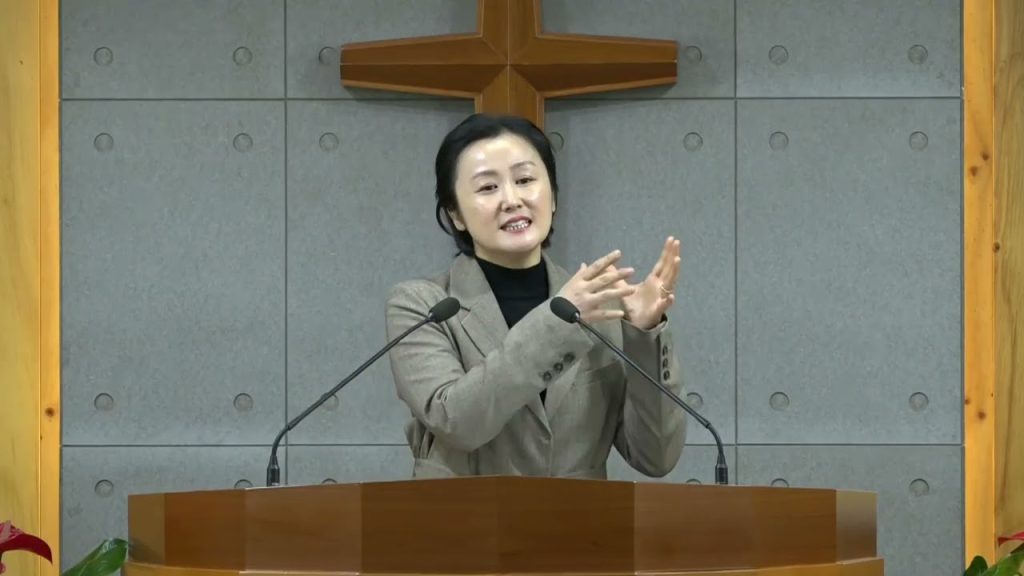
Pastor Cho Chun-sook · Feb 1, 2026
The Choices of Humble Aaron and Proud Satan
Jude, Part 4Jude 6-10

The Choices of Humble Aaron and Proud Satan

Through three events recorded in the letter of Jude, this passage deals with the importance of keeping the order God has set and each one's own place. First, it shows Aaron, Moses' older brother, humbly serving by performing miracles in place of his younger brother, who hesitated to obey because he was slow of speech. Second, through the fallen angels who forgot their beauty and position and rebelled against God, and through the judgment of Sodom and Gomorrah, it makes clear that those who overturned the order of creation received eternal judgment. Finally, it points to the meaning of true humility in the archangel Michael, who, even while disputing with Satan, did not pass judgment himself but respected the Lord's authority.

The sermon points out that miracles reveal a person's nature more than they change the person. Although Aaron did not enjoy greater glory than Moses, he obeyed God's will and served devotedly in a low place, and so received the office of high priest. Proud Satan, by contrast, left the position he had been given and tried to seize God's glory, which led in the end to his falling into the eternal lake of fire. It also warns that the way false teachers despise authority and slander celestial beings belongs in the same vein as those fallen angels. Michael's not rebuking Satan himself but leaving it to the Lord is presented as a model of humility that keeps its own place.

The sermon calls believers to guard against losing their gratitude and growing proud in the place God has set for them. It asks what we must hold on to in life so that we are not swept away by the world's values or Satan's temptations into the sin of overturning the order of creation.

Pastor Cho Chun-sook · Jan 25, 2026
Amaziah’s Pride and Jeroboam’s Prosperity
2 Kings, Part 142 Kings 14:3-4, 23-27

Amaziah’s Pride and Jeroboam’s Prosperity

Through the contrasting fates of Amaziah, king of the southern kingdom of Judah, and Jeroboam II of the northern kingdom of Israel, today's passage shows how God's work differs from human religious common sense. Amaziah, who did what was right in God's eyes, was carried away by small successes, grew proud, and in the end met a miserable death, while Jeroboam, judged an evil king, was used through God's compassion as an instrument to make the nation prosper. This shows that the logic of retribution, in which good people are always blessed and evil people always punished, does not always apply.

We easily tend to think that our good deeds or circumstances are evidence of God's approval or blessing. But visible success is not necessarily the result of God's approval, and having troubles does not mean we have been abandoned by God. This passage emphasizes that God leads history within a sovereignty far greater and vaster than human wickedness or goodness, and that God's complete grace and will matter more than our righteousness or effort.

Rather than focusing on the situation or circumstances we are in, it is important to look at what God has willed. How can we confess that our prosperity or suffering is not our own merit but God's grace, and take the attitude of standing humbly before God?

Pastor Lee Ji-hyun · Jan 18, 2026
God’s Love Without Limits
2 Kings, Part 132 Kings 13:14-21

God’s Love Without Limits

This passage deals with an episode between the prophet Elisha, as he neared death, and Joash, king of the northern kingdom of Israel. Following Elisha's instructions, Joash is told to shoot an arrow toward the east and to strike the ground, but he strikes only three times and stops. Because of this, Joash does not fully destroy Aram but wins only three victories, and Elisha shows sorrow and anger at his half-hearted attitude.

The sermon points out that Joash's actions mirror the way we treat Christ's salvation on the cross. Though we already hold the answer of salvation in our hands, we often cling to our own standard of ‘this is enough’ and offer God a hesitant obedience. It emphasizes that God gives grace in proportion to how much we have prepared and to our faith, and that to win a complete victory, we must throw away the standard of ‘that will do’ before God.

The work of God's love and grace goes on beyond human limits and the boundary of life itself. Despite our own shortcomings and weakness, we must have a faith that relies on God to the end and obeys the Word. If God did not spare his own Son but delivered him up for us all, how should we believe in and follow his endless love?

Pastor Lee Ji-hyun · Jan 4, 2026
Faith Revealed When We Stand Alone
2 Kings, Part 122 Kings 12:1-8

Faith Revealed When We Stand Alone

Noting how hard it is to finish well as the year draws to a close, this passage deals with the life of King Joash, who became king at a young age and repaired the temple. While he was under the protection of the godly high priest Jehoiada, he did what was right before God and accomplished the great work of repairing the temple. But after that protection was gone, he fell back into a compromising faith without removing the high places, the breeding ground of idolatry, and in the end met a miserable death.

The sermon points out that Joash's failure to remove the high places was not a simple failure but a half-hearted obedience that leaned on someone else's faith. Even behind the outwardly beautiful achievement of repairing the temple, he had not removed the idols in his heart, so his faith collapsed as soon as the protection from outside was cut off. It warns that this is no different from believers today who compromise God's commands for their own standards or convenience and live holding on to something like the high places.

True faith must have the staying power to stand alone and hold on to God even when the protection of those who went before us, or our circumstances, are gone. As the new year approaches, the sermon calls us to look back at whose spiritual protection we are sheltering under, and to check whether our faith is ready to stand on its own.

Pastor Lee Ji-hyun · Dec 28, 2025
Love Perfected in Us (Christmas Sunday)
1 John1 John 4:7-12

Love Perfected in Us (Christmas Sunday)

Going beyond the meaning of Christmas, this passage leads us to reflect deeply on the essence of love. It looks at what love is when it is proven by real action and not by words alone, and sheds light on the substance of the love God showed by sending his one and only Son.

The sermon points out that what sets God's love apart from the human sacrifices the world honors is that Jesus did not avoid suffering but willingly obeyed. It also emphasizes that God's love was confirmed when Christ died for us while we were yet sinners, and explains that this love is not a mere feeling but something revealed in reality.

Finally, it makes clear that if someone who professes to love God does not love his brother, it is a lie, and says that only when we love one another do we remain in God and can his love be perfected in us. The sermon asks us to think deeply about how believers can grow further, taking the birth of Jesus as an opportunity, and reveal Christ's love through their own lives.

Pastor Lee Ji-hyun · Dec 21, 2025
Believers Must Search the Scriptures
Jude, Part 3Jude 5-8

Believers Must Search the Scriptures

In today's passage Jude writes to faithful believers, reminding them not to forget the truth they already know and to judge carefully. Through three events, Israel's exodus from Egypt, the judgment of the fallen angels, and the destruction of Sodom and Gomorrah, the passage clearly shows what befell those who disobeyed God. In particular, it highlights the foolishness of the people who, having come out of Egypt, forgot their slavery there, grumbled against God and Moses, and tried to go back, and it warns how deadly a heart that forgets grace and is not thankful can be.

The passage points out that true faith is not simply knowing things but living out the Word. If believers give in to the world's temptations or fears and cannot let go of human righteousness, they lose the opportunity to show the light of Christ to people in darkness. It also reminds us that refusing a pastor's counsel or a brother's correction, and even resenting it, can be an expression of pride that sets itself against God. When we know the truth but do not obey it, we are easily deceived by the false gospel that heretics preach, and that is the road to a heavier rebuke.

We must look back at whether we are living lives that never forget God's grace, moment by moment, but give thanks and obey. In a life where suffering and ease keep alternating, we must become believers who are not swayed by feelings but persevere to the end and are transformed by the renewing of our minds. Today we need to think deeply about what decisions we must make to live according to God's will as we search the Scriptures, and what attitude we should bring to that process.

Pastor Cho Chun-sook · Dec 14, 2025
Contend Earnestly for the Faith
Jude, Part 2Jude 3-4

Contend Earnestly for the Faith

This passage contains the apostle Jude's exhortation to believers to hold firmly to the truth of the faith and fight for it. Jude stresses that believers must live out the uncorrupted gospel the apostles delivered just as it is, without mixing in their own thoughts or feelings. He also warns that when believers fall to Satan's temptations and choose sin, it is not a simple mistake but a conscious choice, so repentance does not come easily and recovery is hard.

The sermon leads us to consider whether believers' hearts have received God's grace and become good soil, or whether they are rocky ground where thorns and thistles grow because of worldly greed and lust. In particular, it points out that conviction about the Word and discernment are essential to protect our souls from false teachers who have slipped into the church and twist the truth, and from the temptations of heresy. Since Satan attacks relentlessly to make believers fall, it says that believers must not let their guard down but stay awake and be led by the Holy Spirit.

The sermon warns that if believers do not contend earnestly for the faith, their salvation can be taken from them. It also reminds us that false truth is a well without water that gives no spiritual satisfaction, and asks us to stand firm in the Word so that the Holy Spirit can be a strong fence around us. Finally, it leads us to reflect on how believers can keep the faith to the very end without being shaken by Satan's schemes.

Pastor Cho Chun-sook · Dec 7, 2025
The Lamp That Never Goes Out
2 Kings, Part 112 Kings 11:1-8

The Lamp That Never Goes Out

This passage deals with the tragic consequences that began when Jehoshaphat, king of the southern kingdom of Judah, took a princess of the wicked northern kingdom of Israel as his daughter-in-law for the sake of a political alliance. He was overconfident that his own firm faith would keep him free from evil influence, but that choice led in the end to his son's corruption and to a crisis for the dynasty of David. It shows that sin does not begin with a resolve to do evil from the start, but with compromising and allowing it ourselves in the midst of conflict.

Once we set foot in the swamp of sin it becomes hard to get out, and the passage warns that one person's choice can bring deadly consequences on their descendants and community. But even amid human failure and the attacks of evil powers, God faithfully kept his covenant with David and secretly protected one life, Joash. This means that God's promise is far stronger than human mistakes or Satan's schemes, and it becomes hope for those who keep the faith to the end.

When we cannot tell whether our choices now are right, can we remember the final day of judgment and look at them objectively? And are we keeping an earnest heart that does not forget the pain and regret that follow sin, so that we can make right judgments?

Pastor Lee Ji-hyun · Nov 30, 2025
A Servant of Jesus Christ
Jude, Part 1Jude 1-2

A Servant of Jesus Christ

In this passage Jude, the brother of Jesus, warns against the Gnostic heresy that was threatening the church at the time, and makes clear what the true identity of a Christian is. At first Jude was not convinced that Jesus was the Messiah, but after experiencing the resurrection and the coming of the Holy Spirit firsthand, he takes up the mission of being ‘a servant of Jesus Christ’. He points out that the Gnostic claim that only the soul is saved leads in the end to moral laxity, and emphasizes that believers must live lives of obedience to the Word.

The sermon explains why believers who have faith must not compromise with the world but preserve their holiness. Because God first welcomed us, we must show a holy character and life worthy of his calling. After sharing the gospel, we must not simply share it in words, but bear the fruit of faith by being kind, thankful, and patient. Believers must step back from the world's temptations and emotions to discern evil, and lead souls by setting an example of living by the Word.

As a special people rescued from death, can we confess wherever we go that we are servants of Christ? And what decision will we make today to live a holy life worthy of God's calling?

Pastor Cho Chun-sook · Nov 23, 2025
Thanksgiving Built on Repentance (Thanksgiving Service)
LeviticusLeviticus 23:39-44

Thanksgiving Built on Repentance (Thanksgiving Service)

Today's passage sheds light on the true meaning of thanksgiving through the feasts of Israel established in Old Testament times. In particular, it highlights the order by which the Day of Atonement had to be kept before the harvest thanksgiving feast, the Feast of Booths, showing God's order of requiring repentance before thanksgiving. This is not simply the arrangement of a calendar; it reveals the spiritual principle that unless a clean heart has been prepared, we cannot fully receive God's grace.

Through the lives of King David and Peter, the sermon explains how thanksgiving built on repentance leads to deeper grace and a new mission. Even after victory, David consecrated himself and stood before God, and Peter, rather than dwelling on the miraculous catch of fish, confessed before the holiness of Jesus that he was a sinner. These examples show that thanksgiving is not simply an expression of joy, but true worship that flows from a pure heart whose problem of sin has been dealt with.

So Thanksgiving helps us see that its meaning goes beyond joy over material abundance, and grows deeper when we first make sure of spiritual cleanness. Repentance is the act of leaving the place of sin, and thanksgiving is the process of restoring grace on that very ground. The sermon asks what true worship is, beyond formal words of thanks: looking back at one's inner life and standing before God with a clean heart.

Pastor Lee Ji-hyun · Nov 16, 2025
Jehu’s Zeal Without Reward
2 Kings, Part 102 Kings 10:15-17,30-31

Jehu’s Zeal Without Reward

This passage deals with the scene in which Jehu, king of the northern kingdom of Israel, judges the house of Ahab and wipes out the worshipers of Baal. Jehu was used as an instrument of God's judgment and pressed zealously ahead, wielding great power, but inside him, rather than true love for God, there was a pride that wanted to display his own might and sense of achievement. Rather than acknowledging that what he did came from God, he prided himself that it was the result of his own ability and zeal, and acted as though he had already received his whole reward.

Jehonadab the son of Rechab, a Gentile, by contrast chose a life of serving God alone rather than worldly security or power. He followed God without hesitation when Jehu questioned him, kept his distance from idolatry all his life, and charged his descendants to hold on to an eternal hope. Although Jehu seemed outwardly to be working for God, his motives came from human righteousness and boasting, so he did not receive true spiritual reward. Instead, he followed in the sin of idolatry that Jeroboam had committed and in the end fell into the way of corruption.

The sermon asks believers to reflect on their motives when they take up God's work. It points out that even if we look devoted and zealous on the outside, if pride and self-boasting are mixed into our hearts, that cannot be the faithfulness God delights in. It reminds us that we must lay aside our own righteousness and work with a heart that gives glory to God alone. The sermon puts questions to the reader, so that they can look back at the motives of their life of faith and devotion, and choose the path of faith that gains the true reward.

Pastor Lee Ji-hyun · Nov 9, 2025