
Skip to content

Sermons

Hezekiah’s Pride Revealed in the Place of Grace
2 Kings, Part 212 Kings 20:16-21

Hezekiah’s Pride Revealed in the Place of Grace

This passage covers the scene in which Hezekiah, after experiencing the remarkable grace of being healed of a fatal illness and having his life extended by fifteen years, receives envoys from Babylon. While enjoying the great blessing and peace God had given him, he shows the envoys, at their request, all the treasures and wealth in his palace, holding nothing back. On the surface this looks like a gracious welcome, but in reality it was an act that put human calculation ahead of God.

The sermon points out that this was the beginning of Hezekiah's pride. He had shown an attitude of testing God by demanding visible signs and sure proof, and once he had received great grace, he cared more about showing off his wealth and power than about giving thanks. God allowed this situation in order to test what was in his heart, and Hezekiah fell into the temptation of holding on to what can be seen rather than to God's unseen work. As a result, even after hearing the prophecy of judgment, he complacently assumed that there would be peace in his own lifetime, and did not repent.

Though his life had been extended, Hezekiah ended it leaving evil fruit behind. The sermon stresses that long life in itself is not a blessing; the true blessing is a life lived with God and full of faith. Through Hezekiah's failure we come to see that in the place of blessing we must not grow proud, but must rely on God alone to the end. The sermon challenges us to treat this very moment as the last chance God has given us, and to reflect on what fruit we are leaving behind.
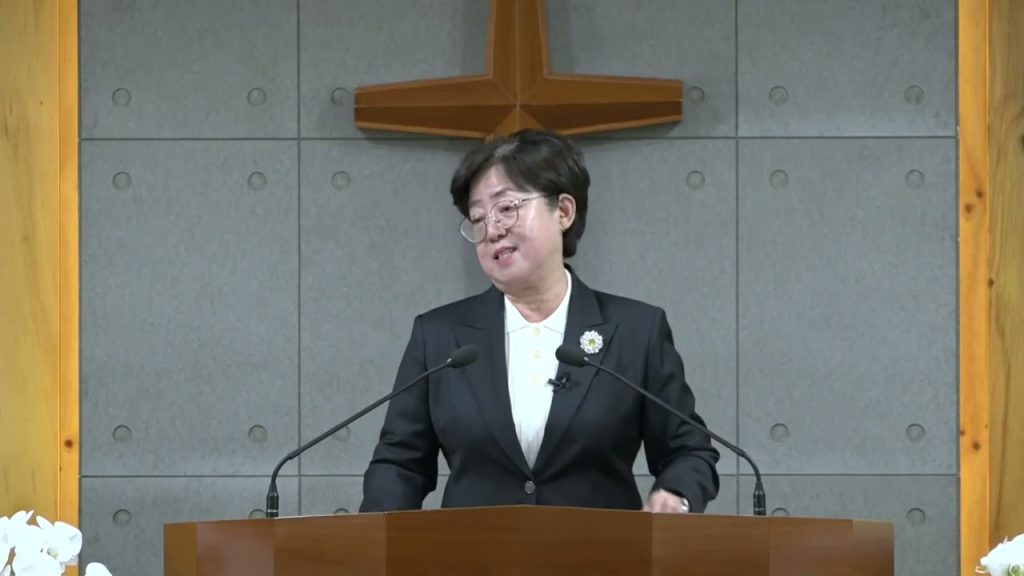

Pastor Lee Ji-hyun · May 3, 2026
The Beginning of the Good News of Jesus Christ
Mark, Part 1Mark 1:1-8

The Beginning of the Good News of Jesus Christ

This passage deals with how the gospel of Jesus Christ began. Drawing on the spiritual knowledge he gained as Peter's interpreter, the writer vividly recounts the deeds of Jesus, who came to this earth as a lowly servant. In particular, the scene at Jesus' baptism, when the Holy Spirit comes down like a dove and a voice is heard from heaven, shows the triune God working together. It stresses that this is not simply one individual's ministry but the moment God's plan of salvation is fulfilled.

Through the life and ministry of John the Baptist, the sermon points to the meaning of true repentance. Though John came from a distinguished family, he lived simply in the wilderness, laid himself aside, and prepared the way for the Messiah. He called not for formal religious ritual but for a repentance that confesses sin and restores one's relationship with God. The sermon also explains the difference between baptism with water and baptism with the Holy Spirit, emphasizing that faith is not mere ritual but a time of decision in which the old self dies and is born again as a new self.

The sermon points out that the church today is losing the truth as it leans toward form and pretense. It warns that boasting of one's own righteousness and refusing to repent, as the Pharisees did, is like being offspring of vipers, and says that believers must admit their weakness and keep laying themselves aside. Since growth in faith takes time, it asks what it looks like for a community to wait for weaker brothers and sisters with love and consideration.

Pastor Cho Chun-sook · Apr 26, 2026
The Zeal of God
2 Kings, Part 202 Kings 19:29-37

The Zeal of God

This passage deals with the life-or-death crisis King Hezekiah faced when Jerusalem was besieged by the vast Assyrian army. At first, rather than relying on God, Hezekiah surrendered by human means and paid an enormous tribute, but this only brought greater threats and confusion. His faith, which had sunk into the false logic and fear that Satan uses, turned back to God only after his human efforts had collapsed.

The sermon stresses that when believers suffer, they must not blame God or cling to the world's methods. When Hezekiah prayed, seeking God's glory and sovereignty before his own safety, God answered his prayer by wiping out the enemy army in a single night. This shows that prayer is not a power that solves problems but a channel that connects us, so that God's zeal can flow. God keeps his children not by human effort but by grace, and faithfully fulfills his word to the end.

The sermon asks what believers are holding on to right now. It leads us to consider whether we are still gripping human methods, which are like a cut power line, or whether we are coming to the place of prayer that connects us to God's power.

Pastor Lee Ji-hyun · Apr 19, 2026
The Meaning of the Lord’s Day (Easter)
John

The Meaning of the Lord’s Day (Easter)

Through the deep meaning of the Lord's Prayer that Jesus taught his disciples, this passage deals with how our relationship with God is restored. Just as Adam set up his own standard of judgment by eating the fruit of the tree of the knowledge of good and evil, and this led to separation from God, human judgment often puts our relationship with God out of joint. So the Lord's Prayer is not simply a form of prayer; it sets out a direction for life that heals the root of sin and restores our relationship with God.

Through his own precious blood, Jesus opened the only way to restore the broken relationship. When the veil of the sanctuary was torn, the way into the Most Holy Place was opened, and this shows God's will: he wants not formal sacrifices but a heart that sincerely loves him. At the center of this restored relationship is Jesus, the Lord of the Sabbath. The Lord's Day is not simply a day for keeping rules; it is the time when church members who come carrying spirits wounded in the world meet the Lord of the Sabbath and are restored.

Worship should not be something we attend out of habit, but a precious time of one-on-one fellowship with God in which our souls find peace. The praise and the Word offered on the Lord's Day are the place where we lay down the pain and worry of the past six days and take in spiritual food. Through the Lord's Day our relationship with God must be restored and the direction of our lives set right; without this peace, it cannot be called true worship. Today we should reflect deeply on how we are restoring our relationship with God through the worship we offer on the Lord's Day, and on what peace we receive through it.

Pastor Cho Chun-sook · Apr 5, 2026
The Kingdom You Enter by Dying [Palm Sunday 2026]
JohnJohn 12:23-33

The Kingdom You Enter by Dying [Palm Sunday 2026]

Today's passage deals with the scene of Palm Sunday, when Jesus entered Jerusalem riding on a young donkey. The crowds at the time welcomed him eagerly, wanting a king who would solve their practical problems, but Jesus declares the way of glory, in which the nations are saved through his death. This shows that it was not simply a festival but the starting point of Jesus' journey to the cross to atone for the sins of humanity.

Jesus says that a grain of wheat must fall into the earth and die in order to bear much fruit, revealing that the kingdom of God works on the principle that only by dying do we live. This means that we must turn down the path of comfort and consolation that we want, and walk with Jesus the path of self-denial and the cross that he walked. Such a life begins not with some grand resolution, but with small training in which our first reaction when we face a problem changes from complaining to calling on God.

Before Jesus' call, we must not answer with our lips alone but answer with our lives and resolve to walk that path. Can our desire to walk with Jesus toward the kingdom of God, where only by dying do we live, lead us onto the path of true discipleship?

Pastor Lee Ji-hyun · Mar 29, 2026
The Fall of Northern Israel and God’s Providence
2 Kings, Part 182 Kings 17:1-6

The Fall of Northern Israel and God’s Providence

This passage deals with the historical event of the northern kingdom of Israel's destruction at the hands of Assyria. Though it was a nation God himself had established, the people, through spiritual corruption and idolatry, chose to depend on worldly power in spite of God's warnings. In particular, the political blunders of Hoshea, the last king, and the worship of the golden calves are read not as a simple diplomatic failure but as the result of an unbelief that betrayed God and loved the world.

The sermon stresses that God's deep providence lies behind this destruction. It shows that judgment brought on by human misjudgment and sin does not mean God has given up; rather, God loved them to the end and left open a way of restoration. Even in an age when the Jews' rejection of the Samaritans was intense, Jesus did not turn away from them but brought them the gospel of salvation, and this proves that God never stopped loving all peoples.

How can we believe that God does not abandon us even in times of suffering and judgment? We also need to reflect deeply on whether we are living without a heart that loves and fears God at the center, leaning instead toward formal religious acts or the logic of the world.

Pastor Lee Ji-hyun · Mar 22, 2026
Believers Blessed Through Christ’s Sacrifice
Jude, Part 8Jude 24-25

Believers Blessed Through Christ’s Sacrifice

Through the lives of Abraham and Joseph, this passage shows how God accomplishes his plans even in human weakness. Through failure after failure on the way to having Isaac, God still made Abraham the father of many nations; Joseph went through the suffering of his brothers' jealousy, slavery, and prison, and became prime minister of Egypt and an instrument for saving his family. These stories of biblical figures are not mere historical records; they are examples that show how God is at work in the trials and temptations believers face today.

The sermon stresses that the direction of believers' lives changes depending on what they choose between the world and God. When Joseph refused the temptation of Potiphar's wife and chose the suffering of prison, God set him in the seat of prime minister; this means that when believers make God-centered decisions moment by moment, God changes their circumstances. Also, Abraham's failure in trying to have a son, Ishmael, by his own will, and Joseph's forgiving his brothers and fulfilling God's prophecy, show that only when people abandon their own righteousness and obey God can they enjoy true blessing.

Because Christ bore our sins and sacrificed himself on the cross, we have received the right to stand blameless before God. But if we do not treasure this amazing grace and pursue worldly gain or comfort instead, we may give in to Satan's attacks and lose the opportunity of salvation. What is the sacrifice of Christ, and his authority, that we must carry in order to stand blameless before God, and how are we keeping his grace now?

Pastor Cho Chun-sook · Mar 15, 2026
Ahaz, Remembered as an Evil King
2 Kings, Part 172 Kings 16:10-16

Ahaz, Remembered as an Evil King

Today's passage tells the story of Ahaz, who left God, relied on idols and worldly power, and is recorded as an evil king. He practiced the worship of Molech, sacrificing his children in pursuit of his own prosperity, and in a crisis he asked Assyria for help instead of seeking God. Even though he had already been promised God's protection through the prophet, he avoided crying out to God on the excuse that he would not test God, and bowed to worldly power.

The sermon points out that Ahaz's actions looked like devotion on the outside but in reality came from thoroughgoing self-centeredness and self-love. By instinct, people easily fall into the logic of giving up what is most precious in order to protect themselves, but God asks of us a love that denies self and entrusts itself wholly to him. Ahaz's refusal to ask for a sign was not humility but a disobedience that did not trust God, and it is no different from the attitude of believers today who avoid prayer or do not want to know God's will.

Worldly power is only temporary, and when God's people stand firm, no oppression lasts forever. The sermon asks by what name believers want to be called before God. What are we holding on to, so that we can stand as the people God wants, wise in that which is good, but innocent in that which is evil?

Pastor Lee Ji-hyun · Mar 8, 2026
Believers Filled with the Holy Spirit
Jude, Part 7Jude 17-23

Believers Filled with the Holy Spirit

This passage warns about what false teachers really are and the confusion they cause in the church, and describes the life of a true believer as being filled with the Holy Spirit. False teachers, servants of Satan, pretend outwardly to preach the truth but actually lead souls to destruction, and believers must keep checking whether their choices have Christ at the center, so that they are not deceived by those teachers' words. Emphasizing that salvation is not a mere declaration but something that shows itself in good character and actions in life, it points out that God looks not at outward appearance but at the thoughts and judgments of the heart.

Through a parable of two servants, the sermon explains that believers' faith makes a difference, like the amount of water filled into a jar. Even if people outwardly receive the same grace, the reward they receive on the last day differs according to their thankfulness and devotion, and the sermon warns that those without the Holy Spirit live by instinct and fall into sin. In particular, it teaches that a mature believer, rather than judging or condemning those who doubt, has compassion on them and embraces them, and that such patience and love become a blessing that in the end lets the church stand unshaken.

The sermon asks in depth how believers filled with the Holy Spirit should discern the temptations of falsehood and embrace a doubting brother or sister, and how they should transform the suffering and strife they meet along the way into something higher.

Pastor Cho Chun-sook · Mar 1, 2026
The Faith of Jotham, Who Endured a Dark Age
2 Kings, Part 162 Kings 15:32-38

The Faith of Jotham, Who Endured a Dark Age

Through the lives of Jotham, king of the southern kingdom of Judah, and Timothy, the disciple of the apostle Paul, this passage sheds light on the value of faithfulness, not of the conspicuous hero but of those who quietly endured their times. In a dark time, when the people were still corrupt and the northern kingdom of Israel was in extreme turmoil, Jotham did what was right before God and held the line of faith, without dramatic reforms or miracles. His life is counted as precious as those of the great figures who opened new eras, and he served as a buffer that held back a collapsing age and passed the thread of faith on to the next generation.

Comparing Jotham's faith with Timothy's life, the sermon conveys how important it is to stay faithful to the end without losing one's direction toward Christ, even if one's life looks plain and ordinary rather than brilliant. The world shines its spotlight only on the winner or the hero, but God uses not only people who change their times but also people who hold them up. Believers' lives do not lose their meaning because they have no visible achievements or go unrecognized where they are; God remembers faith that has quietly endured, and treasures it and uses it as a channel for the next generation.

Even in the dark currents of the last days, what we must do is not blame the times and despair, but stand honestly before God wherever each of us is placed. The sermon asks how believers, even if they never become brilliant heroes, should quietly finish the race of faith and carry out the mission of handing the faith down to the next generation.

Pastor Lee Ji-hyun · Feb 22, 2026
Enoch, Who Prophesied Christ’s Return
Jude, Part 6Jude 14-16

Enoch, Who Prophesied Christ’s Return

Today's passage deals with a situation in which false teachers deny Christ's humanity and salvation through the cross, and emphasize only spiritual knowledge. As in the scene where Paul says farewell to the elders, or in what Jude warns of, believers must remain in the Holy Spirit and discern evil people and spirits, whichever way the world may go. It tells us that God will do anything for the salvation of his people, and that those who persecute the church and hinder God's work will surely be judged.

Enoch is introduced as a man who, through understanding given by the Holy Spirit, prophesied Christ's return and judgment. He was taken up to heaven without seeing death, which suggests that believers who have received Christ will also have their bodies changed and will meet the returning Lord. The line of faith runs from Adam through Enoch, Methuselah, and Noah; they proclaimed the world's judgment, but were met with people's indifference and mockery. Believers today must still boldly proclaim Christ's return and judgment, and live lives set apart from the ungodly world.

When on the last day we stand before the judgment seat, before the book in which all our words and deeds are recorded, what choice will we make? We ask how we will live as godly people, right now, in order to enter the kingdom of heaven God has prepared.

Pastor Cho Chun-sook · Feb 15, 2026
Uzziah, Who Failed to Enjoy the Grace He Received
2 Kings, Part 152 Kings 15:1-7

Uzziah, Who Failed to Enjoy the Grace He Received

This passage covers the successful early years of the reign of Uzziah, king of the southern kingdom of Judah, when he sought and relied on God and led the nation to strength and prosperity, and how later, as he grew powerful, his heart became proud, he sinned against God, and he rushed toward ruin. Under the influence of his mother and his spiritual mentor Zechariah, he did what was right before God and received marvelous help, but his attitude degenerated into exalting himself, and he did not acknowledge his abilities and position as grace from God.

Through the incident in which Uzziah, as king, tried to burn incense himself, a task only priests could perform, and was struck with the curse of leprosy, the sermon points out that pride was the root reason he could no longer enjoy grace. It warns that treating the grace God has given in answer to prayer as a right we are owed, or being so absorbed in worldly success and comfort that we forget God, leads in the end to spiritual ruin. It also stresses that having many visible worldly possessions does not make a successful life, and that we can enjoy grace to the end only when we keep a humble heart that is thankful for it.

The sermon asks whether believers are now enjoying with thankfulness the grace they have received from God and using it as an instrument for God's kingdom, or treating it as a blessing they deserve and simply consuming it.

Pastor Lee Ji-hyun · Feb 8, 2026