Skip to content

Sermons

The Ignorance of Those Who Forsake God’s Wisdom
Ecclesiastes, Part 14Ecclesiastes 7:19-29

The Ignorance of Those Who Forsake God’s Wisdom

Solomon was a man who governed his people by the wisdom God had given him and handed down judgments famed for their insight. Yet as his power grew, he took foreign women as wives and lent his ear to flattery, until his wisdom came to smell of pride and lust.

This was the result of mistaking grace for his own righteousness. The moment a person sets the heart on human praise, grace is pushed aside, and where God has been abandoned, greed and idols move in where discernment once stood. Solomon himself later came to see that those years had been in vain.

God’s people must not set their hearts on what others say, but look to God alone. Whoever pleases God can escape what is evil, while the one who forsakes wisdom is caught in a snare of their own making. Before frost settles on their heads, now that they have heard the word, they need to turn back.
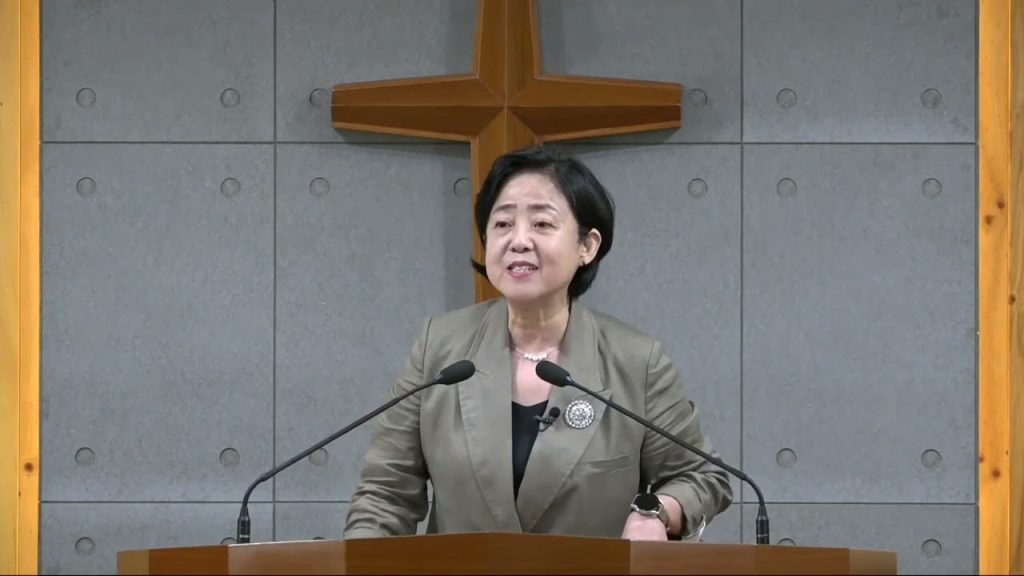
Pastor Cho Chun-sook · Jul 14, 2024
Wise or Foolish?
Ecclesiastes, Part 13Ecclesiastes 7:8-18

Wise or Foolish?

As the years go by, a child who has studied faithfully over a long time and a child who crams only to scrape through exams come to lead lives of a different quality. So it is with life. There are times when hard work does not bring what one hoped for, and those who have lived honestly may find themselves the more discouraged.

To say that the former days were better than these is not wisdom. A faith that dwells on the past instead of living fully in the present is itself unbelief. That God has set prosperity and adversity beyond human reckoning means that life, in the end, rests with him.

Counting oneself overly righteous or overly wise, and being overly wicked or foolish, alike lead a person to ruin. Salvation comes not through one’s own righteousness but through the merit of Christ and God’s election. The wise are those who acknowledge their weakness and live in humble reverence for God.

Pastor Cho Chun-sook · Jul 7, 2024
In the One Who Gives Me Strength
Philippians, Part 9

In the One Who Gives Me Strength

Moses shrinks from God’s call in fear. He would have to contend with Pharaoh and prevail, and trials he might have borne on his own grew far heavier now that he had to answer for the faith of the people as well. Yet the people, having come through the ten plagues and the miracle of the Red Sea, treat that grace as something of their own, and then complain against Moses over a mouthful of water.

The most dangerous moment comes just after great grace has been received. Those who are not thankful will keep pressing for something more. Moses could not release that people from his heart, and so he grew angry; tripped by his hurt, he did not in the end enter the Promised Land. The apostle Paul, by contrast, confesses even in prison that he has learned to be content in whatever circumstances. He kept his own suffering apart from his calling to preach the gospel, and released that suffering from his heart.

It is love for God’s people that makes one stumble before them, not a lack of it. Yet one who cannot compose those feelings will fail in everything. Those who bear their calling in humility receive strength and peace from God, and come to the confession that they can do all things in him who gives them strength.

Pastor Cho Chun-sook · Jun 28, 2024
A Good Name Is Better Than Precious Ointment
Ecclesiastes, Part 12Ecclesiastes 7:1-7

A Good Name Is Better Than Precious Ointment

Joshua obeyed, the walls of Jericho fell, and his name became known among the nations. Until the shout went up, the people made no sound at all, and after that obedience God himself raised Joshua’s name high.

A name carries a person’s faith, character and the years they have lived. God honors the name of one who has lived according to his will, but service offered to win human praise, however splendid it may look, bears no fruit. Just as the fragrance of costly perfume lasts only a moment, so an empty name that exalts people soon fades away.

Greed and bribery bring down even the wise and discerning. The pride that set out to make a name for itself is left at last as ashes, but whoever lives for the name of God comes to be named alongside it. The word calls believers to use their own names for good, for the sake of that name, the most beautiful in all the world.

Pastor Cho Chun-sook · Jun 9, 2024
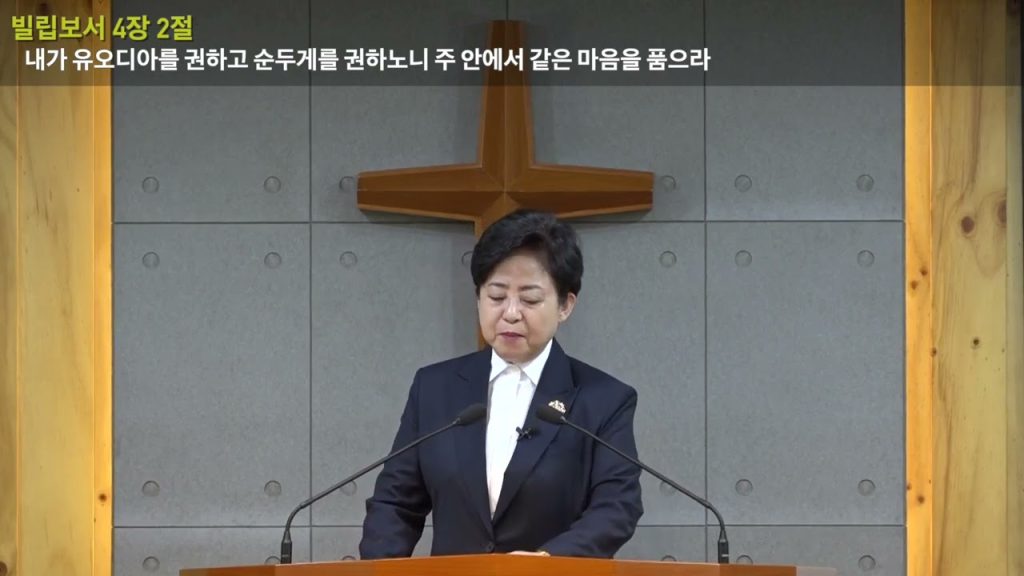
Be of the Same Mind in the Lord
Philippians, Part 8

Be of the Same Mind in the Lord

John said he loved Jesus, yet at the cross fear drove him to betray him. Only later, when he saw with his own eyes Christ seated on the throne and the book of life, did he come to recognize his sin and the faith he had failed to show that day.

Sin is not forgotten as time passes; the more faith grows, the more clearly it comes into view. The quarrel between Euodia and Syntyche arose for the same reason. Each put her own judgment and pride first, saying, “This is for the work of God,” while underneath lay an unwillingness to bend her own will.

The church is not a place where matters are settled by worldly knowledge and self-assertion. Where salvation is not at stake, those who give way, leave the matter to the Holy Spirit and quietly bear with it will find that God resolves it in his own time. A life lived with such forbearance is recorded just as it was in the book before the throne, and God is watching that life.

Pastor Cho Chun-sook · Jun 2, 2024
Those Who Cannot Enjoy Even the Grace They Have Received
Ecclesiastes, Part 11Ecclesiastes 6:1-12

Those Who Cannot Enjoy Even the Grace They Have Received

Uzziah became king at sixteen and feared God. He won his battles and made the nation great and strong. But as his fame spread as far as the border of Egypt, he slowly began to change, and came to regard his success as the fruit of his own wisdom and strategy. In the end he went into the temple to burn incense himself, an offering only the priests could make. Azariah the priest pleaded earnestly with him, but he would not listen.

Pride does not arrive in a single moment. Wealth and power that can be seen, and the praise of others, gradually cloud a heart that once gave thanks to God. Refusing to heed the priest shows that the heart has already passed over to Satan. Uzziah was struck with leprosy on his forehead as judgment. He was shut away in a separate house until the day he died, unable to enjoy a king’s authority, and was not laid in the royal tomb.

However great the grace someone has received, if they forget to give thanks and grow proud, they cannot enjoy it and it is taken from them. God did not cast Uzziah aside from the beginning; it was his own choice that damaged the relationship. Those who treat the grace they have received as a debt and live in thankfulness remain God’s people to the end.

Pastor Cho Chun-sook · May 26, 2024
God’s People Who Cast Their Heavy Burdens on the Lord
Ecclesiastes, Part 10Ecclesiastes 5:10-20

God’s People Who Cast Their Heavy Burdens on the Lord

Solomon says that whoever loves silver will never be satisfied with silver. He had known every kind of wealth and power, and he speaks these words because he had learned at first hand that greed is a mire from which, once a person has fallen in, there is no climbing out.

The story of two brothers who found a lump of gold shows this. Once they had divided the gold between them, each found himself hating the other, and they threw the gold into the river. The trouble lay not in the gold but in the human heart that changes in its presence, and that greed is, in the end, something Satan plants there.

People come into the world naked and leave it naked, taking with them nothing of all they have toiled for. Whatever wealth is gained, then, must not be clutched but shared, scattered abroad and given to relieve the needy. Life’s heavy burdens, too, must be laid on Christ rather than shouldered alone, for only then is true peace to be found.

Pastor Cho Chun-sook · May 12, 2024
A Fool’s Voice Comes with Many Words
Ecclesiastes, Part 9Ecclesiastes 5:1-9

A Fool’s Voice Comes with Many Words

Those who go into the temple are told to guard their steps and not to speak rashly. To listen to the word is better than to offer many sacrifices, and whoever has made a vow should not be slow to pay it.

God is in heaven, and man is on earth. Words spoken in haste and vows left unkept are sin in themselves. What set Abel’s offering apart from Cain’s was not the gift that was brought but the life each had lived from day to day.

There is no cause for surprise at those who oppress the poor and trample on justice, for one higher than they is watching over them. May God’s people be those whose words and deeds agree, keeping the vows they have made.

Pastor Cho Chun-sook · Apr 28, 2024
A Cord of Three Strands Is Not Quickly Broken
Ecclesiastes, Part 8Ecclesiastes 4:7-16

A Cord of Three Strands Is Not Quickly Broken

At the end of his life, Solomon comes to realize that there is not a single person with whom he can share what is truly in his heart. He had power and wealth, yet he spent his wisdom on establishing himself and left his people in hardship, and after his death the kingdom was torn in two. David, by contrast, lived much of his life on the run, yet he still strove to keep himself from sin before God and gave himself up to protect his people.

What is amassed in this world crumbles like a sandcastle, but faith built up in walking with God, like a cord of three strands, does not break. With a faithful brother in the faith at one’s side, two can hold each other up and stand unshaken even when Satan tempts them. Whether it is wealth or position, the one who has gathered it for himself alone is left with no such brother.

Neither the king who enlarged his lands nor the king renowned for wisdom is remembered once a generation has passed. What is not forgotten is not achievement but only faith given in devotion to Christ. To build up those nearby in humility and love, forming bonds of faith like a cord of three strands, is the way an empty life becomes a life of true worth.

Pastor Cho Chun-sook · Apr 21, 2024
The Holy Spirit, Our Comforter
Ecclesiastes, Part 7Ecclesiastes 4:1-6

The Holy Spirit, Our Comforter

Though God took from Job his wealth, his children and his health, Job did not let go of his faith. Doeg, by putting to death eighty-five priests and the people of the town of Nob, took his stand on the side of the world. Rehoboam, Solomon’s son, rejected the people’s plea to lighten their heavy yoke, and so tore the kingdom in two.

Comfort offered in words alone is no comfort at all. Those who will not share what they have find no one to comfort them, and after death they come under God’s judgment. But those who, like Job and Paul, have given themselves to the gospel have the Holy Spirit with them, comforting them at every moment.

The Holy Spirit is a protector stronger than any power in this world, and he gives a true comfort that not even parents can give. Solomon, for all the wealth and power in his grasp, looked back with regret on a life spent with an anxious heart; yet those who go through life with wealth in one hand and faith in the other leave Satan no foothold at all. Only a life of faith lived today will leave no regret at its end.

Pastor Cho Chun-sook · Apr 7, 2024
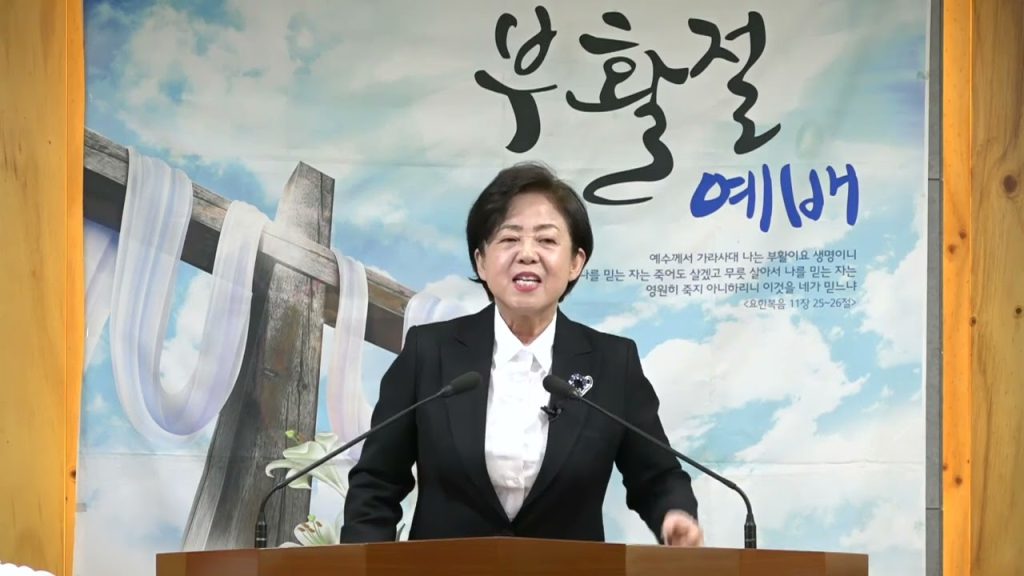
As the Father Has Sent Me, So I Send You

As the Father Has Sent Me, So I Send You

In the agony of nails driven through his hands and feet, Jesus said, “It is finished.” Three days later he rose from the dead and appeared first of all to Mary Magdalene.

The disciples saw the empty tomb, yet went quietly home without any great rejoicing. Mary, by contrast, took Jesus for an ordinary man, yet she would not leave the place, and in the end she met the risen Lord face to face. God looked not at the measure of her faith but at the sincerity with which she held on to the end.

The resurrection shows that there is an eternal life that death does not bring to an end. The disciples had locked the doors for fear of the Jews, and only after they had seen the risen Lord for themselves did they cast off their fear and come forward as his witnesses. Those who believe in that resurrection are not afraid of the world and can proclaim the gospel boldly.

Pastor Cho Chun-sook · Mar 31, 2024
Created to Fear God
Ecclesiastes, Part 6Ecclesiastes 3:11-22

Created to Fear God

At death a person is cut off from the world entirely. There is no coming back to finish what was left undone, and nothing more that can be done for one’s family. Beast and human alike draw breath and return to the dust, but they differ in this: the spirit of a person goes up to God, while the spirit of the beast goes down into the earth.

If someone who bears a holy spirit lives like a beast, that sin will be judged when they meet God. Hezekiah was given fifteen more years after a mortal illness, and the son born to him in that time was Manasseh, who set up idols in the temple and committed the evil of making his children pass through the fire. In the story of the rich man and Lazarus, too, the rich man who had lived in luxury on earth begged in hell for a single drop of water, while Lazarus, who had gone hungry, forgot every earthly sorrow in Abraham’s bosom.

Since no one knows what tomorrow will bring, all a person can do is live today in goodness and honesty. No one should wound those close to them for the sake of their own feelings and pride; while there is still life, they must love, forgive and share. Whoever fills today with faith in this way has no fear of death, and even on this earth tastes beforehand the peace of heaven.

Pastor Cho Chun-sook · Mar 10, 2024