
Skip to content

Sermons

A Shadow Cast in the Midst of Glory
1 Kings, Part 131 Kings 10:4-10

A Shadow Cast in the Midst of Glory

This passage covers the Queen of Sheba, who heard of Solomon's wisdom and fame and traveled a long way to visit Jerusalem. The queen was deeply moved by the well-ordered national system under Solomon's rule and by his wisdom; she praised God and brought enormous gifts. This shows that Solomon's life, made by God's grace, became a channel that revealed God's glory even to the Gentiles.

Behind this glorious scene, however, it comes to light that Solomon was walking the path of compromise, taking God's commands lightly, trading with Gentiles and even handing over land. God did not stop Solomon at once when he sinned but left him alone, both out of a heart of love that waited for him to repent and return, and in order to draw, through his life, those who would come to God. We look back on whether, though we have already received much grace, we still demand that God show us what his will is, or pursue worldly success and prosperity and lose sight of God.

This passage tells us that, to connect the grace we have already received with the blessing of salvation, we must turn the direction of our lives completely around and live in obedience to God's commands. What question is it putting to us?
Pastor Lee Ji-hyun · Oct 6, 2024
The Love That Speaks of Judgment
1 Kings, Part 121 Kings 9:1-9

The Love That Speaks of Judgment

This passage covers Solomon standing before God after completing the building of the temple. Solomon prays, believing that since he has built the temple by his own efforts, God's promise will be kept. But God sets out a condition more important than the success of the temple building: to keep one's heart whole, as David did, and to obey God's statutes.

God warns that however beautiful the temple is, it can be destroyed if the people lose the heart of the covenant and disobey. This is a message of love, spoken not because he wants judgment to come, but to lead the people out of the place of sin and into the place of salvation. Yet while Solomon prayed for the sins of the people, he did not repent of his own sin, especially the matter of having foreign wives.

Through Solomon, who did not first look at his own sin but only demanded the promise, God shows that prayer offered without true repentance can instead become a warning of judgment. The sermon asks believers to examine themselves so that they do not grow proud, drunk on a sense of achievement, and to offer honest prayers.

Pastor Lee Ji-hyun · Sep 8, 2024
The Temple Being Built Together
1 Kings, Part 111 Kings 8:27-30, 56-61

The Temple Being Built Together

Today's passage contains the prayer and blessing Solomon offered to God after completing the temple. Solomon confesses the infinity of God, whom heaven and earth cannot contain, and declares that the temple is not a mere building but the place where God hears and meets his people's prayers. At its heart is his prayer of intercession: that when the people suffer because of sin and sincerely repent and pray, God will forgive and restore them in his justice and mercy.

This passage leads us to reflect deeply on what it means for us to walk before God ‘with all our heart’. It asks what true faith is, the faith that obeys God's will beyond our understanding, as Abraham did when he offered Isaac. It also shows how, though salvation is given wholly by grace, our lives, as we respond to that grace and walk the path of sanctification, can be in harmony with God. It emphasizes that the temple is now not a building but believers united with Christ, and that our whole lives must become the ground that bears witness to God.

Relying on God's grace, how can we carry out our mission as the temple through the relationships in which we meet one another? We invite you to consider together what a true temple looks like, one in which God's work is revealed in every area of life.

Pastor Lee Ji-hyun · Aug 25, 2024
Where God Dwells
1 Kings, Part 101 Kings 8:12-21

Where God Dwells

This passage begins with the question of whether the word that God would dwell in the thick darkness conflicts with the statement that a temple was built as a place for him to dwell forever. Generally light symbolizes God and darkness stands for evil, but in many places in the Bible God is present in thick darkness. This shows that human wisdom cannot fully know the being of the infinite God.

The temple is a place fit for God to put his name, a place granted where God himself is present. But the passage emphasizes that the temple is not merely a building, and that God is with his people only when his covenant with them is faithfully kept. When the people of Israel broke the covenant, the temple was destroyed, and the same obedience and faith are required of us today.

The sermon asks how we are welcoming God, who is everywhere and loves us. It leads us to consider what it looks like to become humble before God's infinity, obey his word, and keep growing to the end.

Pastor Lee Ji-hyun · Aug 18, 2024
The Place of Eternal Atonement and Grace
1 Kings, Part 91 Kings 8:1-11

The Place of Eternal Atonement and Grace

This passage covers Solomon moving the ark of the covenant into the completed temple. At this important turning point, from the age of the tabernacle to the age of the temple, Solomon made all the furnishings new but moved the ark of the covenant just as it was, the one used since the days in the wilderness. This emphasizes the importance of unchanging truth and stands in contrast to the way the world ignores what is eternal.

Through the qualities of the acacia wood from which the ark was made, the sermon holds up a mirror to who we are. This tree, which grows in the desert, looks worthless on the outside, but it has tough roots and bark. God chose such rough and twisted wood, shaped it, overlaid it with pure gold, and placed it at the center of the Most Holy Place. This shows that when we shape our hearts and are clothed in the grace of Jesus Christ, we can become instruments that please God. The mercy seat, the lid of the ark, also symbolizes God's mercy that forgives sin and the atonement of the cross.

God put nothing in the ark besides the two stone tablets. This shows that God's concern is not with miracles or symbols of grace, but with the covenant and his word alone. We must not make anything other than believing and following God's covenant the object of our faith. When God's glory filled the temple as a cloud, the priests felt his presence so strongly that they could not stand to minister. How will we stand firm on God's covenant that never changes, and stand humbly before his glory?

Pastor Lee Ji-hyun · Aug 4, 2024
The Exodus: History or Myth?

The Exodus: History or Myth?

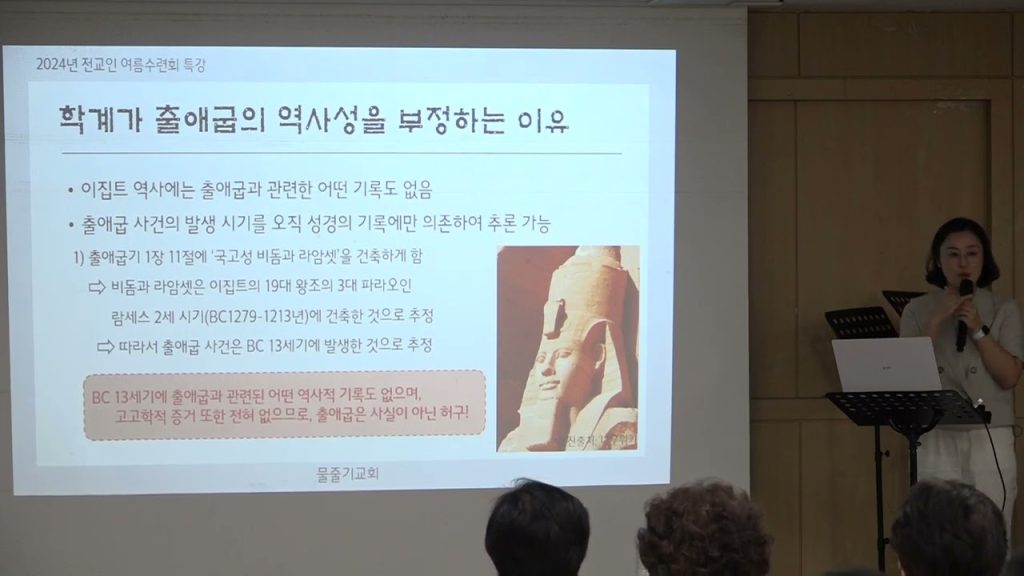
This passage examines archaeological and textual evidence to show that the Exodus was not simply a myth but a historical fact. Scholars dismiss the Exodus as myth on grounds such as the absence of records from the time of Ramesses II, but artifacts from the Middle Kingdom period that match the order of the biblical record are being found. A site thought to be Joseph's tomb, traces of canal works on the Nile, and the text of an Egyptian sage's warnings all contain things that fit the biblical account remarkably well.

In particular, the archaeological traces of the period when the people of Israel were exploited as slaves connect with traces of a sudden mass departure from Egypt after the ten plagues. This evidence shows that the Exodus was not an accident but an event thoroughly planned according to God's covenant with Abraham. If this event were not historical fact, the credibility of Jesus explaining his own ministry by comparing it to the Exodus would also collapse.

When the biblical record is shown to be historical fact, beyond mere parable or lesson, we can think again about what the foundation of our Christian faith is. We invite you to consider together what assurance God's work of salvation, actually carried out in history, gives our faith, and why the reasoning of scholars who try to turn away from this fact is dangerous.

Pastor Lee Ji-hyun · Jul 27, 2024
The Miracle of the Red Sea and the Location of the Real Mount Sinai

The Miracle of the Red Sea and the Location of the Real Mount Sinai

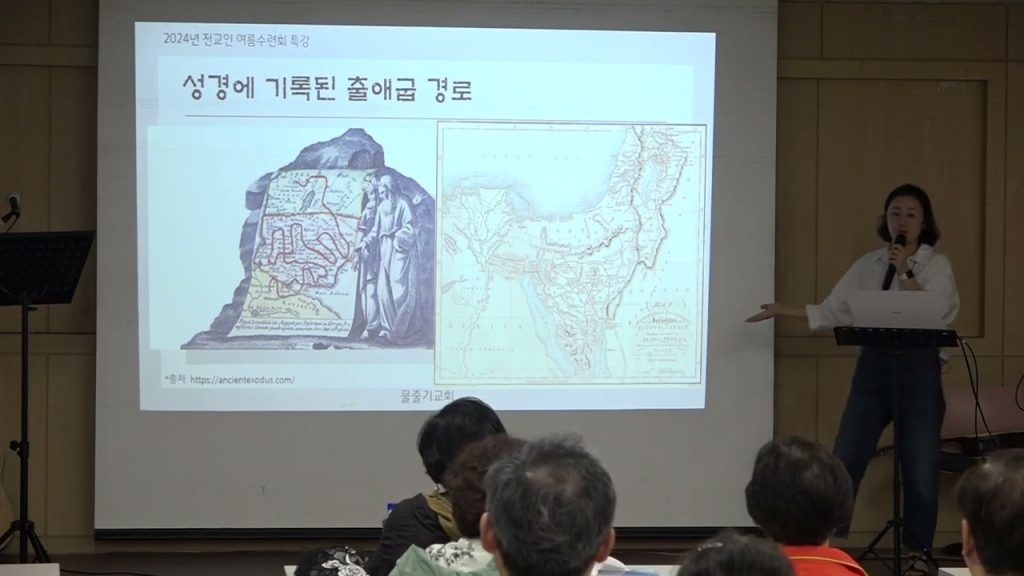
This passage points out the geographical and biblical contradictions in the traditionally held view that the Exodus route passed through the Sinai Peninsula and the Gulf of Suez. Considering the meaning of the Hebrew word translated as Red Sea and the size of the sea the Bible describes, it argues that the Gulf of Aqaba fits better than the shallow lakes of the Nile Delta or the traditional Sinai Peninsula route. It also explains that the coastal terrain at Nuweiba on the Gulf of Aqaba matches the biblical record remarkably, and that archaeological clues support this.

It likewise proposes that Mount Sinai is likely not the traditional Mount Sinai but Jabal al-Lawz in the Arabian Peninsula. This mountain meets many of the conditions the Bible requires, such as the boundary around the mountain, traces of an altar, flowing water and a cave, and its name's meaning and topographical features are seen as connected with the events of the Exodus. This geographical re-examination goes beyond simply finding a location; it is an attempt to confirm the reality of the place where God worked.

While presenting a great deal of archaeological evidence and geographical analysis, the sermon emphasizes that in the end human knowledge and logic cannot fully replace faith. It leads us to reflect on whether the evidence God has given leads us to faith, or instead exposes our own ego. Under the word that those who have not seen and have believed are blessed, with what attitude are we receiving this word?

Pastor Lee Ji-hyun · Jul 27, 2024
The Work of God and the Work of Man
1 Kings, Part 8

The Work of God and the Work of Man

Through the ‘sandwich technique’, in which a short record of Solomon's palace construction appears in the middle of the account of his building the temple, this passage deals with where our priorities should lie, between God's work and the work of the world. That the palace, which was larger than the temple and took longer to build, is recorded relatively briefly in the Bible shows that the center must be not human achievement but God's history of redemption.

Through the meaning and use of the temple furnishings, such as the bronze pillars and the bronze sea made by the Gentile craftsman Hiram, it also explains how believers must stand before God with a heart of purity and sacrifice. The pillars set up at the entrance of the temple lead us to confess that it was established not by human strength but by God's power, and the rite of washing with water symbolizes the process of repenting of sin and coming to God.

As the temple where God dwells, we look back on how we are building and tending our own lives. When our small lives are set within God's long history, by what name do we want to be recorded, and how should we live?

Pastor Lee Ji-hyun · Jun 30, 2024
The God Who Fulfills
1 Kings, Part 7

The God Who Fulfills

This passage covers the historic scene in which Solomon begins building the temple 480 years after the people of Israel came out of Egypt. The change in the place of God's presence, from the tabernacle to the temple, is not simply the expansion of a building; it shows the faithfulness of God, who quietly fulfilled his covenant over nearly 500 years.

The structure and building process of the temple faithfully reflect the design and pattern God set, which emphasizes that it was not something humans made as they pleased. God values the obedience practiced within the temple and the attitude of keeping his statutes more than the temple building itself, and reveals that the temple is a place that keeps peace and quiet. This true meaning of the temple is completed through Jesus Christ, and in the end it reminds believers that they themselves are the temple in which God's Holy Spirit dwells.

Through this long history, we confirm that God's promises are never broken but are surely fulfilled. How, then, can we guard in our lives the center of peace and presence that God has set, and respond with obedience that stays unchanged to the end?

Pastor Lee Ji-hyun · Jun 16, 2024
Worship That Serves One Another

Worship That Serves One Another

This sermon begins by appreciating the order of God's creation through the natural scenery of the outdoor service and the changing of the seasons. Drawing on the Greek roots of the word, it explains that the essence of worship is not simply the act of bowing down, but carries two meanings that include serving and ministry. It emphasizes that worship is true when adoring God and believers serving one another are not separated but in harmony.

Comparing the peace offering of the Old Testament with the Lord's Supper in the New Testament, it shows that both hold together the restoration of our relationship with God and fellowship among believers. In particular, it points out that the Lord's Supper is not a mere ritual but a community of sacrifice in which believers remember Christ's death, wait for his return, and share with one another. While acknowledging that conflicts can arise in the church, it urges that believers are people who must lay down their own interests and work together.

It says that serving always involves sacrifice, and that in this process we must not be overcome by evil but overcome evil with good. It leads us to look back on whether our service comes from a sincere heart rather than a desire for reward, and makes clear that love for our neighbors is the result of salvation. The sermon presents a life in which worship toward God and service toward our neighbors are woven into one as living worship. It asks how believers should fill their lives on this earth through a worship of sacrifice that offers their whole selves, and how they should devote themselves to one another.

Pastor Lee Ji-hyun · May 19, 2024
The God Who Prepares
1 Kings, Part 61 Kings 5:1-8

The God Who Prepares

Today's passage describes how Solomon worked with Hiram king of Tyre as he prepared to build the temple. Hiram, continuing from the days of David, kept up friendly relations with Solomon and supplied the cedar and craftsmen needed to build the temple, and through this Solomon systematically secured the labor and materials the temple required. This process is portrayed not as a mere political deal or trade, but as the sacred work by which the covenant God made with David is being fulfilled through Solomon.

The sermon emphasizes that for the mission of building the temple, God prepared a mission and resources suited to each one's place: David, Solomon, and even the Gentile Hiram. Just as David gathered and prepared wealth through the instruments of war, God governed the currents of the age and the hearts of people to set every condition for building the temple perfectly in place. Also, the contract Solomon made with Hiram by exercising his wisdom, and the way he managed the laborers, were the fruit of the wisdom God gave, showing that God accomplishes his work through people even where they can claim no credit for themselves.

The mission we must carry out in the last days is to hold on to the word of truth in this dark world and lead even one soul into the light. We are led to consider how we recognize the mission and the times God has given us, and how we will faithfully carry out that mission with the resources and wisdom we have been given.

Pastor Lee Ji-hyun · May 5, 2024
The Prosperity of Solomon
1 Kings, Part 51 Kings 4:20-25

The Prosperity of Solomon

This passage deals with the administrative system of Solomon's reign and the vast prosperity the people enjoyed. Through the differences from David's reign, it examines how Solomon organized the state, restructured the local officials and strengthened a centralized system. While these policies were wise in some respects, the sermon points out that an unequal tax structure between the tribes and the exemption granted to the tribe of Judah left the cracks that later split the kingdom.

The sermon emphasizes that the peace and abundance Solomon enjoyed were the fulfillment of God's covenant and blessing. But Solomon's military policy of keeping many chariots and horses in violation of God's Law shows how dangerous human wisdom can become when it overrides God's command. What God desires is not dependence on the world's power, but relying on God alone and standing as a set-apart kingdom of God.

When we face practical difficulties or cracks in the course of our devotion and service, can we take them as an opportunity to connect them with God's work? Rather than being content by fitting ourselves to the world's standards, we consider what decision we must make to walk the path of humble obedience that God requires.

Pastor Lee Ji-hyun · Apr 14, 2024