

Skip to content

Sermons

The Wisdom of Believers Who Choose Blessing (New Year’s Eve Service)
DeuteronomyDeuteronomy 4:1-9

The Wisdom of Believers Who Choose Blessing (New Year’s Eve Service)

This passage is the scene in which Moses proclaims to the people of Israel that keeping the statutes and commandments is the shortest way to receiving blessing. God promises that when the people hear his word and obey, he will protect and bless them, and the passage emphasises that this is not an unconditional work but a protection given when we live within his word.

The sermon points out that a pastor's heart striving for the growth of church members can sometimes turn into a greedy desire to take God's place. When the sacrifice of the cross and the devotion of ministry are taken for granted and not met with thanksgiving, God instead brings rebuke and judgment. And just as those who close their hearts, like Judas Iscariot, are driven out of the place of blessing, God is not shaken by human mockery or unbelief.

So believers must lay down the feelings of judging or grieving over other people's choices, and entrust their hearts to God alone and pray. Since God blesses those who give thanks and judges those who keep their distance, we need the wisdom to cast off our own righteousness, to help wisely those who draw near to the Word, and to pray for those who stand back and watch. What God wants is not our emotional involvement, but an obedient faith that relies on God alone.
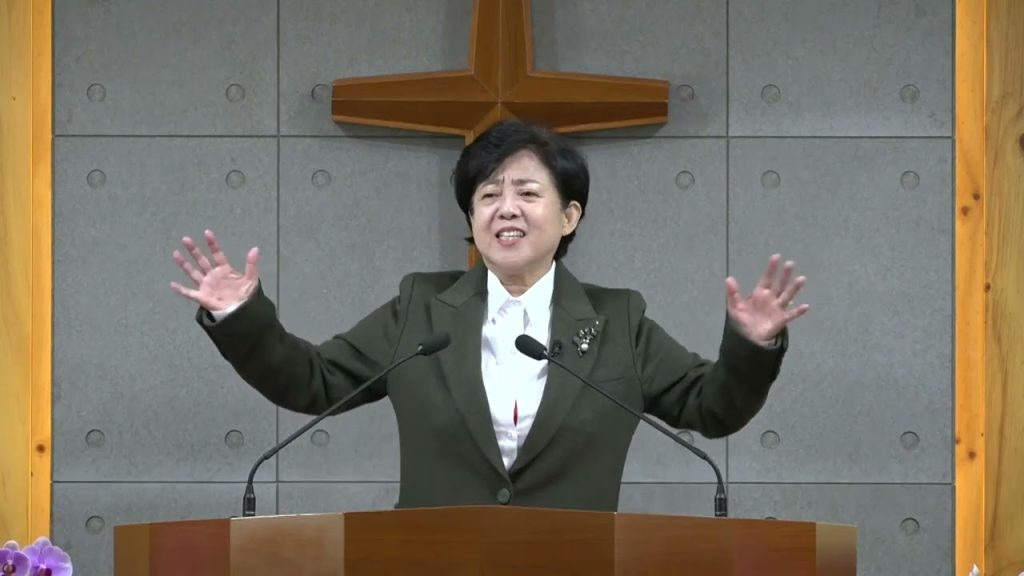
Pastor Cho Chun-sook · Dec 29, 2024
God Who Rules Over Satan
Ecclesiastes, Part 19Ecclesiastes 9:13-18

God Who Rules Over Satan

The world shows us evil people using technology to harm life, and a reality in which committing sin is far easier than holding on to what is good. As the standards of education and morality collapse and parents and the church fail to judge within the truth, people are losing common sense and discernment. Amid the currents of this fallen world, keeping the eternal truth demands a fierce spiritual battle that may at times mean risking one's life.

Through the story of the poor wise man who saved a small city and the event of David defeating Goliath, the sermon sheds light on God's work of choosing what is foolish and weak in the world. David could fight the giant Goliath without fear because he had the experience of a faith that was blessed as he overcame lions and bears. He risked his life not to win a reward but to stop the one who insulted God and his people, and this was not the world's war but God's battle.

People commit the folly of easily forgetting the words of the wise and following only the words of the powerful or the rich, but God uses the weak to put the strong things of the world to shame. Believers should learn to trust God through their own experiences, and those experiences should become courage and wisdom that let them overcome the great enemies of the world. The sermon asks how believers will carry out the mission of becoming poor wise people who proclaim the truth even when the world does not recognise it, and of saving souls through the experience of a life lived by faith.

Pastor Cho Chun-sook · Dec 8, 2024
Jesus Christ, Who Became Our Goal
Ecclesiastes, Part 18Ecclesiastes 9:11-12

Jesus Christ, Who Became Our Goal

This passage sheds light on the essence of life through the way Solomon and King Nebuchadnezzar of Babylon lost their power, wisdom, wealth and glory and came to realize how empty it all was. People come to see that even the swift runner or the strong warrior can be caught in an evil net at any time without God's protection. In particular, King Nebuchadnezzar, though he had seen God's warnings and miracles, could not let go of his pride and suffered the hardship of living like a beast, revealing the weakness of human beings, who cannot overcome sin by their own will.

The sermon points out that the cause of such failure was that they had left God and raced through the world driven by their own greed and selfishness. Believers must not be swallowed up by the world's goals, but must have a faith that has been taken hold of by Jesus Christ, who became our goal. Even when Satan and evil spirits attack, when the Holy Spirit protects us and walks with us, we can walk safely on the narrow way of truth. Even when hardship comes, if we are in Christ we are safe there, and we can enjoy peace even in the midst of outward difficulties.

In an uncertain world where we cannot know what tomorrow will bring, rather than boasting of our own wisdom or ability, we must walk steadily with the Holy Spirit. Letting go of the folly of forgetting God's grace and chasing only worldly success until it is lost, as Solomon and Nebuchadnezzar did, what kind of life must we live to become true victors?

Pastor Cho Chun-sook · Nov 24, 2024
A Living Dog Is Better Than a Dead Lion
Ecclesiastes, Part 17Ecclesiastes 9:1-10

A Living Dog Is Better Than a Dead Lion

This passage deals with the emptiness of life and with what we should truly set our hearts on. The writer himself realizes that the authority and wealth he holds mean nothing in the face of death, and declares that those who live in a low place, repenting daily and obeying God, are more precious.

Through the parable of the unjust steward, the sermon points out the need for wisdom to discern the master's will. The world praises those who hold on to what is theirs and pile it up, but God delights in the good steward who has compassion on the poor and shares. Believers must acknowledge that what they own has been entrusted to them by God for a while, and must use it according to God's will, not for their own pleasure or power.

The sermon asks believers not to be bound to the world's empty glory, but to live the life of a good steward as those whose sins have been washed away by the blood of Christ alone. Before we cross the bridge of death, it leads us to look back on whether our lives right now look like those of children who fear God, or like the unjust steward who builds up his own righteousness in the darkness.

Pastor Cho Chun-sook · Sep 29, 2024
Paul and Silas, Who Had True Hope (21st Founding Anniversary)
ActsActs 16:16-40

Paul and Silas, Who Had True Hope (21st Founding Anniversary)

This passage covers the persecution and imprisonment that Paul and Silas went through after healing a slave girl possessed by a spirit in Philippi. As they preached the gospel they were driven into extreme circumstances of insults, beatings and prison, yet even at midnight they offered prayers and praise, revealing God's presence.

When an earthquake opened the prison doors and gave them a chance to escape, Paul stayed to save the jailer's life. His honest and holy choice drew from the jailer an earnest question about salvation, and in the end the jailer and his whole household received Christ. And Paul's boldly exercising the authority of his Roman citizenship and making his status known shows wisdom and courage for the spread of the gospel.

We look at how these hardships and choices led to the salvation of souls and the growth of the church. We must think deeply about what choices we will make now, and how we must live to stand on a rock of faith that the world cannot treat lightly.

Pastor Cho Chun-sook · Sep 1, 2024
The Wise Man Who Does Not Grasp God’s Greatness
Ecclesiastes, Part 16Ecclesiastes 8:9-17

The Wise Man Who Does Not Grasp God’s Greatness

This passage deals with the frustration believers feel as they see the injustice of the world and the long lives of the wicked. Solomon points out that because the wicked are not judged at once, they sin boldly, and he explains that this is because God is being patient to give them an opportunity to repent. The world's abundance and long life are in the end empty things that vanish like a shadow, and the passage emphasizes that true blessing lies in eternal life after death.

Through the case of Judas Iscariot, the sermon shows how someone who knows the Word but whose heart has not been changed becomes a tool of Satan. And through the experience of Solomon, who enjoyed power and wisdom yet did not fear God and in the end felt only emptiness, it teaches that human wisdom and effort alone cannot bring true satisfaction. Believers must not be swallowed up by the world's standards, but must understand God's patience and hope for eternal life through faith in Christ.

The sermon urges believers to live a meaningful life following Christ rather than the world's empty glory. Finally, it invites the reader to meditate deeply on why we must walk toward the eternal kingdom of heaven, rather than becoming churchgoers who do not fear God or heroes of the world.

Pastor Cho Chun-sook · Aug 11, 2024
If Only We Have Faith in Christ (2024 Summer Retreat)
Revelation

If Only We Have Faith in Christ (2024 Summer Retreat)

This passage deals, from an eschatological perspective, with the various interpretations of the millennium and with the timing of the rapture. Scholars are divided among premillennialism, postmillennialism and amillennialism, but because the Bible does not clearly fix a specific time, the passage points out that we must not brand one another as heretics. In particular, it describes how dispensational premillennialism and historic premillennialism fiercely debate the identity of the 144,000 and the timing of the rapture, and warns that fixating on such details can get in the way of the life of faith.

The sermon emphasizes that rather than being swallowed up by fear of the end times or by a particular theory, the most important thing for believers is to keep a firm faith in Christ. When the forces of the antichrist appear and the great tribulation comes, it says, what is needed is not trembling in fear but an attitude of walking with the Lord now and living by faith. For even if there is physical pain or persecution, believers who have been spiritually born again are those who reign with Christ.

So rather than knowing exactly when the rapture will happen or when the millennium will begin, believers should reflect on whether they have the faith to be taken up when the trumpet sounds, and whether they are keeping hold of the thread of faith that will not deny Christ amid the currents of the world. The sermon asks the reader to hold not fear of the end, but the hope and joy that come from faith in Christ.

Pastor Cho Chun-sook · Jul 28, 2024
Believers Who Keep the Good King’s Command
Ecclesiastes, Part 15Ecclesiastes 8:1-8

Believers Who Keep the Good King’s Command

Through the life and wisdom of King Solomon, this passage deals with how believers should live between the powers of the world and God's commands. It contrasts the time when Solomon oppressed the people because of his pride with the time after he recognized his own weakness and turned into a good king who obeyed God. It also sheds light on the attitude of people of faith through Obadiah's faithfulness in hiding and saving God's prophets amid Jezebel's persecution, and through Stephen, who kept his peace even as he was martyred.

The sermon emphasizes that believers keep the moral laws of the world and submit to authority as a strategic choice for spreading the gospel. But it points out that this must not be a mere strategy for survival; it must be a natural obedience that flows from their identity as people who have God as their King. In particular, noting that believers' faces shine when they obey the Word and grow dark when they stray from it, it urges them to examine their inner spiritual state. It also speaks of the need to understand the grace of God, who waits, not through force but through a personal relationship, for believers to devote themselves of their own accord.

Finally, it reminds us that human beings are weak, unable to know what is to come or to control their own life or the time of their death. Only when we acknowledge these limits can we become truly wise, and we come to realize that keeping God's good commands is, in the end, the way that saves believers. The reader is led to look back on whether their life is lived for the praise of the world, or is a life of obedience that fears God.

Pastor Cho Chun-sook · Jul 21, 2024
The Ignorance of Those Who Cast Aside God’s Wisdom
Ecclesiastes, Part 14Ecclesiastes 7:19-29

The Ignorance of Those Who Cast Aside God’s Wisdom

This passage sheds light on how the wisdom of God that Solomon enjoyed early on gradually disappeared because of his own pride and lust. It shows how he, who at first governed the people with wisdom greater than that of ten rulers in a city and gave off a holy fragrance, became intoxicated with people's praise, mistook God's grace for his own righteousness, and fell into corruption. Where wisdom was lost, pride and sexual immorality filled the space, and in the end he was caught in Satan's snare and came to regret having lived an empty life.

Through Solomon's failure, the sermon asks what believers should hold on to as they live. It warns that when we do not let go of human righteousness and insist that our own judgment is right, it can lead to a foolish decision like Eve's eating of the fruit of the knowledge of good and evil. It also points to situations in which we react too sensitively to what people say, or let others' slander capture our hearts until the foundation of our faith is shaken, and reminds us that true wisdom comes from God.

Believers must break free from the temptations of the world and from human righteousness, and carry the fragrance of Christ. The sermon asks the reader to reflect on whether they are guarding God's wisdom in their life, or have fallen for Satan's schemes and been caught in his snare.

Pastor Cho Chun-sook · Jul 14, 2024
Are You Wise or Foolish?
Ecclesiastes, Part 13Ecclesiastes 7:8-18

Are You Wise or Foolish?

This passage sets out the standard that divides the wise from the foolish among believers, and points out that longing for past glory or complaining about present hardship is folly. God has set the day of prosperity side by side with the day of adversity so that people cannot find out what is to come, which shows that sovereignty over life belongs to God. Believers must obey God's righteous judgment rather than boast of their own righteousness or wisdom, and must guard against the pride of being overly righteous or acting overly wise.

The sermon warns that human righteousness in the end brings ruin, and makes clear that exalting oneself by the world's measure is an act that brings God low. Believers must acknowledge their weakness and live with honest faith, cutting off the sprouts of sin and fending off Satan's attacks. So as not to walk the path of the fool who may die before the time God has set, they must judge carefully with the wisdom of Christ and devote themselves to the salvation of souls.

The sermon asks whether believers boast of their own righteousness, or judge the world's problems with God's wisdom and devote themselves. It reminds us that if our human righteousness is not revealing the Lord's righteousness, it is something that must be cast away. When believers meet problems, they must discern why God has given them this situation, and seek not human wisdom but the wisdom of God.

Pastor Cho Chun-sook · Jul 7, 2024
Through Christ, Who Strengthens Me
Philippians, Part 9

Through Christ, Who Strengthens Me

This passage deals with Moses leading the people of Israel as he confronted Pharaoh of Egypt, and with the lessons the apostle Paul conveys in his letter to the believers of the church in Philippi. Moses passed the outward test of fighting Pharaoh, who held absolute power, but he fell in the inward test of his own people's greed, as they took the miracles God gave for granted and complained, and of their ungrateful attitude. In particular, his love and sense of responsibility for the people clouded his judgment, leading to the tragic result that he could not enter the promised land.

Through Moses' failure, the sermon points out the deep tests that leaders and parents face. It warns that the most dangerous time after receiving God's grace is when our self-regard rises and our emotions are shaken by the weaknesses of others. The apostle Paul, even in such situations, set an example by being content whatever his circumstances and focusing on spreading the gospel. He suffered because of the quarrels among the believers, but he controlled his emotions and exhorted them solely for their restoration and for God's will. Paul longed earnestly for the believers to recover, beyond material help, their first love and a heart of obedience, and this shows that true maturity is possible when emotion and faith are brought together as one.

The sermon asks how believers should receive God's grace by faith, and how they should take on an attitude of controlling their emotions and obeying in the face of others' weaknesses. It also leads us to consider what power and peace God gives when we carry out our mission with unchanging faith.

Pastor Cho Chun-sook · Jun 28, 2024
A Good Name Is Better Than Fine Perfume
Ecclesiastes, Part 12Ecclesiastes 7:1-7

A Good Name Is Better Than Fine Perfume

Through the fall of the walls of Jericho by Joshua's obedience, this passage explains the principle by which God's name receives glory. When people of faith obey, the world comes to remember their names, and at that point believers must humbly give the glory to God. A name is not merely a label; it is an important marker that speaks for a person's faith, character and the years they have lived through.

It also says that the word that the house of mourning is better than the house of feasting leads us, through the end that is death, to realize the finitude and truth of life. Worldly pleasure lasts only for a moment, but a life of self-examination in preparation for death is a wise attitude that hopes for the eternal kingdom of heaven. Believers should be able, even amid hardship and sorrow, to discern the emptiness of the world and to mourn for the salvation of souls.

Finally, it warns that greed and bribes make the wise foolish and destroy understanding. Because one wrong choice can bring down a faith built up over a lifetime, believers must in every situation think deeply about how God would judge, and live honest lives. This sermon, which says that a life that exalts God's name rather than worldly honor brings true glory, leads the reader to reflect on how their own name will be recorded.

Pastor Cho Chun-sook · Jun 9, 2024