
Skip to content

Sermons

The Obedience and Faith of the Widow of Zarephath
1 Kings, Part 221 Kings 17:15-24

The Obedience and Faith of the Widow of Zarephath

This passage follows the footsteps of the prophet Elijah as he carries out his mission for God amid the extreme crisis of drought and famine. In particular, God leads Elijah, who had taken refuge in a barren place, to a poor widow in the land of Sidon, the centre of idol worship, and commands her to share the last food she has. In a hopeless situation with nothing visible to rely on, the widow obeyed God's word and fed the prophet, and as a result her food did not run out, and she gained the hope that she and her son could live.

But when tragedy struck at the height of her blessing and even her only son died, she fell into deep despair and resentment. Through this suffering God leads her a step further, beyond a faith content with the world's material blessings, into a true faith that trusts wholly in God, the Lord of life. Having seen her son raised to life, the widow at last confesses that the word Elijah spoke is true, and comes to understand how God rescues a soul and establishes it even in her weakness.

In what situation are we trusting God right now? We are led to look back on whether we live resenting our suffering, buried in the world's standards and our own feelings, or whether we obey, looking to the hand of God, who leads us through that suffering to grow into deeper faith.
Pastor Lee Ji-hyun · Feb 16, 2025
The Birth of a Wicked King
1 Kings, Part 211 Kings 16:29-34

The Birth of a Wicked King

This passage covers the history of the kings of northern Israel from Jeroboam up to Ahab. With kings such as Nadab, Baasha, Zimri, and Omri replaced after short reigns, a history of extreme instability and conspiracy repeats itself, in contrast with King Asa of southern Judah. In particular, Omri and his son Ahab, though they had political stability and military ability, chose the way of idolatry and disregard for God's law, and grew more and more wicked.

Even in this dark history, the prophet Hanani and his son Jehu carried out the mission of proclaiming God's truth, which transcends the ages. They rebuked the wicked kings and kept the faith to the end, and God remembers their faithfulness. On the other hand, the case of Hiel, who rebuilt the city of Jericho despite Joshua's warning, shows that God's word is unfailingly fulfilled. When a leader's faith is not upright, the foundations of the nation crumble and the people rush down the road of spiritual corruption.

The world is growing darker as it moves toward the end times, but we must choose whether to yield to the world's current or to rely on God alone. Drawing on the lessons of history already given to us, with what attitude can we carry out our mission to the end and pass faith on to our children?

Pastor Lee Ji-hyun · Feb 9, 2025
The Problem of Sin That Believers Face
1 Kings, Part 201 Kings 15:16-24

The Problem of Sin That Believers Face

Within the history that began when Israel set up a human king in place of God, this passage looks at how King Asa of southern Judah came to be recorded as a good king. After taking the throne, Asa rooted out idolatry, relied on God against foreign invasion, won victory, and brought stability to the nation. He stayed watchful and showed faithfulness to God into his old age, but in his last years he made the mistake of sending treasure to the king of Aram and asking for help against an invasion by northern Israel. And when he fell seriously ill, he revealed his unbelief by relying on physicians instead of seeking God.

The sermon points out that these actions of King Asa were sins that came from human weakness. Even after being rebuked by the seer he did not repent, but showed pride, going so far as to put the seer in prison, yet the Bible judges that his heart was perfect all his days. This is because God bears with sins that come from human weakness and gives the chance to be restored, but does not forgive the sin of blasphemy against the Holy Spirit. Judas Iscariot repeated small sins, grew proud, and in the end committed the sin of blasphemy against the Holy Spirit by betraying Jesus, while Peter denied Jesus three times out of fear, but because it was not a planned betrayal he was forgiven and restored.

We must look back on whether we are committing the folly of failing to see grace as grace because God's grace is so great. So as not to commit planned evil that blasphemes the Holy Spirit or throws the church into confusion, we must not take sin lightly, but repent at once and live lives that fear God.

Pastor Lee Ji-hyun · Feb 2, 2025
True Reform
1 Kings, Part 191 Kings 15:9-15

True Reform

This passage tells the story of Asa, king of southern Judah, who boldly cut off the evil practice of idolatry handed down from his ancestors and sought God. Even in times of peace Asa did not let down his guard but built cities to prepare, and when he faced an enemy army that outnumbered his own, he acknowledged his weakness and cried out earnestly to God. His faith brought victory and peace from God, and through a prophet's encouragement he carried out deeper reforms, leading a work in which the people returned to God.

But in the course of Asa's reforms there was a great obstacle: the idolatry of his grandmother Maacah, one of his closest family. The sermon points out that for healthy character and the growth of the soul, it is sometimes necessary to boldly put an end to unhealthy relationships or weak areas. It explains that simply forcing a relationship to continue may not be unconditional love or loyalty, and that only when the vessel of our own faith stands firm do we gain the strength to truly save others. It stresses that to lead a loved one onto the path of eternal life, we need the resolve to accept discomfort and break ties, and that this is ultimately the way to create an opportunity for that person to stand before God.

Keeping in mind that our relationship with a loved one may be strained, why must we first stand firm in faith ourselves?

Pastor Lee Ji-hyun · Jan 26, 2025
The Consequences of Choice
1 Kings, Part 181 Kings 14:21-31

The Consequences of Choice

Through the life of Rehoboam, grandson of the great King David and son of Solomon, this passage shows how the surroundings and conditions we are given lead to different outcomes depending in the end on each person's choices. By the world's standards Rehoboam was born into the best of conditions and came to the throne, but he grew proud, forsook the Law of the Lord, and went the way of idolatry. As a result the nation was divided, he suffered the pain of Egypt's invasion and the loss of his treasures, and in the end he was recorded as a wicked king.

David, on the other hand, though he committed the grave sins of rape and murder, humbled himself before God, repented, and was faithful, and so was forgiven and approved. Because God is invisible, human beings easily fall for Satan's temptations, but the Bible records side by side, in contrast, the journey of a life that believes in the invisible God and a life whose heart has been captured by the world. Just as Rehoboam, when the nation became stable, did not stay spiritually awake but fell into corruption, we must be all the more careful when things are going smoothly, and we need training to rely fully on God alongside our human effort.

Through the ends of these two lives, the Bible urges the reader to decide for themselves which choice to make. God keeps his covenant to the end and grants opportunities, but if we receive that opportunity and still do not choose the way of faith, we will end up going the wicked way. The sermon asks what opportunities we have received, and what choice we will make with that opportunity before us.

Pastor Lee Ji-hyun · Jan 19, 2025
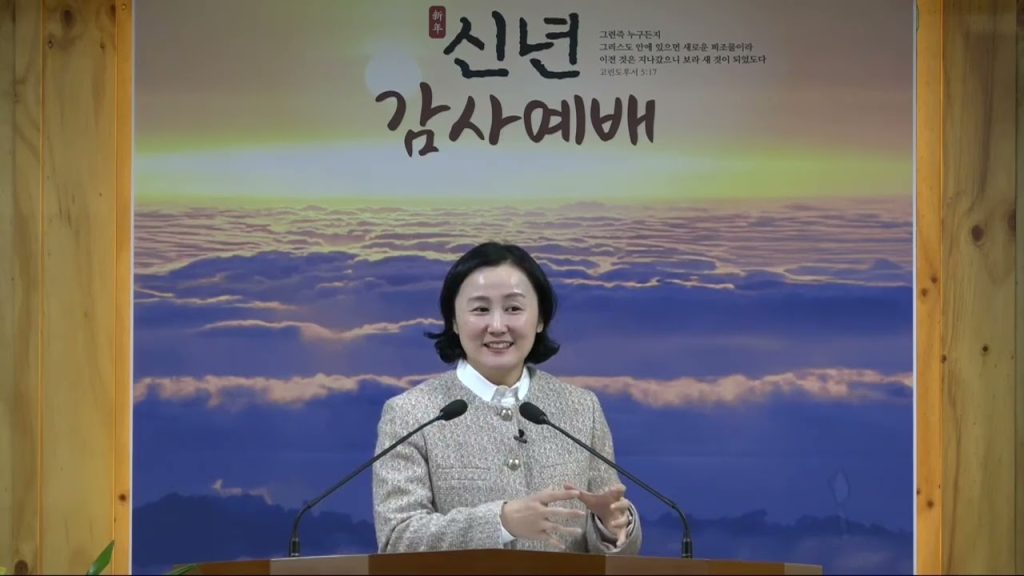
According to the Measure of the Gift of Christ (New Year Thanksgiving Service)
Ephesians

According to the Measure of the Gift of Christ (New Year Thanksgiving Service)

This passage deals with the letter the apostle Paul sent to the believers of the church in Ephesus while under house arrest in Rome. In a situation that might have been his last moment, at the threshold of death, Paul earnestly urges the church and its members on how they can keep the faith to the end. First of all he stresses that they should walk worthily of the calling with which they were called, and explains that this means a life in keeping with God's will, not with personal preference.

The sermon presents three concrete attitudes needed to walk worthily. The first is humility, following the example of Jesus Christ, who lowered himself to save souls; the second is true gentleness, as seen in Moses, who rose above his own anger to intercede for souls. The third is patience that is not hasty, like a farmer waiting for the harvest. These attitudes are essential conditions for accepting one another's differences, making up for one another's lack, and building up the whole body of Christ.

Now, at the start of a new year, what effort should we make to grow according to the measure of the gift of Christ given to each of us, and to work together for good?

Pastor Lee Ji-hyun · Jan 5, 2025
The King of Humility (Christmas Thanksgiving Service)
Philippians

The King of Humility (Christmas Thanksgiving Service)

Today's passage deals with the meaning of the incarnation, in which Jesus Christ laid aside the glory of heaven and came to the lowest place, a stable. It makes clear that this event, in which God humbled himself to deal with human sin and darkness, is more than a birthday celebration: it is a core step of salvation that leads on to the death of the cross and the resurrection.

The sermon emphasises that Jesus became a vessel able to embrace all humanity. It also points out that believers must not keep the light of life they have received shut up around themselves, but set it on a lampstand for the sake of weaker brothers and sisters. In contrast with the world's logic of power, it paints a picture of a church that follows Christ's humility and service, building up and protecting one another.

It helps us realise that Christmas is not simply a holiday but a day to follow the pattern of the kingdom God has brought about on this earth. Remembering Jesus' sacrificial love, what resolution must we make to live as mature believers who hold high the light of life in a dark world?

Pastor Lee Ji-hyun · Dec 22, 2024
The Line Between Suffering and Blessing
1 Kings, Part 171 Kings 14:7-16

The Line Between Suffering and Blessing

This passage deals with the event in which Abijah, son of Jeroboam, the first king of Israel, fell seriously ill while Jeroboam refused to bend his hardened heart. Unlike his father with his evil deeds, Abijah had a good faith before God, yet because of his father's sin he fell mortally ill. This was God's urgent intervention to give Jeroboam one last chance to repent, but Jeroboam made the foolish choice of disguising his wife and sending her to the prophet in order to hide his own sin.

The sermon notes that when we meet suffering, we should pray to God and seek to understand his will rather than first looking for human solutions. God exposes our limits so that we rely on him completely, and invites us to the door of repentance. In particular, through Abijah's death God shows that he saved him from the curse on a wicked house and gave him eternal peace. This suggests that what the world regards as suffering can, for God, become an instrument of great blessing and salvation.

We are led to look back on whether the standard by which we view our present suffering and joy stays within the world's perspective, or whether it needs to be re-evaluated from God's perspective. If we suffer because of problems with family or circumstances even though we have kept an honest faith toward God, we are led to reflect deeply on how we should view it: not merely as misfortune, but in the context of the special grace and protection God has given.

Pastor Lee Ji-hyun · Dec 15, 2024
Temptation That Comes When Things Go Smoothly
1 Kings, Part 161 Kings 13:15-24

Temptation That Comes When Things Go Smoothly

This passage deals with the event in which the prophet from Judah, who went to Bethel at God's command and tore down the king's altar, was deceived by an old prophet's lie right after completing his mission and strayed from the path of obedience. He had already passed through a moment of faith in which he witnessed God's amazing power and judgment and firmly refused, but then, leaning on a sense of relief and on social authority, he watered down God's word with his own judgment and disobeyed.

The sermon notes that the time believers most often fall is just before they bear the fruit of obedience, when everything is going smoothly. Satan, like a roaring lion, watches for any gap, and uses the hearts of people who know God yet make easy compromises with the world to make believers fall. In the end the prophet from Judah is judged for having turned back from the way he was going, because although he had heard God's word directly, he abandoned obedience for his own thinking.

We must realise that we must not let our guard down until the last moment of our mission, but obey absolutely the word God has given us. What should we prepare in order to discern the temptations and deceptions that come when things go smoothly, and, knowing that our lives are not our own, not to turn back from the way we are going to the end?

Pastor Lee Ji-hyun · Dec 1, 2024
The Time of Harvest Has Come [Thanksgiving Sunday]
MatthewMatthew 9:35-38

The Time of Harvest Has Come [Thanksgiving Sunday]

This passage covers the scene in which Jesus, seeing that the harvest is plentiful but the laborers are few, is moved with compassion, and his command to ask God for laborers for it. Through this passage the sermon points out how urgently devotion to the salvation of souls is needed in the last days. In particular, it emphasizes that church members must not be satisfied merely with religious rituals or material giving, but must tend their own hearts in order to bear the true fruit of faith.

The fruit Jesus desires comes not from service or devotion that shows on the outside, but from a life that lays itself down on the cross and obeys God's word. It reminds us that this is a time when laborers are needed who will obey at once and share the gospel with people who are spiritually thirsty in a hardened world. We must cast off our own righteousness and greed, prepare a clean heart, and make ready to welcome the Lord at his return.

As we come to Thanksgiving, we look back on what true fruit we have offered to God over the past year. It also asks how we should tend our hearts in order to stand as laborers who save souls, and how we should make the decision of obedience that God asks of us at this very moment.

Pastor Lee Ji-hyun · Nov 17, 2024
Two Kings of a Divided Kingdom
1 Kings, Part 151 Kings 12:15-20

Two Kings of a Divided Kingdom

This passage covers the case of Ammon, which misread David's kindness and chose war, and the story of Rehoboam, who after Solomon's death refused the people's demands and split the kingdom. It also sheds light on the foolish decision of Jeroboam, who, though he had received God's promise, chose idolatry to protect his own position.

The sermon points out that the failures these figures experienced were not simply fate, but the result of wrong judgments that grew out of their own sense of inferiority and suspicion. In particular, it emphasizes that God's warnings and judgment are in the end a Father's pleading for repentance and turning back, and it urges us not to distort the true nature of our circumstances but to choose with discernment.

So that we do not repeat the mistakes of the two kings, who doubted God's love and his choosing and rushed headlong down the path of sin, how must we discern and choose by faith?

Pastor Lee Ji-hyun · Nov 3, 2024
For the Sake of God’s Choosing
1 Kings, Part 141 Kings 11:9-13

For the Sake of God’s Choosing

Today's passage shows, through the life of King Solomon, how God's choosing and human choices flow together. Solomon had received God's special love and wisdom from birth, but in his later years he fell into idolatry through foreign women and committed a grave error. God resolved not to tolerate his apostasy, yet for the sake of his covenant with David and for Jerusalem, he did not take the kingdom away entirely but left one tribe. This shows that human failure and corruption cannot nullify God's plan and covenant.

Through the laws for the king that Solomon failed to keep, the sermon points out how he came to rely on the world's power and pride. He broke the command not to multiply horses and built up his military strength, and he married foreign women and his heart was led astray. He also piled up wealth and did not meditate on the Law, neglecting his relationship with God. These sins were intertwined and in the end led to the grave mistake of apostasy, which warns how dangerous it is to allow small sins with a complacent heart.

Despite Solomon's failure, God did not abandon him to the very end, and carried on his work of salvation. This means that God's faithfulness is greater than human unfaithfulness. We must remember that having been saved does not give us permission to live as we please. Rather, to live as God's children, we must fight a spiritual battle to bring our lives into line with God's word. Can we live a life that loves and relies on God alone, whatever the currents of the world?

Pastor Lee Ji-hyun · Oct 20, 2024