
Skip to content

Sermons

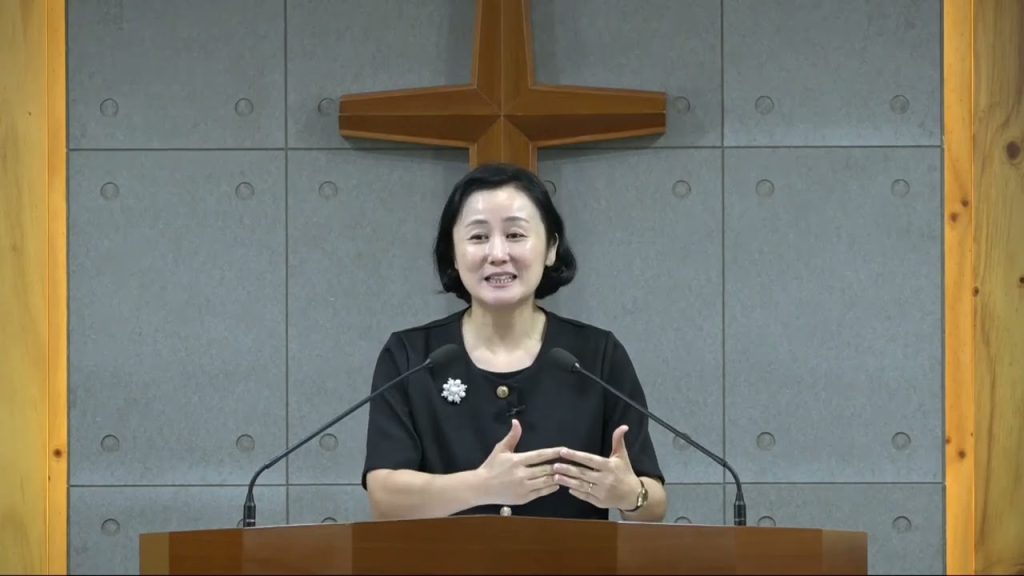
God Who Is Our Strength When We Are Weak
2 Kings, Part 42 Kings 4:1-7

God Who Is Our Strength When We Are Weak

Life is one hardship after another, and we are weak beings who can lose what we rely on at any moment. Today's passage records four miracles through the prophet Elisha, and the first is the story of a widow who, after her husband's sudden death and because of debt, faced the danger of having her two sons sold as slaves.

With no way to get by, the woman did not look for a human solution in the face of the creditor's threats, but went to Elisha. Elisha told her to prepare the one jar of oil she had at home and empty vessels borrowed from her neighbours, and the woman poured out oil until every vessel was filled. As a result the oil kept flowing without stopping until all the vessels were full, and she was able to sell it, pay her debt, and save her family.

This miracle came not from the woman's little oil but from the good character she had shown her neighbours and her obedient faith in God. God does not work forcibly all on his own; he uses the small faith and fruit we have as his instruments. And when the Holy Spirit is at work, we must shut our hearts and focus, so as not to mingle with the world.

If we do not look down on the grace we now enjoy or on what we have, and rely on God alone in our place of weakness, what amazing solution will we experience?
Pastor Lee Ji-hyun · Aug 31, 2025
The Battle Is God’s
2 Kings, Part 32 Kings 3:13-20

The Battle Is God’s

This passage records how the allied armies of northern Israel and southern Judah went to war against Moab, and how a victory that seemed certain, with water supplied and the enemy about to be defeated through God's help, ended in failure. Victory had been promised through the prophet Elisha, but at the last moment of the battle the king of Moab offered his son as a burnt offering, and great wrath came upon the army of Israel, and they left the battlefield. This event, which many Bible scholars regard as a difficult problem, is not simply a military failure; it shows the spiritual crisis that those who have received grace go through when they fail to face their own sin.

The sermon points out that God loved and helped Jehoshaphat to the end, even though he allied himself with wicked kings, but that they took that grace for granted and covered up their own sin. God governs the outcome of battles, but he brings judgment on those who fail to show his holiness along the way and who glorify their own sin. Even after experiencing God's miracles and receiving answers, we face the contradiction of still not being free from sin and not walking with God.

When we face moments of hardship and failure that we cannot bear, how should we discern whether it is simply fate or a punishment from God to set us upright? And in the very place where we seemed to have won by God's grace, we are led to look back on whether we truly repented of our sin and submitted completely to God, or whether we sat in the place of opposing God by displaying our own righteousness.

Pastor Lee Ji-hyun · Aug 24, 2025
[Revelation] Come, Lord Jesus
RevelationRevelation 22:18-21

[Revelation] Come, Lord Jesus

This sermon looks at the situation in the Middle East and the rapidly changing world of technology from a biblical point of view, and points out that the signs of the end times are already clearly appearing. Going beyond frightening memories from childhood, it explains that totalitarian control and the development of superintelligent technology are now taking place as preconditions for the appearance of the Antichrist. In particular, it warns of the reality that artificial intelligence and data-collection technology threaten human dignity, and that through them a structure of rule that binds the whole world into one is nearing completion.

The sermon gives direction on how believers should live in such a confused age. It urges that even though the last day comes like a thief, we must stay awake as those who belong to the day, not to the night. It stresses that in order not to be deceived we must take up the shield of faith and love, hold on to the hope of salvation, and keep ourselves pure so as to win the spiritual battle. It says that even as the world turns against Christianity and morality collapses, what we need is not fear that judgment is about to fall, but a heart that longs for Christ's return.

Finally, the sermon closes by saying that believers should not be lazy but encourage one another, and live lives that rejoice always, pray, and in everything give thanks. It says that although we cannot stop what is evil, what matters is to keep the faith to the end and to prepare ourselves as the bride. The sermon asks whether believers can have the faith to wait for Christ's return with joy and eager anticipation rather than fear, and to cry out, 'Come, Lord Jesus.'

Pastor Lee Ji-hyun · Aug 10, 2025
Elijah’s Ascension and the Power Elisha Received
2 Kings, Part 22 Kings 2:8-14

Elijah’s Ascension and the Power Elisha Received

This passage deals with what the prophet Elijah went through before his ascension in order to establish his disciple Elisha as his successor. Before crossing the Jordan River, Elijah tells Elisha three times to stay behind, but Elisha refuses, firmly resolved to follow his master to the end. Because of Elisha's persistent companionship and faith, Elijah promises that he will receive a double portion of the grace of the Holy Spirit, as he desired.

Elisha witnesses his master's ascension with his own eyes and gains not a vague faith but assurance, and afterwards he carries out his mission, performing many miracles. In particular, in healing the bad water of Jericho and bringing God's judgment on those who mocked him, he shows how God protects believers and works on their behalf. The passage emphasises the importance of an obedience that truly loves God and seeks to understand his will, rather than formal religious acts.

We are led to think deeply about how to discern the stumbling blocks and temptations we meet on the journey of faith, and how to keep a faith that perseveres to the end and walks with God even amid the world's mockery and persecution.

Pastor Lee Ji-hyun · Jul 20, 2025
God, the Lord of Life
2 Kings, Part 12 Kings 1:13-17

God, the Lord of Life

This passage deals with the scene in which Ahaziah, king of northern Israel, falls ill and sends messengers to inquire of the god of Ekron, and with how God, angered by this, brings judgment through the prophet Elijah. Despite his sinful life, Ahaziah seeks idols rather than repenting before God, and shows his arrogance by opposing God's messenger. By God's power Elijah brings judgment on the king's soldiers and proclaims that God is the Lord of life.

The sermon points out the nature of sin: in moments of crisis people look first to what others think or to the powers of the world, rather than to God. Ahaziah and the first two captains of fifty were destroyed as they opposed God in their own strength, but the third captain of fifty humbly feared God and his life was saved. This shows that human will or authority cannot preserve life, and that there is salvation only when we obey God.

In life's crises and at the crossroads of choice, we must decide whether to trust God or to look for the visible solutions of the world. What does a life that entrusts sovereignty over life to God alone and obeys his will really look like, and how should we live it?

Pastor Lee Ji-hyun · Jul 6, 2025
The Mistakes and Restoration of Jehoshaphat, a Good King
1 Kings, Part 281 Kings 22:41-50

The Mistakes and Restoration of Jehoshaphat, a Good King

This passage covers the life of Jehoshaphat, known as a good king of southern Judah. He removed idols and showed reverence for God, but he made fatal mistakes, such as making an alliance with the wicked King Ahab and joining him in battle. In particular, his going into battle disguised as King Ahab, even though he was in danger of death, raises serious questions about the situation of the time and his identity as a man of faith.

Through these actions of Jehoshaphat, the sermon points out the spiritual pride and complacency into which people thought to have good faith can easily fall. It points out that when God gives great blessing, the mistaken confidence that one can keep the faith in any situation led in the end to an alliance with those who hate God. It also tells of his path to restoration: when trouble came, he cried out earnestly to God, did not fight in human strength, and relied on God alone, going out with praise.

Yet considering that the mistakes Jehoshaphat repeated, and the chain of evil left unbroken because of them, affected even his children, we must take care not to trust our own faith too much. The sermon closes at the point where we look back on ourselves, asking whether we are truly standing honestly before God and whether our heart right now is one that pleases him.

Pastor Lee Ji-hyun · Jun 22, 2025
Micaiah’s Prophecy Fulfilled in Ahab’s Death
1 Kings, Part 271 Kings 22:14-25

Micaiah’s Prophecy Fulfilled in Ahab’s Death

This passage deals with the event in which Ahab, king of northern Israel, receives a prophecy of his own death through the prophet Micaiah before the battle of Ramoth Gilead. Ahab listens to the flattery of false prophets and tries to escape God's wrath, but ends up walking the road to judgment, while Micaiah, even under the king's anger and torment, delivers what God has said without adding or taking away anything.

The sermon contrasts Ahab's hardness of heart, which would not bend its stubbornness despite the warning of judgment, with Micaiah's bold obedience in proclaiming the truth at the risk of his life. It also points out the folly of people who want to hear only pleasant words, and emphasises the stance of wise believers who take rebuke and counsel as opportunities to grow. Reminding us that God's warnings of judgment are an act of love that gives us the chance to turn back, it urges a life that fears God rather than the fears of the world and follows his true will.

Do we, like Ahab, reject the truth, bound by our own thinking, or do we, like Micaiah, obey God's word? Are we willing to bear the pain of cutting out the bitter roots and self-righteousness within us now, and are we doing our best to walk only in the way of Christ?

Pastor Lee Ji-hyun · Jun 8, 2025
Naboth’s Death and Ahab’s Repentance
1 Kings, Part 261 Kings 21:25-29

Naboth’s Death and Ahab’s Repentance

Today's passage deals with the event in which King Ahab, wanting to take Naboth's vineyard, drives Naboth to his death by following the scheme of his wife Jezebel. Frustrated by the refusal of Naboth, who keeps God's law, Ahab sulks like a child, and Jezebel, seeing this, uses the king's power to have Naboth falsely accused and executed. In the process Naboth's faithfulness is disregarded, and power and greed combine to bring about the unjust death of a righteous man.

Ahab, so easily swayed by Jezebel's urging, shows that sin does not work alone but bears fruit when it combines with the temptations and circumstances around us. But when Ahab receives the message of judgment through the prophet Elijah, he repents in deep humility, tearing his clothes and putting on sackcloth. Seeing this, God postpones the disaster he was about to bring until the days of Ahab's son. This means that God shows abundant mercy and does not turn away from those who repent, but at the same time it suggests that Ahab did not bear the fruit of true repentance, namely restoring Naboth's good name and returning his property.

The reason Ahab's brief humility could not fully remove the consequences of his sin is that he did not turn completely away from his repeated sins. When we do not seize the opportunity God gives and truly repent, sin carries on through the generations and ends in destruction. How should we live so that we do not grow numb to sin and do not miss the opportunities we are given?

Pastor Lee Ji-hyun · May 11, 2025
The Result of Your Own Decision
1 Kings, Part 251 Kings 20:35-42

The Result of Your Own Decision

Today's passage shows how God gives the disobedient King Ahab of Israel another chance. At first Ahab behaved servilely in the face of the provocations of Ben Hadad, king of Aram, but in the end he won a victory through God's work. Yet rather than giving glory to God through this victory, Ahab put political gain first and turned away from God's will.

Afterwards God pointed out Ahab's sin through a prophet and pronounced judgment. The prophet appeared before Ahab in disguise and described the situation of a man who had lost a prisoner, and Ahab judged that since the man had decided it himself, he must bear the responsibility. But this judgment carried within it the message of the judgment that would soon come back upon Ahab himself. Ahab showed the contradictory attitude of being numb to his own sin while reacting sharply to the sins of others.

Looking at Ahab, we may click our tongues and shake our heads. But we need to look back on whether we are still using God's grace as a tool for worldly gain. We need to ask ourselves whether, faced with the words of warning God has given, we merely feel troubled and frustrated without going on to true repentance and turning back.

Pastor Lee Ji-hyun · Apr 27, 2025
Hosanna for What? (Palm Sunday)
MarkMark 11:1-10

Hosanna for What? (Palm Sunday)

On Palm Sunday, today's passage deals with the scene of Jesus entering Jerusalem riding on a donkey. At the time the crowds spread their cloaks on the road, waved palm branches, and cried out ‘Hosanna.’ This word was not simply praise but an earnest plea meaning ‘Please save us,’ yet the salvation they hoped for was to escape Roman oppression and gain worldly power. By contrast, the salvation Jesus truly brought was to give life to souls by dealing with human sin and separation from God.

The sermon points to the gap between the crowd's expectations and Jesus' mission, and asks whether we today are repeating a similar mistake. We live paying more attention to success and prosperity on this earth than to the salvation of our souls, which God wants to give us. Pointing out a situation in which thanksgiving and life are separated, so that God's grace has no effect on our actual lives, it urges us to hold up a mirror and see how far our thinking and outlook have drifted from God.

We must follow the path of humility and obedience that Jesus walked to bear the cross. Yet we still want high positions and try to live chasing the satisfaction of the flesh. When we realise that our hearts toward God can change as easily as turning over a hand, what choice will we make?

Pastor Lee Ji-hyun · Apr 13, 2025
God’s Comfort
1 Kings, Part 241 Kings 19:11-18

God’s Comfort

This passage deals with the prophet Elijah, who, after winning a great victory on Mount Carmel, fled in fear at Jezebel's threat. When Elijah, in despair, asks even before God to die, God does not rebuke him but gives him bread and water and comforts him as if gently touching him. This is the love of God, who recognises that however great our faith, human beings are weak and can stumble.

The sermon points out how we often expect from God only supernatural miracles or outward works. Elijah waited for the wind, the earthquake, and the fire, but God came in a still small voice. This shows that God is not one who reveals himself through power that startles us, but one who is with us in the depths of our hearts and conveys deep love and grace. It also reminds us that even in the loneliness of feeling that we carry our mission alone, there are many unseen fellow workers whom God protects.

When we sense God's careful guidance and listen for his still small voice, we can lay down our fear. When we see the fellow workers in faith God has placed beside us, feel the love of Christ who intercedes for us, and set out on our way toward the kingdom of heaven, can we remain humble and not proud, whatever mission he entrusts to us?

Pastor Lee Ji-hyun · Mar 23, 2025
The Final Victor
1 Kings, Part 231 Kings 18:36-40

The Final Victor

This passage deals with the scene of Elijah's confrontation with the prophets of Baal on Mount Carmel. King Ahab blames Elijah for the drought and opposes God, but Elijah urges the people, who waver between God and idols, to follow the true God. The people show a lukewarm attitude, serving God and Baal at the same time, but Elijah prays to God alone.

The sermon points out that Baal worship is not simply an idolatrous ritual but the world's values, which pursue material abundance and success. It emphasises that God gave human beings authority to rule over all things, but that true blessing comes when we keep within its boundaries and obey God. Satan uses human desires to make us torn between God and idols, but God is helping his children keep the faith to the end.

The sermon asks whether we will choose God decisively, without wavering between God and idols, that is, between God and the world's gain.

Pastor Lee Ji-hyun · Mar 9, 2025