

Skip to content

Sermons

The Calling of Gideon
Judges, Part 9Judges 6:6-12

The Calling of Gideon

The people of Israel have worshiped idols and left God, and as a result they have been severely oppressed by the Midianites for seven years. In their suffering the people cried out to God, but this was less true repentance than a cunning attempt to escape their pain. God sent a prophet to remind them of his grace in the past, but the people still did not understand.

At this time the angel of the Lord appears to Gideon, who was hiding in fear and threshing wheat in a cave, and calls him ‘mighty man of valor.’ God declared that the one God is with is the true man of valor. But even though his hardship came from his own sin, Gideon complained that God had not protected him and shifted the blame onto God. He claimed that if God's presence were guaranteed, none of this would have happened, revealing an attitude that sought instead to order God around like a servant.

Gideon refused the mission, excusing himself as weak and small, and tested God by asking for a sign to confirm God's presence. Despite his complaints and doubts, God patiently answered him, and Gideon built an altar and named it ‘Yahweh is Peace.’ Even so, he still tried to avoid his mission, using his weakness as an excuse. When we lack the assurance that God is with us, with what attitude should we respond?
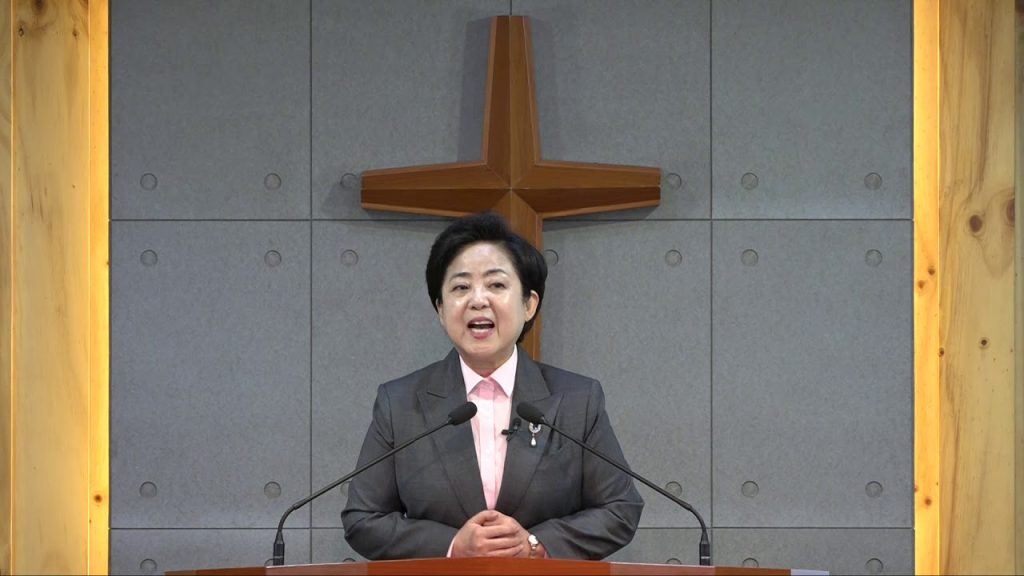

Pastor Cho Chun-sook · Mar 17, 2019
The Song of Deborah
Judges, Part 8Judges 5:1-10

The Song of Deborah

This passage deals with the story of the victory in which the judge Deborah, following the word God had given, defeated Sisera, the commander of the Canaanite king Jabin. After winning the battle Deborah sings praise to God, but behind it lies a contrast with the army commander Barak, who obeyed God's command selectively and tried to look after his own safety. Barak tried to lean on Deborah's faith and go together with her, but in the end, because of his own lack of resolve, the credit for the victory was taken from him and went to another.

The sermon points to how Barak's selective obedience made him miss the chance of blessing. The blessing God gives comes with conditions and obedience, and an attitude that only looks forward to the result while avoiding the sacrifice along the way ends up losing the reward. It also stresses that, unlike the tribes that stayed out of the battle and guarded only their own comfort, God's blessing follows those who willingly sacrificed themselves for their people.

Deborah trusted God even amid fear and temptation and went forward boldly, and as a result God sent rain from heaven to confirm the victory. Sisera's mother and her ladies, on the other hand, held fast only to the world's power and logic, turned away from God's will, and met the tragedy of defeat. Why do we need to sacrifice ourselves right away and keep striving to the end in order to receive the reward God has prepared, and can we, like Deborah, overcome fear and live boldly, believing that God will work for us?

Pastor Cho Chun-sook · Mar 10, 2019
Barak, Who Did Not Fully Obey
Judges, Part 7Judges 4:1-9

Barak, Who Did Not Fully Obey

Today's passage is the scene in which, during the twenty years that Israel was oppressed by Sisera, the commander of the army of the Canaanite king Jabin, God calls the judge Barak through the prophet Deborah and commands him to go to war. God clearly promised to give Sisera and his nine hundred chariots of iron into Barak's hand, but because of his weakness and fear, Barak refused to go out alone and demanded that Deborah go with him.

Deborah warns that because Barak did not fully obey, he will not enjoy the glory of the victory himself. Despite Barak's disobedience, God flooded the Kishon River and defeated the enemy army, but the task of killing Sisera fell to Jael the Kenite, in the gap left because Barak, having not obeyed, was not in his place. Although Barak saw God's work with his own eyes, human judgment and fear caused him to miss the reward God had prepared.

We look back on whether, though we pray and wait for an answer, we hesitate out of fear or attach conditions when God's command actually comes. We must consider whether there have been times when, even though God promised to go before us, our weakness stood in the way of our obedience and we missed important grace.

Pastor Cho Chun-sook · Mar 3, 2019
God, Who Raised Up Judges
Judges, Part 6Judges 3:7-15

God, Who Raised Up Judges

This passage deals with the situation in which, when the people of Israel forgot God, served idols and became corrupt, God handed them over to Cushan Rishathaim, king of Mesopotamia, and they suffered for eight years. When the people cried out in their suffering, God raised up Othniel as a judge and saved them, but once peace came they again forgot to be thankful and turned back to sin.

To discipline their pride, God made Eglon king of Moab strong, and raised up Ehud, a left-handed man whom the world looked down on, as their deliverer. This was to put the world's wisdom and strength to shame and to work by God's unseen power. Through the example of Shamgar, who defeated the Philistines with a single ox goad, it also shows that God uses those who give themselves with full faith, not according to their qualifications or possessions.

Are we living a repeated pattern of seeking God only in hard times and abandoning him once things are comfortable? Rather than measuring our worth by the world's standards and possessions, it asks whether we will move toward a life of fulfilling God's will by becoming a judge for the weak.

Pastor Cho Chun-sook · Feb 24, 2019
God, Who Tested Israel
Judges, Part 5Judges 3:1-7

God, Who Tested Israel

Today's passage deals with the background of God leaving the Canaanite peoples in the land after Israel entered Canaan, in order to train them. When the people failed to live out their faith and compromised with a worldly life, God used hardship and circumstances as tools to test whether their faith was right. This shows that it was not simply punishment, but a process of God's deep love and training, so that believers would have a true faith that does not change in any situation.

It also brings out the meaning of testing through the story of Daniel, who did not leave God and lived uprightly even in exile. Daniel did not stop praying even at the risk of his life, and as a result he experienced God's protection even in the lions' den. This shows that a faith that keeps God's word amid the world's mockery and threats in the end reveals God's glory and becomes the way to overcome the hardships one is given.

When we remember that the difficulties and tests we go through are God's training for the growth of our faith, what choice should we make?

Pastor Cho Chun-sook · Feb 17, 2019
God, Who Does as He Promised
Judges, Part 4Judges 2:11-15

God, Who Does as He Promised

This passage deals with how the people of Israel, even after being saved from Egypt, worshiped the idols of Canaan and forgot God. They took the countless miracles and grace God had shown them for granted, and tested God and grumbled against him for their own convenience and gain. In particular, through the incident in which Moses struck the rock and brought out water, it shows the tragic result that even a leader who had experienced countless miracles, overcome by emotion, failed to show God's holiness and so could not enter the land of Canaan.

Through this failure of Israel and the parable of the vineyard, the sermon lays out the right view of faith that believers should have. It stresses that God does not hand out rewards according to the amount or length of our devotion, but saves all who truly believe alike. If believers, rather than seeking to please God through offerings and service, harbor the desire to put forward their own merits and receive more blessing, that is pride that does not truly know God. True believers must not boast of their labors, but keep an attitude of humble obedience to the end, thankful for the mission and grace God has given.

God is patient to the end out of love, to save even one more soul, but an attitude that abuses that patience in order to sin is never tolerated. Through Moses' bitter end and Israel's repeated betrayals, we must learn not to take God lightly. What God requires is not a formal devotion, but a mature faith that strives to see as God sees and an obedience that does not change to the end. Looking back on whether our faith now is for pleasing God or for our own gain, we must consider whether we can move toward true repentance.

Pastor Cho Chun-sook · Feb 10, 2019
God, Who Wants to Give a Life of a Different Order
Judges, Part 3Judges 2:1-6

God, Who Wants to Give a Life of a Different Order

This passage deals with the people of Israel in the time of the judges who, after entering the land of Canaan, abandoned their covenant with God, lived mixed in with foreign gods, and disobeyed again and again. The angel of the Lord goes up from Gilgal to Bochim, rebukes them for their failure, and warns that the salvation from Egypt and the protection in the wilderness he had shown them before will not continue. God makes it clear that when they settle for the visible gains and comforts of the world and live by their own standards, he will no longer give them protection and blessing of a different order.

The sermon points out that although Israel suffered, wept and offered sacrifices, their hearts were not sincere and it stopped at mere formality. True humility and repentance are not just feeling guilty or shedding tears; they mean submitting one's life completely to God and living to share the gospel. Through the examples of Peter and Judas Iscariot, it shows that even the same act of betrayal can have results as far apart as heaven and earth, depending on what is at the heart. God longs for the days when Israel obeyed the Word and showed bold faith as Joshua did, and he feels deep disappointment and pain at their self-serving faith that uses him.

Even though God patiently speaks to us again and again, wanting to give us a life of a different order, we must look back on whether we still cling to what we can see and use God. We ask ourselves whether our repentance comes from despair over our own comfort, or from a sincere desire to please God.

Pastor Cho Chun-sook · Feb 3, 2019
The Unbelief That Could Not Drive Out the Chariots of Iron
Judges, Part 2Judges 1:18-21

The Unbelief That Could Not Drive Out the Chariots of Iron

Today's passage deals with the background of the event in which the people of Israel, having conquered the land of Canaan, drove out the inhabitants of the hill country but could not drive out the inhabitants of the valley, who had chariots of iron. In the days when Moses and Joshua led them, God gave them victory after victory in perfect order, but as the leadership changed and time passed, the people's hearts began to change. God had commanded them to drive out the Canaanite peoples completely, but Israel looked at the chariots of iron, the visible strength of the enemy, and was afraid.

This passage points out that the problems we face cannot be solved by human strength. Israel forgot its past victories, compared only its own weakness with the strength of its enemy, and fell into unbelief. This is like people today who, worn down by chronic fatigue and stress, forget God's help and give in to the powers of the world. God stresses that his word is the only way to restore the soul, and urges us to trust his promises rather than the reality we can see.

What was the result of Israel's choice to stop obeying out of fear of an enemy that came with chariots of iron?

Pastor Cho Chun-sook · Jan 27, 2019
God, Who Wants Us to Overcome Sin
Judges, Part 1Judges 1:1-7

God, Who Wants Us to Overcome Sin

This passage deals with the situation after Joshua's death, when the people of Israel, without a leader, came to live each doing what was right in his own eyes. At first the people showed obedience, for example by asking God who should go up first to fight, but in the end they served the idols of the Canaanite peoples and left God. This happened because, without strong leaders like Moses and Joshua, the people came to put their own judgment and experience ahead of God.

The sermon warns that trying to overcome sin by human righteousness is like climbing a wall of ice with bare hands. We cannot conquer the mountain of sin with our own ability or good deeds; only the rope of the grace of Jesus Christ is the way of salvation. The prayerful attitude the people of Israel showed at first shows that God answered them directly and gave them victory, and this came not from a leader's help but from a direct relationship with God.

We live in an age in which, even without a leader, we must rely on God directly through the Word and prayer. We must seriously reflect on whether stubbornly living by what is right in our own eyes is really the faith God wants, and whether, to climb the mountain of sin, we are relying not on a rope we have fixed ourselves but on the grace of Christ.

Pastor Cho Chun-sook · Jan 20, 2019