Skip to content

Sermons

Paul Meets Christ 2
Unless a Grain of Wheat Dies, Part 10

Paul Meets Christ 2

Paul had once persecuted Christ, but after meeting him he preached the gospel to his very last moment. Sickness gave way at his touch, and those who heard the word repented and were born again.

The reason Paul did not forget grace lies in how he regarded the past. The Jewish people think of the past as lying before them, and so they live always facing the grace that has gone before. That is why, even when God did not answer his prayer for healing, Paul came to understand that the weaker he was, the more Christ’s power was made perfect.

Standing in chains before a king of this world, Paul was not afraid and proclaimed the gospel. Even now, as the church strips away words like the cross and repentance in order to become more like the world, what God desires is for each one of his people not to let their lamp go out in the place where they stand.
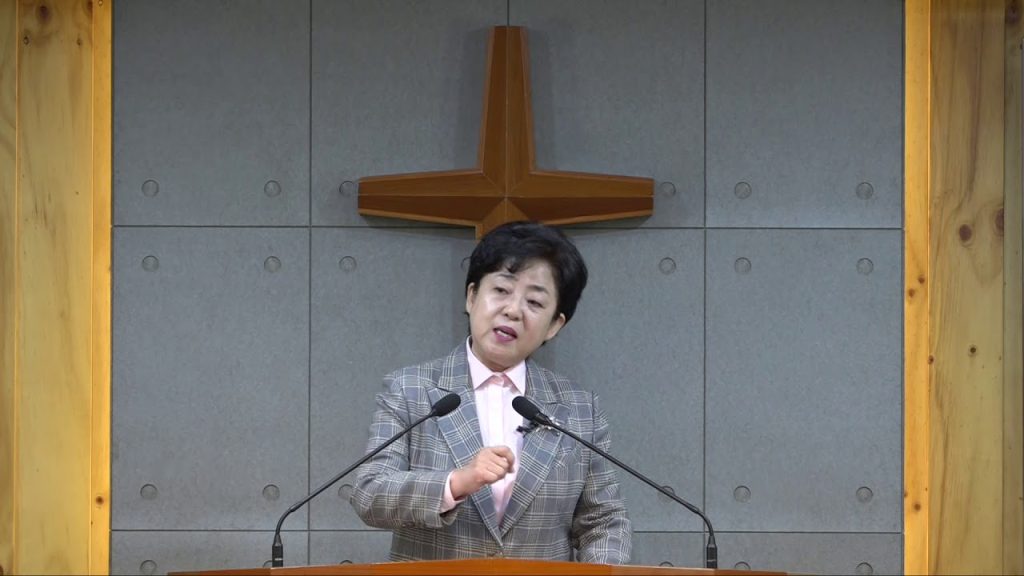

Pastor Cho Chun-sook · Nov 29, 2020
Paul Meets Christ
Unless a Grain of Wheat Dies, Part 9Acts 20:17-31

Paul Meets Christ

A young man listening to the word in an upper room sat by the window, sank into sleep in the night, and dropped from the third story. He seemed already dead, yet as day broke he was alive again. Saul, meanwhile, on his way to Damascus to seize Christians, fell to the ground before a light and a voice from heaven; he was struck blind, and there he met Jesus.

Only someone with eyes given by God can say that there is life in a person who looks dead. That God should call Saul, who had brought about Stephen’s death, and even see to it that he was healed is beyond human understanding, yet salvation rests wholly in the sovereignty of God. Before Christ, Saul came to count as rubbish the world and the power of the law he had once clung to.

Christians are not to pronounce the people of the world dead; they must leave them in God’s hands and preach the gospel. Like Ananias, they need an obedience that goes when the word says go and stands still when it says stand, even when they do not understand. When, before the knowledge of Christ, they lay down what the world counted as strength, they can live out a faith that runs to the finish, as the apostle Paul did.

Pastor Cho Chun-sook · Nov 22, 2020
Jonah, Who Loved God and Was Loved by Him
Unless a Grain of Wheat Dies, Part 8Jonah 3:3-4:4

Jonah, Who Loved God and Was Loved by Him

Commanded to proclaim judgment on Nineveh, Jonah fled to Tarshish instead. Only after he had been caught in a storm, thrown into the sea and kept three days in the belly of a great fish did he go to Nineveh and preach the word, and the king and his people repented.

Jonah did not run away merely because he feared what might befall him for proclaiming judgment. He was unwilling to go because he already knew that God would spare the city even without him. When Nineveh repented, Jonah grew angry with God instead, and through a vine that withered within a day, God showed him that he cared more for his own comfort than for the lives of a hundred and twenty thousand people.

When God sent Jonah to save Nineveh, it was not a command but love. God longs to give life to the world even when it sins, and to understand that heart and proclaim the gospel is the calling given to God’s people.

Pastor Cho Chun-sook · Nov 8, 2020
Nehemiah, Who Rebuilt the Ruined Walls
Unless a Grain of Wheat Dies, Part 7Nehemiah 2:8-20

Nehemiah, Who Rebuilt the Ruined Walls

After the temple and the walls of Jerusalem had fallen into ruin, Nehemiah came as governor and, dividing the work among the people, rebuilt the wall in fifty-two days. When opponents gathered to hinder them, he had the people work with swords and spears in hand.

The wall is not merely a wall; it is a hedge that guards the temple, that is, God’s people. Even after the temple had been regained, there was no wall, so foreigners came and went and the sacrifices became an empty formality. In the same way, without the walls of the Word, prayer and holy living, the greed and lusts of the world come straight in.

Each of God’s people is a temple of God, and so each must build for themselves the wall that guards that temple. Just as Nehemiah held his post and served the people, those who live as dead to the world and raise the wall high through the Word and prayer are able to hold to a faith that does not waver.

Pastor Cho Chun-sook · Oct 25, 2020
Jesus, Who Gave Himself Up for Sinners
Unless a Grain of Wheat Dies, Part 6John 12:9-16

Jesus, Who Gave Himself Up for Sinners

Riding on a donkey’s colt, Jesus enters Jerusalem. The crowd waved palm branches, spread their cloaks on the road and cried out “Hosanna”, and the disciples were swept up in the excitement along with them.

Yet this acclaim was not for a Messiah who would save them from sin. It was for a mighty king who would set them free from Rome. The same crowd would later shout for Jesus to be put to death, and only after his eyes met those of Jesus did Peter see that he had denied him three times. Praise raised in hope of the things of this world turns to betrayal once circumstances change.

Jesus knew that such people would betray him, and still he chose to take up the cross for their sake. The apostle Paul, aware that he was the worst of sinners, lived a life of dying daily. To lay aside worldly desire and human righteousness and to follow Jesus in honest faith: this is the decision asked of God’s people today.

Pastor Cho Chun-sook · Oct 18, 2020
What the Lord Says to Me [Micaiah]
Unless a Grain of Wheat Dies, Part 51 Kings 22:14-25

What the Lord Says to Me [Micaiah]

Before King Ahab and King Jehoshaphat joined forces to take back Ramoth Gilead, Ahab summoned four hundred prophets who were on his side and told him only what he wanted to hear, and asked them whether he would win. Jehoshaphat was not satisfied with that and sent for Micaiah, who, despite the messenger’s prompting, declared that he would speak only what the Lord said to him. He delivered the word exactly as it was given: if Ahab went to war, he would die. Ahab, in his anger, had him thrown into prison.

Micaiah already stood as one dead to the world, and so even before the king he did not plead for his life. Everyone wants to hear only what pleases them, but a word of blessing must come to pass just as it is spoken, while a word of judgment must be proved wrong through repentance. Only those who, when rebuked, look not at themselves but at the God who speaks can receive such a word.

Ahab went into battle in disguise, trying to have it both ways, and was struck by a stray arrow, dying just as Micaiah had prophesied. David, too, took God’s word alone and believed it as it stood: that the people of Keilah would forget the kindness of his defending their city and betray him, and that Saul, who had not yet even set out, would march against it. So he left the city without regret. Unless the cord that binds one to the world is let go, faith only snaps back further than where it began; to stand as those dead to the world, to speak only what the Lord says, and to obey it just as it is given is the way of life for God’s people.

Pastor Cho Chun-sook · Oct 11, 2020
Job, Who Trusted God Completely
Unless a Grain of Wheat Dies, Part 4Job 7:11-21

Job, Who Trusted God Completely

After losing all his children and possessions in a single day, Job tears his robe and worships God. He confesses, “Yahweh gave, and Yahweh has taken away,” and offers praise instead of complaint.

Satan assumed that Job served God because of what he had, but Job’s roots ran deep into God, not into his possessions. Like a tree that does not die even when its leaves and branches are cut off, Job’s faith came from his relationship with God, regardless of whether he prospered. His friends insisted that his suffering was proof of sin, but that was only the human wish that people reap what they sow, not the truth.

Suffering is where believers are confirmed as God’s children, and it is training that refines faith more deeply. Passing through suffering, Job met God with a far more mature faith than before, and in the end he received back a blessing that could not be taken from him.

Pastor Cho Chun-sook · Oct 4, 2020
The God Who Built an Ark Through Noah
Unless a Grain of Wheat Dies, Part 3Genesis 6:5-14

The God Who Built an Ark Through Noah

The world God created fell under a curse through Adam’s sin, and like a car whose brakes have failed, it is racing toward judgment. God saw that the whole earth was filled with violence, and he commanded Noah to build an ark.

The ark is not a church building, nor is it simply going to church; it is believing in Jesus Christ and living a life in keeping with his word. Even as people mocked him, Noah set his own life aside to build the ark, and until the very moment the door was shut he kept calling out to them in anguish. Those left outside the ark had no faith in God, and so they dismissed a judgment they could not see; yet that judgment came all the same, whatever they believed.

Even after the flood, Noah had to endure emptiness and loneliness, and he once became drunk and fell, yet God did not rebuke him but waited for him in silence. In this harsh world Jesus Christ alone is the true ark, and the Christian life is to obey as Noah did and bring even one more soul on board.

Pastor Cho Chun-sook · Sep 27, 2020
Jesus Meets Lazarus
Unless a Grain of Wheat Dies, Part 2John 11:32-44

Jesus Meets Lazarus

Lazarus falls ill and dies. When the news reaches Jesus, he stays where he is two days longer, and arrives in Bethany only once Lazarus is well and truly dead. Martha reproaches him for not coming before her brother died, and when he tells them to take away the stone, she protests again that after four days there will be a stench.

Jesus came late to show that not Lazarus alone but every human being is powerless to escape death. By raising a man who was utterly dead, he meant to teach that he himself is the Lord of life. Martha, doubting and objecting to the smell, is a picture of humanity itself, bound by sin and shut up in the tomb.

At Jesus’ call to come out, Lazarus walked from the grave, his hands and feet still wrapped in strips of linen. Faith must rest not on a God who will supply one’s needs but on Jesus, the Lord of life. When their own righteousness dies and the precious blood of the cross releases them from sin, people receive new life and go free, just as Lazarus did.

Pastor Cho Chun-sook · Sep 20, 2020
Esther, Who Brought About the Blessing of Purim
Unless a Grain of Wheat Dies, Part 1

Esther, Who Brought About the Blessing of Purim

Haman’s decree goes out to every province. On a single day, the thirteenth of the month of Adar, the Jews are to die without even knowing why.

Mordecai would not bow to Haman, because he could not acknowledge Haman as a god. On the surface it is one man’s defiance, but behind it lies a scheme of Satan, in which a descendant of Amalek seeks to wipe out God’s people. God knew of that scheme beforehand and had already set Esther in the place of queen.

Esther fasts for three days, resolved that if she perishes, she perishes, and then goes in before the king. She has already taken her stand as one who is dead to the world, and so she has no fear. That resolve won the king’s heart, and with it came victory: her people, once in peril, were delivered, and Haman himself was brought to judgment instead.

Pastor Cho Chun-sook · Sep 13, 2020