

Skip to content

Sermons

The King of Humility (Christmas Thanksgiving Service)
Philippians

The King of Humility (Christmas Thanksgiving Service)

Today's passage deals with the meaning of the incarnation, in which Jesus Christ laid aside the glory of heaven and came to the lowest place, a stable. It makes clear that this event, in which God humbled himself to deal with human sin and darkness, is more than a birthday celebration: it is a core step of salvation that leads on to the death of the cross and the resurrection.

The sermon emphasises that Jesus became a vessel able to embrace all humanity. It also points out that believers must not keep the light of life they have received shut up around themselves, but set it on a lampstand for the sake of weaker brothers and sisters. In contrast with the world's logic of power, it paints a picture of a church that follows Christ's humility and service, building up and protecting one another.

It helps us realise that Christmas is not simply a holiday but a day to follow the pattern of the kingdom God has brought about on this earth. Remembering Jesus' sacrificial love, what resolution must we make to live as mature believers who hold high the light of life in a dark world?
Pastor Lee Ji-hyun · Dec 22, 2024
Through Christ, Who Strengthens Me
Philippians, Part 9

Through Christ, Who Strengthens Me

This passage deals with Moses leading the people of Israel as he confronted Pharaoh of Egypt, and with the lessons the apostle Paul conveys in his letter to the believers of the church in Philippi. Moses passed the outward test of fighting Pharaoh, who held absolute power, but he fell in the inward test of his own people's greed, as they took the miracles God gave for granted and complained, and of their ungrateful attitude. In particular, his love and sense of responsibility for the people clouded his judgment, leading to the tragic result that he could not enter the promised land.

Through Moses' failure, the sermon points out the deep tests that leaders and parents face. It warns that the most dangerous time after receiving God's grace is when our self-regard rises and our emotions are shaken by the weaknesses of others. The apostle Paul, even in such situations, set an example by being content whatever his circumstances and focusing on spreading the gospel. He suffered because of the quarrels among the believers, but he controlled his emotions and exhorted them solely for their restoration and for God's will. Paul longed earnestly for the believers to recover, beyond material help, their first love and a heart of obedience, and this shows that true maturity is possible when emotion and faith are brought together as one.

The sermon asks how believers should receive God's grace by faith, and how they should take on an attitude of controlling their emotions and obeying in the face of others' weaknesses. It also leads us to consider what power and peace God gives when we carry out our mission with unchanging faith.

Pastor Cho Chun-sook · Jun 28, 2024
Think the Same Way in the Lord
Philippians, Part 8

Think the Same Way in the Lord

Through the apostle John's experience of seeing with his own eyes Christ seated on the throne and the book of life, this passage emphasizes that God's justice and judgment are real. John had only vaguely believed in Jesus' cross and resurrection, without any deep understanding of his return and judgment, but on facing the glory of the throne he saw clearly his own sin and ignorance. God records every human word and deed, one by one, in the books, and declares that he will judge by them.

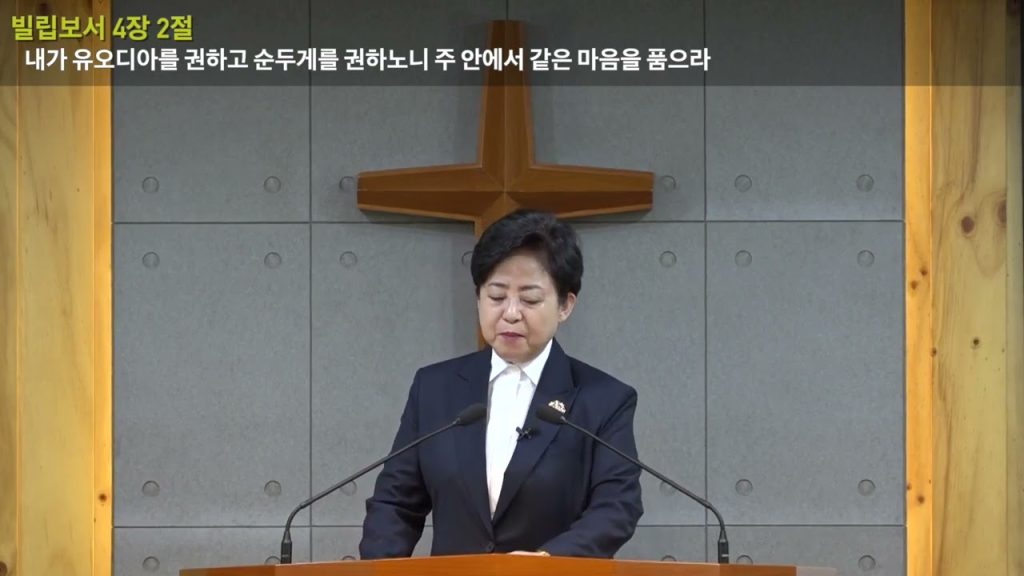
The sermon points to the situation in the church in Philippi, where Euodia and Syntyche quarreled, unable to think the same way in the Lord, and makes clear that conflict in the church arises from a clash between human pride and God's authority. Rather than insisting on their own opinions and ways, believers must obey Christ's commands and show one another gentleness and give way to one another. Because quarrels in the church are a sin that makes souls stumble and divides the church, believers must hold down their tempers and entrust all their worries to the Holy Spirit.

God delights in believers who live with steadfast faith and just lives, and he examines their lives just as he examines the life of the world. Believers should have wisdom and live honestly in the world, but within the church they should humbly choose the lower place and seek harmony. The sermon warns believers to remember the day they will stand before the throne, since the small quarrels of today can bring eternal loss. Can believers enjoy God's peace by forgiving and building up one another, and live without shame as members of the body of Christ?

Pastor Cho Chun-sook · Jun 2, 2024
Believers Who Hold Citizenship in the Kingdom of God
Philippians, Part 7

Believers Who Hold Citizenship in the Kingdom of God

In this passage the apostle Paul conveys to the believers in Philippi, through his own journey of faith and devotion, how precious citizenship in the kingdom of God is. Paul gave up all the world's wealth and honor and lived for Christ, because of his assurance of the eternal kingdom of heaven and the mission he had received from God. He stresses that believers should give up their citizenship in the world of their own accord and walk carefully toward their true home, the kingdom of God.

The sermon explains why believers should live confidently in the world rather than anxiously, like people staying somewhere illegally. Paul did not boast of his faith or seek people's approval; he sought approval from God alone. Yet it warns that many believers fall into their own righteousness, judge and complain about others, and can easily give in to Satan's temptations. True believers are ashamed of their shortcomings, strive every day to build a close relationship with God, and should keep an attitude of thankfulness for the grace they have been given.

What must believers put into practice to discern Satan's schemes and grow spiritually mature? As people who hold citizenship in the kingdom of God, we consider what decisions we must make in order to pursue the eternal reward rather than the passing pleasures of this earth.

Pastor Cho Chun-sook · Jan 21, 2024
Toward the Goal
Philippians, Part 6

Toward the Goal

This passage deals with the turning point in the faith of the apostle Paul, when he boldly threw away his former legalistic pride and counted Christ alone as his boast. Paul regarded everything the world recognizes, including his education, his family background, and his Roman citizenship, as ‘refuse,’ and laid it all down for the gospel. This shows that salvation is not earned by works but given by grace, and that the Christian life is one of painting a picture of faith in response to that grace.

Through the examples of Rahab's scarlet cord and the salvation of Noah's family, the sermon explains that one person's right faith brings about the salvation of a whole household. Just as God chose special people and saved them out of a world guarded by Satan, believers too must overcome the darkness and answer the call of God, who loves souls. Paul preached the gospel even in hardship and persecution because he knew the torment of hell and because he had experienced the power of Christ's resurrection.

As those who have died and risen with Christ, believers must leave the body of sin behind and live holy lives. The sermon helps us see that the mission of believers is to become the light of the world and lead souls trapped in darkness. Believers must run toward the goal, the finish line, without looking back, and through this they receive the wisdom and understanding of the Holy Spirit. The sermon sets out that when believers run with their focus on God's call and the salvation of souls rather than on their own comfort, God will commend them.

Pastor Cho Chun-sook · Aug 13, 2023
Work Out Your Own Salvation with Fear and Trembling
Philippians

Work Out Your Own Salvation with Fear and Trembling

This passage deals with the letter the apostle Paul sent to the believers of the church in Philippi. The believers had kept the faith well while he was with them, but when their conduct became improper once they had to stand on their own, Paul urges them to humbly serve one another and reveal God's glory. Although they had been saved through Jesus' sacrifice, they showed a proud attitude and wanted to be served by their brothers; it is hard to see this as the way of holy believers who have received grace, and it can even become a sin that pushes saved souls toward death.

So Paul urges them to submit to God's word, to fear God, and to work out their salvation with fear and trembling. This means striving to hold on to the grace they have received, to walk with the Holy Spirit, and to live by faith. If we cannot let go of human righteousness and give way to greed, worship and God's word begin to feel uncomfortable, and in the end we walk out of salvation of our own accord. Also, when pastors and those who intercede pray earnestly for believers, it is an important moment that gives believers the chance to be refined and to repent.

Believers must cherish and honor their brothers and sisters in the faith, covering and helping one another's shortcomings. Just as Paul, even in the midst of suffering, asked them to serve Timothy and Epaphroditus well, we must respect and love those who proclaim the word of truth. When God works for believers, believers must work along with him, and when we strive to guard our faith, the Holy Spirit helps us. If Paul prays for the believers, God will answer; how are we responding to that prayer?

Pastor Cho Chun-sook · Apr 30, 2023
Circumcision of the Heart
Philippians, Part 5

Circumcision of the Heart

Through the apostle Paul's letter to the believers of the church in Philippi, this passage emphasizes that we can find true peace and joy only in Christ, by casting away the world's values and human righteousness. Paul urges the believers not to harbor complaining and judging hearts toward one another, but to serve humbly in the fullness of the Holy Spirit, and to cherish and help their brothers and sisters. This shows that it is not a mere moral lesson but an essential attitude for life, needed to win the spiritual battle and enter the kingdom of heaven.

In particular, the passage points out that the root of conflict within the church lies in the pride that seeks to exalt oneself above God and to be recognized, and warns that such an attitude ultimately leads people to lose interest in salvation. Through Jesus' words about admonishing a brother who sins and about cases where someone will not submit to the authority of the church, it also explains how important the obedience and unity of believers are. It conveys that believers experience miracles and protection when they pray together and intercede for one another, and that the secret to standing safe from Satan's attacks is a community of faith centered on Christ.

We are standing in a season of trial that sifts out, through the difficulties and tests we are now going through, what true fruit is. To avoid falling for Satan's schemes and to live following the leading of the Holy Spirit, we must lay down our own righteousness completely and depend wholly on God. When we grow into mature people of faith through this circumcision of the heart, we can enjoy a peace that is not shaken even amid the confusion of the world. So we must look back and ask whether we are now laying down our desire for our own convenience and recognition, and living a life devoted only to Christ and our brothers and sisters.

Pastor Cho Chun-sook · Jun 7, 2020
Work Out Your Own Salvation with Fear and Trembling
Philippians, Part 4Philippians 2:12-18

Work Out Your Own Salvation with Fear and Trembling

This passage is part of the letter the apostle Paul sent to the believers of the church in Philippi, and it deals with how to live by faith when one is alone, outside the church. Paul emphasizes that while it is easy to keep the faith when we are together, when we are alone we must obey God's word through our own effort alone. Pointing out that even after receiving grace the believers are showing arrogant attitudes and behaving in ways that offend their brothers and sisters, he warns that such attitudes can become a sin that pushes saved souls toward death.

The sermon explains that the words 'work out your own salvation with fear and trembling' describe a process of guarding the grace we have received, walking with the Holy Spirit, and making an effort. Salvation is accomplished by God's work, but believers must treasure that grace and take the trouble to flip the switch that turns on the light. If people cannot let go of human righteousness and greed and neglect worship and God's word, they end up drifting away from salvation, and this becomes a dangerous moment when Satan can approach. It also conveys that we can grow only when we treasure the people who give us advice that is hard to hear, and obey those words.

God is constantly at work for the salvation of believers, but if we do not work together with him, we cannot receive God's blessing. With Paul praying at the risk of his life for the believers' repentance, the believers must acknowledge their weakness and turn back quickly. When they honor their brothers and sisters in the faith, serve one another, and keep a humble heart, God sees their good deeds and grants them special grace. We should consider how we will receive this earnest plea from Paul, and how we will keep our faith with fear and trembling.

Pastor Cho Chun-sook · May 31, 2020
Have This in Your Mind, Which Was Also in Christ Jesus
Philippians, Part 3Philippians 2:1-11

Have This in Your Mind, Which Was Also in Christ Jesus

This passage contains the apostle Paul's exhortation to the believers of the church in Philippi to have the mind of Christ and to treat one another with humility. At the time, there were believers in the church who thought themselves superior and engaged in strife and vain conceit, and to correct this division Paul presents the example of the humility and service of Jesus, who emptied himself and took the form of a servant.

The sermon emphasizes a life in the church of casting away human righteousness and the world's standards, humbly obeying the advice of those who are further along spiritually, and serving one another. It conveys that when pastors and church members alike follow the love of Christ, caring for one another from a low place and relating with love and devotion instead of criticism and condemnation, the church grows strong and God is glorified. It also reminds us that a life that obeys God's will, not the world's logic of success, is true blessing.

How can believers gain the wisdom to have the mind of Christ and to humble themselves and serve their brothers and sisters, rather than insisting on their own opinions? And amid the temptation to apply the world's methods to the church, how can they live out a truly humble life of obedience?

Pastor Cho Chun-sook · May 24, 2020
For to Me to Live Is Christ, and to Die Is Gain
Philippians, Part 2Philippians 1:12-21

For to Me to Live Is Christ, and to Die Is Gain

This passage conveys the apostle Paul's joy over the spread of the gospel even while he is imprisoned. Paul sees his suffering as having actually helped the believers of the church in Philippi grow in faith and helped the gospel to be proclaimed, and he rejoices in the gospel being spread whatever the motive with which Christ is preached. He also boasts that he gained mature wisdom through his experiences of pain and refining, and that he uses it as a tool to bring other souls to life.

The world rejects and persecutes the light of the truth, but Paul, unable to leave the souls he loves in darkness, proclaims God's word ready to die. He does not display his own righteousness but lets Christ alone be revealed, and he endures suffering with the help of the Holy Spirit. Paul's life shows the conviction that whether he lives or dies, it is for Christ, and so both are gain. His hope of heaven is so firm that he is not shaken by the world's mockery or persecution, and he had a bold faith willing to sacrifice his life for the salvation of souls.

Believers must live by God's law, not the world's law, and with spiritual discernment stand against Satan's interference and persecution. How can we understand and follow the essence of this devoted and humble faith that Paul showed?

Pastor Cho Chun-sook · May 17, 2020
In the Tender Mercies of Christ Jesus
Philippians, Part 1Philippians 1:1-11

In the Tender Mercies of Christ Jesus

This passage is part of the letter the apostle Paul sent to the believers of the church in Philippi while he was imprisoned in Rome. Paul expresses deep gratitude as he thinks of the brothers and sisters who, even in his suffering, have steadily helped him and devoted themselves. He confesses that he longs for them because they are in his heart and have shared in grace with him in his chains and in the defense of the gospel. This shows their decision to give up worldly possessions and comfort and to sacrifice themselves for the gospel.

The sermon points to the pain and the decisions the Philippian believers had to go through before they left worldly abundance and idolatry and received Jesus Christ. Just as the Israelites who returned from exile in Babylon devoted themselves to rebuilding a desolate Jerusalem, they had to lay down all the glory they had enjoyed in order to believe in the unseen God. That believers such as Lydia opened their homes and helped materially was not a human choice but the work of the Holy Spirit, who opened their hearts to understand the truth. Paul emphasizes that such devotion is showing love with the tender mercies of Christ, and that God is witness to that sincerity.

It asks what kind of faith we have as believers, and whether we are trusted in such a way that people who meet us are moved to give thanks and pray. With the observation that being recognized by the world may be harder than receiving grace from God, we are led to consider how we should live in order to discern what is spiritually good and to stand blameless until the day of Christ.

Pastor Cho Chun-sook · May 10, 2020