

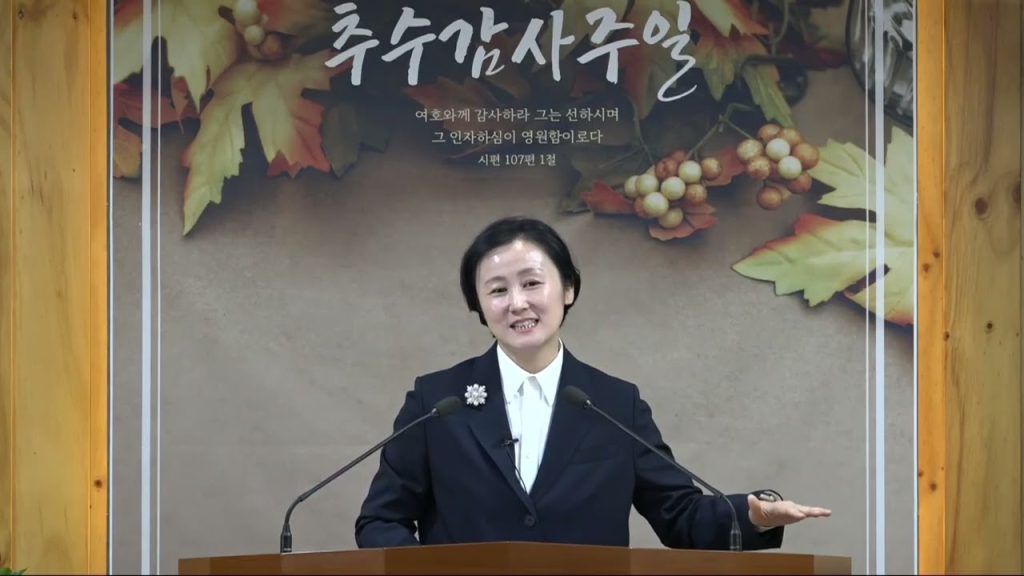
Thanksgiving Built on Repentance (Thanksgiving Service)
Today's passage sheds light on the true meaning of thanksgiving through the feasts of Israel established in Old Testament times. In particular, it highlights the order by which the Day of Atonement had to be kept before the harvest thanksgiving feast, the Feast of Booths, showing God's order of requiring repentance before thanksgiving. This is not simply the arrangement of a calendar; it reveals the spiritual principle that unless a clean heart has been prepared, we cannot fully receive God's grace.
Through the lives of King David and Peter, the sermon explains how thanksgiving built on repentance leads to deeper grace and a new mission. Even after victory, David consecrated himself and stood before God, and Peter, rather than dwelling on the miraculous catch of fish, confessed before the holiness of Jesus that he was a sinner. These examples show that thanksgiving is not simply an expression of joy, but true worship that flows from a pure heart whose problem of sin has been dealt with.
So Thanksgiving helps us see that its meaning goes beyond joy over material abundance, and grows deeper when we first make sure of spiritual cleanness. Repentance is the act of leaving the place of sin, and thanksgiving is the process of restoring grace on that very ground. The sermon asks what true worship is, beyond formal words of thanks: looking back at one's inner life and standing before God with a clean heart.
![Yahweh Is Our God; Yahweh Is One [Thanksgiving]](https://watercourse.org/wp-content/uploads/2026/08/sermon-LaJn7VsQ09w-1024x576.jpg)